
- Home
-
Private banking
-
LGT career

From traditional philanthropy to transition investing: Investors are increasingly aiming to combine financial goals with social and environmental impact. We present the four most common approaches.

A contemporary investor surveying opportunities to allocate capital for good has enjoyed an ever more dynamic and varied view in the 21st century. A shifting landscape unfolds, offering a rich ecosystem of approaches for those with positive social intentions, combining elements of conventional charitable giving and traditional commercial investment. But where to start?
While potential strategies abound and often overlap, four broad approaches can be outlined, each with their own structures and potential payoffs.
The classic form of philanthropic giving has always been central to the activities of the wealthy, from the ancient Greeks to the modern geeks of Silicon Valley.
Whether it's the The Gates Foundation funding vaccine distribution in low-income countries, the Wellcome Trust supporting biomedical research with no commercial application in sight, or a family office endowing a local arts centre or community food bank, philanthropy involves the donation of private resources (money, assets, time, expertise,) without expectation of financial return to advance social, environmental, scientific, cultural, or humanitarian objectives.
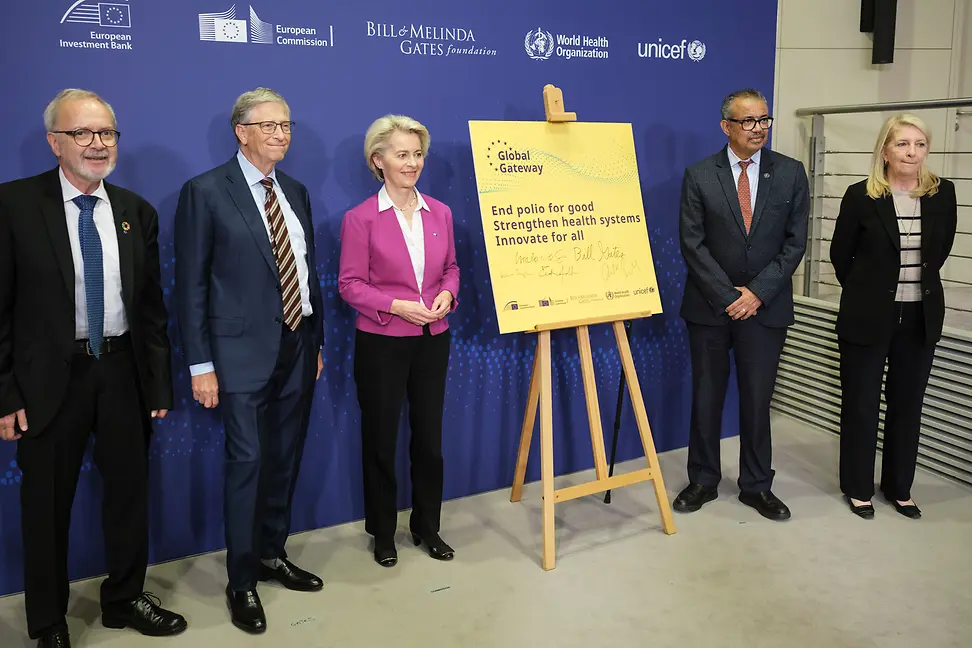
As Silvia Bastante de Unverhau, Head of LGT Philanthropy Advisory explains, "most philanthropists prefer to fund tangible and concrete things - for example, vaccines or scholarships, rather than longer-term, more difficult causes such as strengthening the health or education system." While traditional charity will always have its place, her team promotes strategic and collaborative philanthropy, as well as longer term systems-focused philanthropy.
Pure philanthropy is being joined by a growing number of potential alternatives.
Venture philanthropy (VP) adds a layer of sophistication - and potential benefit - to the pure model. While the term was first used by John D. Rockefeller III in 1969, it began to take off in the 1990s and early 2000s as a new generation of givers looked for more imaginative methods, always with a laser focus on impact.
"Ours is a deliberate form of philanthropy, which applies venture capital principles to achieving social impact by building strong, scalable social organisations," Karius explains.

At its core, VP focuses on organisations and not projects so that they can benefit from active, hands-on investment rather than passive grant-making in a way that can help promising organisations scale their impact significantly. Financial returns are secondary to the main goal of bringing about positive change.
"The benefit of not having to generate financial returns is that you can take maximum risk for maximum impact," Karius adds. "That allows you to do things that normal investing, or even impact investing, is not able to do." Venture philanthropists, for example, can take a longer view in backing young organisations without proven business models that would struggle to get financial support from governments or other investors.
Karius presents LGT VP's long-term support for Educate Girls, a non-profit organisation established in India in 2007, as a classic example of sustained VP. An initial grant of USD 250'000 in 2011 was just the start of a partnership that has since involved more than USD 8.5 million of active support, resulting in a big rise in the number of girls in the target regions enrolled in school (from 3000 to more than 360'000 girls, according to Educate girls' reporting).
Since LGT VPs partnership as well as funding from other foundations, Educate Girls reports to have enrolled 1.56 million out-of-school girls, improved learning outcomes for over 2.2 million children, and has addressed the 40 % of out-of-school-girl's problem in India. Its new bold "Strategy 3.0" aims to reach 11.6 million girls over the next decade. In 2025, Educate Girls became the first Indian organisation to receive the Ramon Magsaysay Award, Asia's most prestigious accolade. Often referred to as the "Asian Nobel Prize", it recognises extraordinary integrity and transformative leadership.
Clearly, VP requires solid commitment from both sides, as well as significant time, expertise, and staff capacity. The payoff is a greater bang for one's buck, and Karius says current trends include a firmer push to measure and verify the impact of such investment. Venture philanthropists are also collaborating more, pooling expertise in VP collectives to maximise social return.
Impact investing is where positive social or environmental impact becomes part of the picture, alongside a financial return for the investor. Or, as it was defined by Rockefeller Foundation in 2007, impact investing is about "using profit-seeking investment to generate social and environmental good."
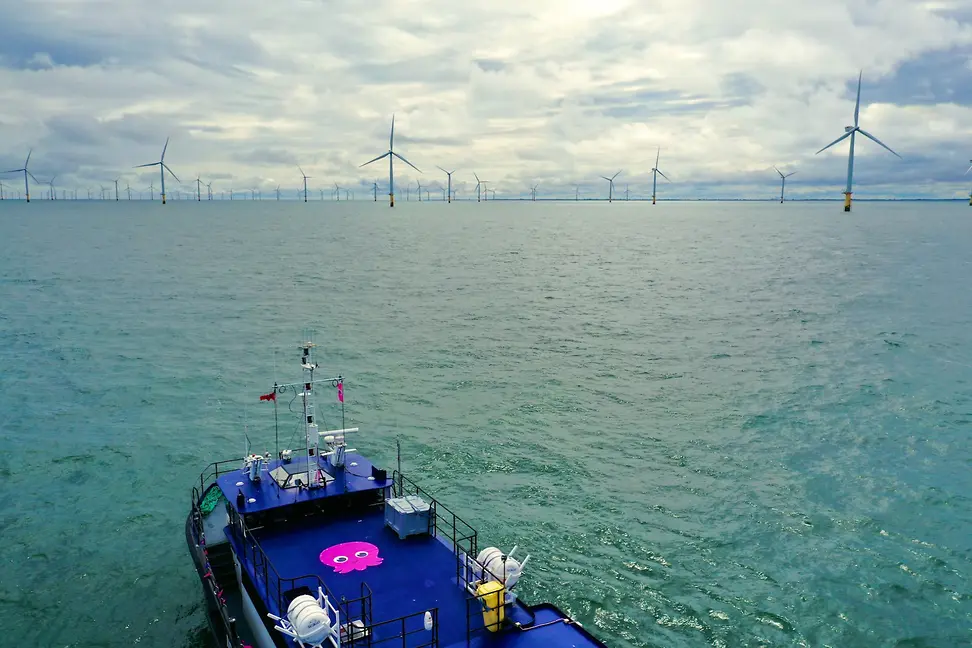
Examples might include a private equity fund investing in off-grid solar companies serving households in sub-Saharan Africa, targeting both financial returns and energy access, or a green bond issued by a multinational bank, ring-fenced for renewable energy projects, offering investors returns while aiming to contribute to carbon reduction as measured and reported under the bond's framework.
"Environmental, social, and financial returns can strengthen one another," says Fil Lekkas, Investor and former Strategy Lead at LGT partner firm Lightrock.
"Businesses that deliver critical solutions to the challenges experienced by companies and communities tend to lead on environmental and social performance, attract stronger talent, enjoy greater customer loyalty, and draw more resilient capital, all of which can contribute to long‑term value creation."
Lekkas says climate-related investment is booming, typically involving mitigation (reducing the drivers of climate change) or adaptation (adjusting to the changes already underway). "Both matter, but adaptation remains significantly underfunded," he says.
In one example of the wider push to fill in this gap, Lightrock is investing in AiDash, which produces satellite intelligence data and weather monitoring systems to reduce the impact of wildfires and extreme weather on critical infrastructure.
The return-generating model can open more doors than others, while encouraging greater innovation in particular in relation to tech solutions. But it comes with challenges, including the need to accurately measure impact to avoid the perennial accusation of, in this case, "impact washing".
The newest, most pragmatic addition to the sustainable investing toolbox involves strategies that are explicitly designed to accelerate the transformation of high-emitting or otherwise unsustainable economic sectors toward low-carbon alternatives.
"The defining characteristic is directionality," Lekkas explains. "The investee company does not need to already be "green" or generating a positive impact, but must be credibly and measurably moving in that direction. Capital is deployed to accelerate and enable that movement while also seeking to generate a financial return." Still, as with impact investing, the measurement and verification of that impact remain a challenge.
While Lightrock is not itself a transition investor, many of its portfolio companies support others in the shift to a low-carbon economy. For example, Lightrock is a big investor in Liqid, which makes hardware and software to reduce the water and energy use of datacentres for its blue chip customers. Other examples might include investment in efforts to decarbonise "hard-to-abate" sectors that collectively account for the majority of global emissions but cannot be replaced overnight by clean alternatives. A sovereign wealth fund might invest in a cement company with a credible net-zero transition plan, including capital expenditure commitments to carbon capture.
Forward-thinking companies, including startups, in aviation, shipping, and mining might also be the target of transition investors. LGT Senior Portfolio Manager Thomas Hassl adds: "There's no solar or wind power industry without aluminium or copper. So those companies can be in a transition portfolio. Yes, they do bump up the baseline emissions and water footprint of the portfolio - but sophisticated transition investors have to look at the supply chain and the companies that are needed to make it happen. We at LGT know that without these companies, the transition is not possible."
The most sophisticated actors in the philanthropy might provide both grants and impact investment, and use venture philanthropy to de-risk organisations before they attract commercial capital, throwing in transition finance to drive change in the most challenging sectors. As Silvia Bastante de Unverhau, Head of LGT Philanthropy Advisory says, "all kinds of funding have an important part to play to address the needs of different sectors - you will not be able to solve all problems exclusively with one funding approach."
A common theme Karius has also observed recently, after almost 20 years in the game, is the changing nature of investors who increasingly prioritise impact. "The newer generations are also more tech savvy and they are experimenting across the spectrum to create impact."