- Home
-
Private banking
-
LGT career

Thai landscape architect Kotchakorn Voraakhom explains why we urgently need to reintegrate cities with nature if we want to survive the consequences of climate change.
Kotchakorn Voraakhom: Rising sea levels present a future far more complex than simple changes to the shoreline. We're facing saltwater intrusion, lost habitats, and destabilized ecosystems. To meet this, we must shift our perspective. Rather than fighting the water with rigid, single-minded solutions like seawalls and dams, we need to learn from nature itself.
With her studio Landprocess and the nonprofit Porous City Network, Thai landscape architect Kotchakorn Voraakhom is on a global mission that extends far beyond her native Bangkok, combining the tools of architecture with the complex web of natural systems to improve climate resilience. Voraakhom has received the UN Global Climate Action Award, and been named one of the BBC100 Women and The Bloomberg Green 30.
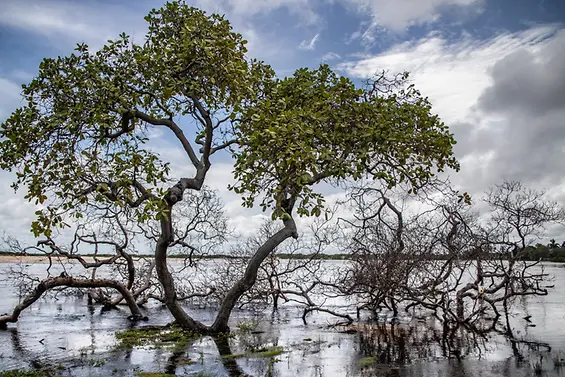
Nature teaches us that resilience lies in dynamism, adaptability, and integration. A mangrove forest doesn't just block water: it dissipates wave energy, builds land by trapping sediment, nurtures vast food webs, and stores carbon. A wetland acts as a sponge, absorbing floodwaters while filtering impurities. A healthy sand dune system moves and evolves with storms.
The most important lesson is to work with these natural systems, not against them. We must move away from a mindset of pure "protection" to one of regenerative adaptation. The goal is not to shield our cities at the expense of nature, but to reintegrate them into the living landscape.
The 2011 floods were a pivotal moment, and a brutal lesson in the need to "adapt or die" - not just for me but for millions. In a country with a deep-rooted water culture, where seasonal flooding was once welcomed and even utilized, flooding was now a catastrophic force. This forced a fundamental question: Why have we become so vulnerable to the very element we once lived in harmony with?
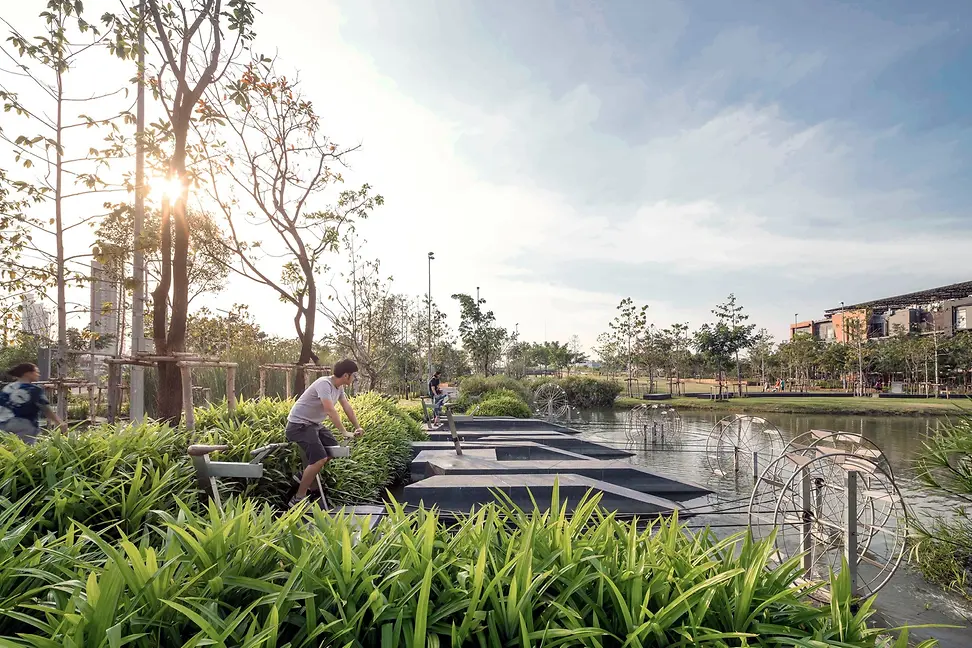
We know that floods will come every year, and extreme events arrive every decade. Yet our cities are designed to hastily expel water, not coexist with it.
The disaster defined my purpose as a landscape architect. It moved me beyond simply asking how to fix things, towards understanding why we were in this crisis. Yes, we had to rebuild, but not based on fear of getting wet. My mission became clear: to rediscover how to design our cities to live intelligently and resiliently with water.
Being Thai has been a huge gift. My Harvard education, and American experience as a whole, didn't overwrite that; instead, it acted like a mirror. It reflected back to me the essence of my Thai identity and how to apply its unique wisdom in an international context.
This has given me the confidence to be fearlessly who I am. In Asian culture, there is a deep appreciation for harmony, subtlety, and indirectness. These values permeate our way of thinking and designing. My Western education gave me the tools to combine these with the precision and power needed to meet global challenges. The two are not in conflict - but a perfect mix.
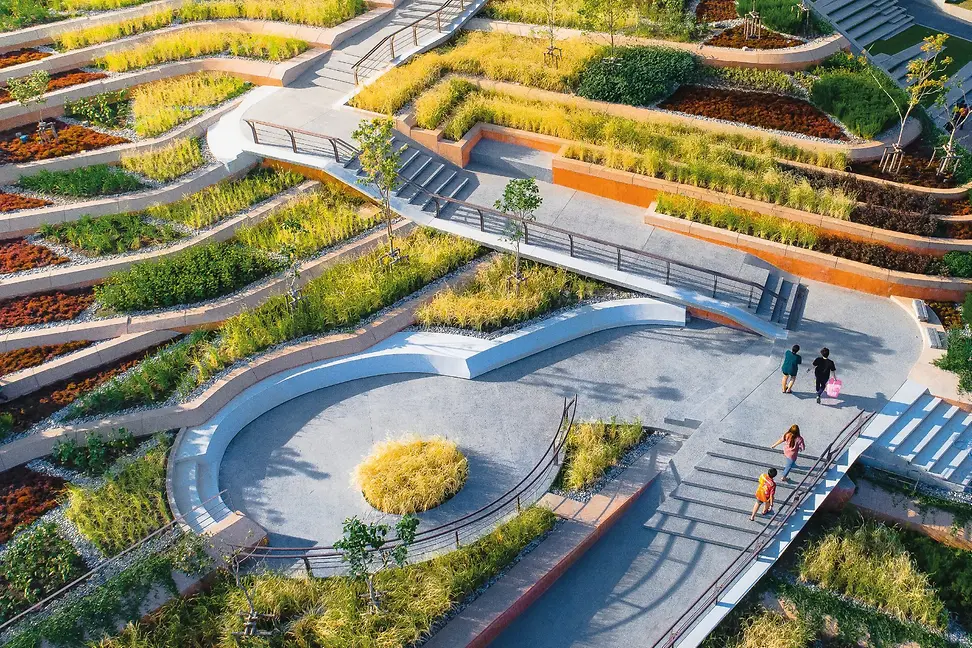
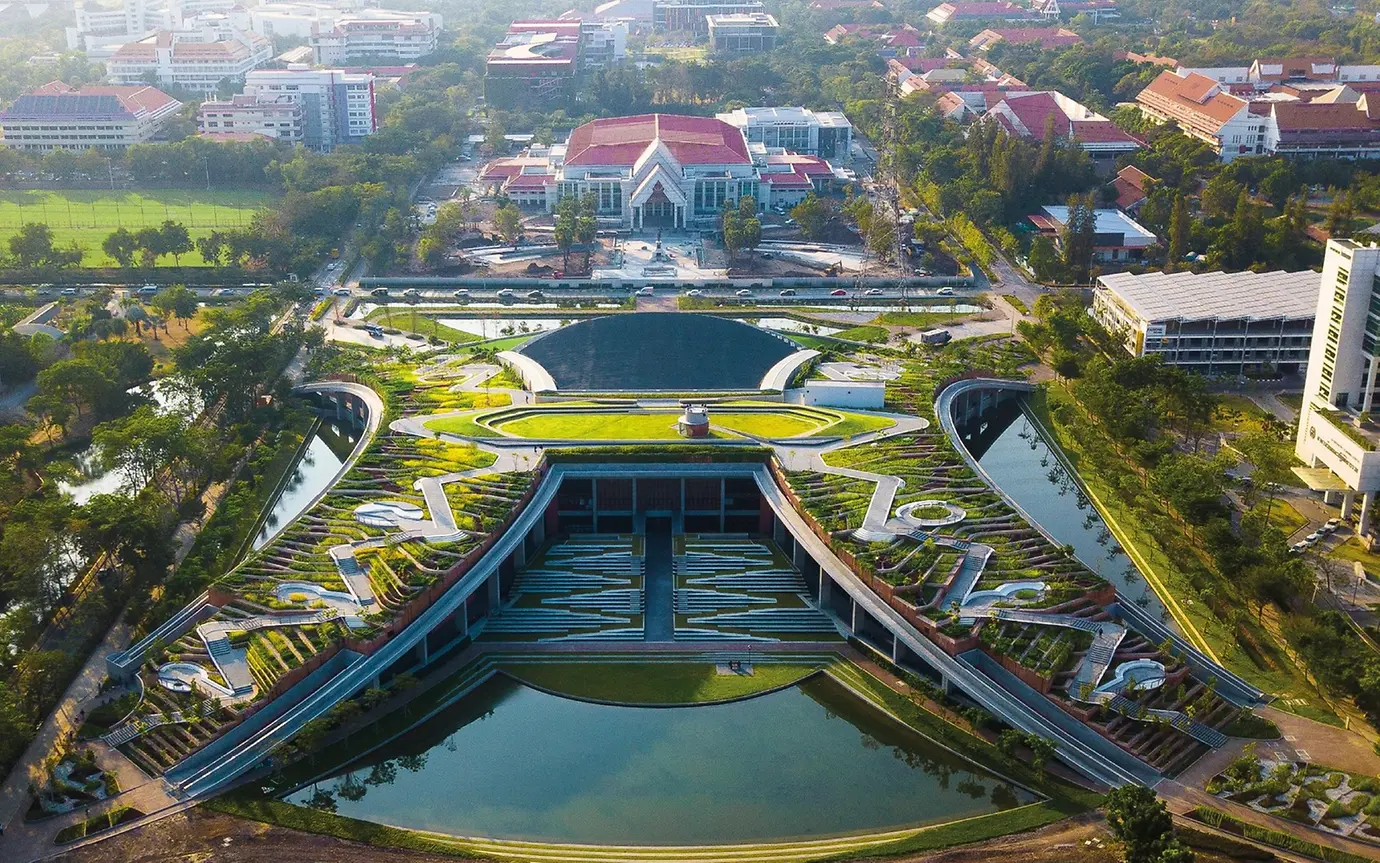
These projects have a "standard philosophy" but never a standard form. Each design is born from its site's unique social and environmental needs, not merely its function as a park, a rooftop, or a beautified space. But they all ask: How can urban development become part of the climate solution?
Collectively, they demonstrate that we can help our cities manage flooding intelligently, transform wasted space into productive assets, and tackle interconnected crises like urban heat, food security, and renewable energy. And do this while creating vital public spaces and solving multiple problems at once.
Ultimately, each project is a statement of faith that Bangkok can be better, and that our cities can be engines of adaptation. The message is clear: if we do not redesign our cities to work with nature, we will not survive. We must adapt, or die.
Nature-inspired architecture, or nature-based solutions (NBS), works with the living systems already present to create integrated and resilient environments.
First, it means designing for multiple benefits. A single-purpose, engineered solution, like a concrete seawall, is replaced by a multi-functional, living system.
Second, it embraces dynamism and flow. Nature is in constant motion. True resilience comes not from static control, but from facilitating natural processes. This means designing spaces that accommodate the movement of water, sediment, and species, allowing these systems to adapt and evolve over time.
Finally, it's rooted in building with and for biodiversity. By regenerating the intricate web of life, we create environments that are more robust, adaptive, and inherently valuable. Our designs should actively repair ecological connections, ensuring benefits for both human communities and the natural systems that sustain us.
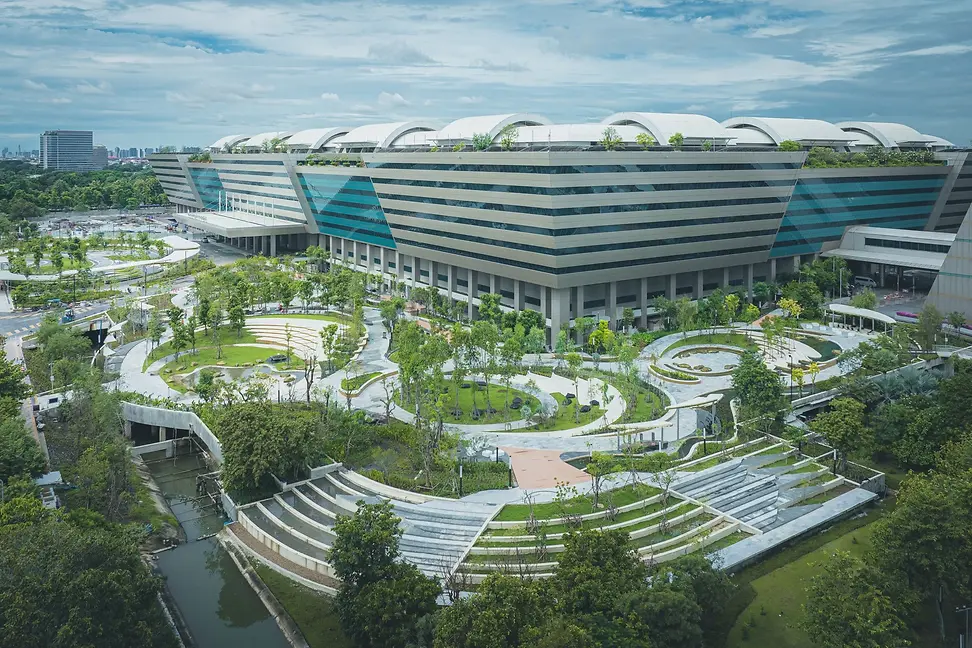
In general, there's more acceptance once designs both solve problems and provide multiple co-benefits. But the deeper question is: How can people, and especially top-down leaders, realize that "business as usual" is no longer sustainable? My projects serve as a starting point. Real change begins not with accepting a new design, but with challenging the old mindset.
Today, interest is predominantly a reaction to extreme events, with a scramble for solutions after disaster strikes. But nature operates on a different timeline. We cannot build a thriving future with short-term fixes for long-term challenges.
Nature-based solutions are not about replacing our existing cities and grey infrastructure used for water and transport; they are about transforming our relationship with them. The old paradigm of rigid, single-purpose engineering is insufficient for the dynamic, interconnected crises we face.
The question is not if we should use nature, but how we can retrofit our urban environments by placing living systems at the heart of city management. This means re-engineering our grey infrastructure to work with green and blue systems, to be porous, adaptive, and multifunctional. True resilience emerges from this symbiosis. Nature is no longer an afterthought, or a decorative add-on, but the central strategy for long-term survival and vitality.
ROI is always crucial, but with nature-based solutions, we must radically expand its definition. Traditional ROI measures direct financial costs against a single benefit: profit. But nature-based solutions offer returns that are multi-dimensional and interconnected. The true investment is in our long-term survival and collective well-being.
We must move away from asking "What is the cost of this project?" to "What is the cost of inaction?", and "What is the value of a regenerative, resilient future?" Nature-based solutions are the only form of development that pays dividends across financial, environmental, and social ledgers simultaneously. It's the ultimate value investment.
Absolutely. While corporations excel at strategic planning for their operations, they often take a defensive, site-specific posture towards climate risk, and only focus on protecting their own facilities and supply chains. I wish more would see investment in public, city-scale nature-based solutions as a direct extension of their own risk mitigation and long-term business strategy.
For example, a corporation that builds a factory in a flood-prone area might invest in a higher perimeter wall. A classic, isolated adaptation. A more visionary corporation would co-invest with the public sector to restore upstream wetlands, or a city-wide green corridor. This would protect their factory, stabilize the regional ecosystem, secure the community and workforce they depend on, and future-proof their local investment. It moves their strategy from defensive adaptation to proactive system-building.
The Porous City Network, founded in 2016, works to empower the next generation of designers and local communities to co-create solutions "rooted in ecological intelligence and cultural wisdom" based on prototypes developed by Voraakhom's firm. The PCN currently operates in Thailand, Malaysia, Laos, and the USA, and has partnered with the Dutch government.