
- Home
-
Private banking
- Market view
- Insights

As government bond yields reach 20-year highs and the US Treasury steps up intervention, bonds are no longer a backroom Wall Street story. They are silently impacting the cost of your mortgage, the value of your pension savings, your company's investment plans, and even politics.

In August 2026, US Treasury Secretary Scott Bessent announced that the Treasury would at least double its buybacks of longer-dated government debt. While buybacks as such are not unusual, and the volume of the intervention represents only a small fraction of the overall market, the prominence of the announcement underscores mounting concerns about rising long-term interest rates and the broader fiscal outlook in light of the staggering USD 40 trillion of outstanding US government debt. There was initial relief for the bond market, but it proved short lived.
The bond market is a fundamental component of the global financial system, playing a crucial role in every economy. As a primary source of funding for many public and private projects, bonds are a key driver for economic development and job creation. When an entity needs to raise funds, whether it's a national or local government, or a company, it can borrow money by issuing bonds to investors.

Tina Jessop is a Senior Economist in the macroeconomics team at LGT Private Banking, where she is responsible for helping shape the private bank's global economic outlook. She focuses on cyclical and structural economic trends and shifts in the US, euro area and Swiss economies, combining macroeconomic and monetary policy perspectives with micro-level developments.
Tina Jessop, Senior Economist Europe at LGT Private Banking, explains: "Government bonds form the foundation of the financial system. The interest rate a government pays helps set borrowing costs across the wider economy, as borrowers demand compensation above the yield available on comparatively secure government debt for the additional credit risk. This matters in tangible ways. Higher government borrowing costs can mean more expensive mortgage rates, car loans, and other types of consumer credit. For companies, they raise the cost of financing a new factory, renewable-energy project, or data centre. This may cause enterprises to delay investments or hire fewer people. For governments, higher interest expenditure curtails spending on other areas, like infrastructure, defence, education, or healthcare."
Bond: A security issued by a government or company wishing to borrow money. Bonds usually pay a fixed interest rate to the investor, with a promise to repay the face value (par) of the bond at maturity.
Yield: Current yield equals the annual interest payment divided by the current market price.
Treasuries: Another name for US government bonds
This link between government and corporate borrowing is particularly important at times like these when demand for long-term funding is rising. Governments are issuing large amounts of debt, while companies are raising capital for artificial intelligence and wider technology investments. Increasing competition for investors' money, alongside concerns about high public debt and the risk of renewed inflation - linked to higher energy prices - may contribute to higher government bond yields.
The relationship between interest rates and bond prices is vital for understanding bond market dynamics. When interest rates rise, bond prices typically fall, and vice versa. Tina Jessop adds: "The bond market serves as a barometer for the overall health of the economy, reflecting central bank policy rates, expected inflation, economic growth, credit, risk, and the wider outlook. It thus provides valuable insights into investor sentiment and economic expectations."
Interventions in the bond market are not a new phenomenon. In February 1961, the Federal Reserve (Fed) launched Operation Twist in order to stimulate a flatlining US economy. By selling short-term bonds and buying longer-term bonds, the Fed aimed to lower the yields on longer-dated bonds, arguing that this was not putting more money into the economy, or affecting short-term borrowing. Operation Twist lasted from 1961 to 1965, and while longer-term interest rates did fall, some economists argued that this was actually the result of a recovering economy.
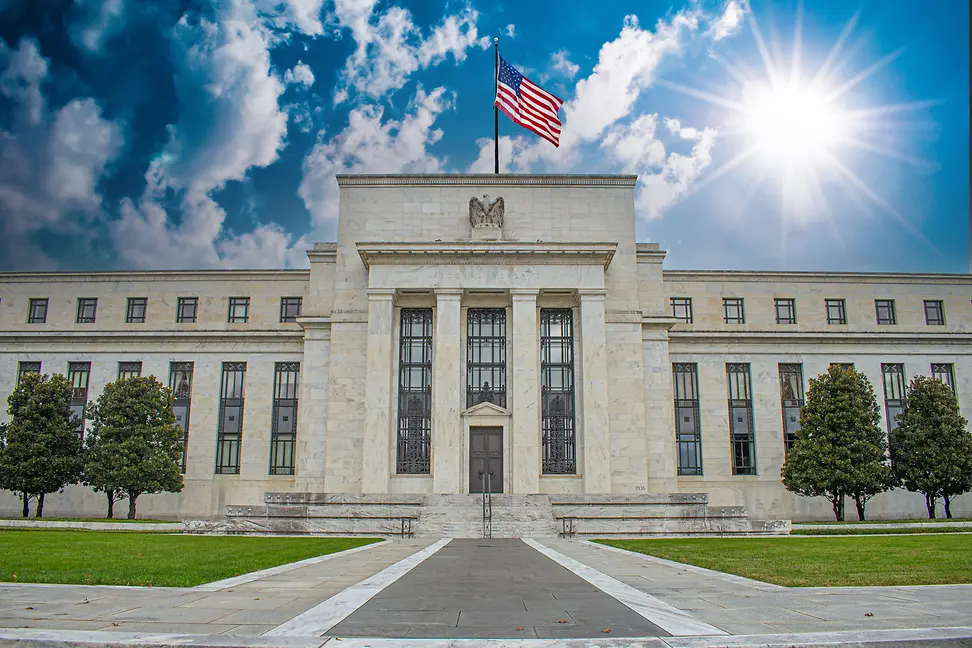
A further intervention, dubbed Operation Twist Redux by some, came in September 2011, when the Fed adopted a similar approach. The aim was to stimulate housing and corporate investment by lowering long-term rates in the wake of the global financial crisis of 2008-09. Again, its precise economic impact remains debated, with commentators arguing that the resulting gradual economic recovery had more to do with accelerated money growth than with the intervention.
Quantitative easing (QE) is a monetary policy tool used by central banks to stimulate economic activity by increasing the money supply. It achieves this by purchasing government bonds and other financial assets with newly created central-bank reserves, i.e. by printing new money. The effectiveness of QE is often the subject of intense debate, as it can be difficult to separate its effect from other economic and policy measures.

The US Treasury and the Federal Reserve both affect the US government bond (Treasury) market, but they have distinct responsibilities. The Treasury, set up in 1789, manages federal finances and fiscal policies enacted by congress and the president. The Federal Reserve, founded in 1913, independently conducts monetary policy to promote maximum employment and stable prices. Think of the Treasury as the government's financial manager, collecting and spending government money and borrowing when required, and the Federal Reserve as the institution that sets interest rates and financial conditions to steer the economy along a healthy growth path.
Tina Jessop clarifies: “Because both institutions operate in the same market, their actions can interact. But routine Treasury issuance should not be described as monetary intervention, and Federal Reserve asset purchases to counter severe financial stress should not necessarily be assumed to be fiscal-policy tools. The past years, however, have blurred this distinction - and high debt leves may blur it further."
The term "bond vigilantes" is well-known. Bond vigilantes are institutional investors who sell government bonds when they believe fiscal policy is unsustainable or inflationary. As bond vigilantes step away from the bond market, interest rates rise and bond prices fall. This, history shows, means they can have a material impact on financial policy, markets, and the economy. Also on politics, as ex-UK Prime Minister Liz Truss discovered when her announcement of unfunded tax cuts and energy subsidies led to market panic, since investors feared exploding national debt, a record fall in the British pound, and rocketing government borrowing costs. She resigned shortly afterwards.
LGT's experts analyze global economic and market trends on an ongoing basis. Our publications on international financial markets, sectors and companies help you make informed investment decisions.
Some economists believe that growing government debt and persistent inflation could cause the bond vigilantes to return. While some believe bond vigilantes are misunderstood, or their influence is exaggerated, this demonstrates the importance of actively monitoring the bond market. Whether or not they're labelled bond vigilantes, bond market participants' views on fiscal policy and inflation can impact stocks, currencies, and the broader economy.
The key question is not whether government-bond yields are rising, but why. Higher yields driven by stronger nominal growth can be a healthy sign of a more resilient economy and improved earnings prospects. By contrast, higher yields driven by persistent inflation or concerns about elevated government debt are more problematic: they lift borrowing costs across the economy without improving the underlying outlook.
Tina Jessop describes it as follows: "Generally, higher yields are not without consequences. They may reduce the market value of existing bonds held in portfolios and pension funds. They also raise the discount rate applied to future corporate earnings, which can put pressure on equity valuations."
As such, understanding the bond market's structure is crucial for both individual and institutional investors, who can then make informed decisions that align with their financial goals and risk tolerance.