- Home
-
Private banking
-
LGT career
-
Market view and Insights

Economic growth requires constant technological innovation. But what are the mechanisms that translate innovation into sustainable growth?

Picking tomorrow's market winners is getting a lot harder.
In fact, from an investor's perspective, 2026 threatens to be one of the toughest years on record. And that's largely because the goose that lays the golden egg - economic growth - is in trouble.
Growth is expected to slow significantly in 2026, with trade and geopolitical tensions continuing to fragment the global economy.
Governments, moreover, are striving to reconcile the often-conflicting needs of citizens, businesses, and the environment, at a time of rapidly accelerating technological change.
AI is disrupting almost every industry, and regulators are struggling to keep pace. There's a real risk that ill-considered competition policy will allow today's big technology players to become even more dominant. And if they grow powerful enough to smother rising stars, this will hold back the next wave of innovation.
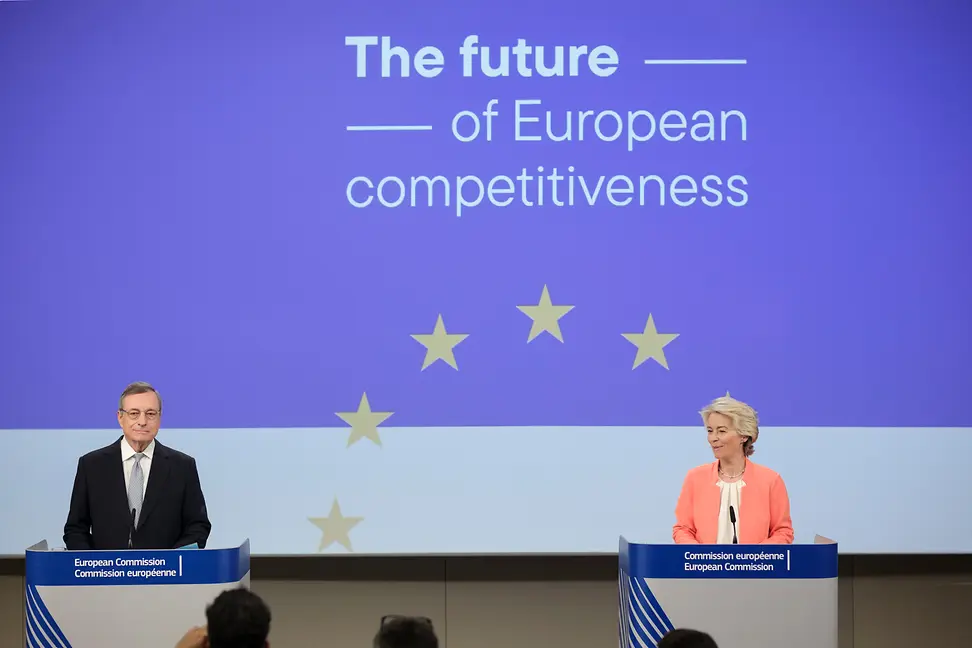
The challenge is especially acute in the Eurozone, which is already falling behind both the USA and China when it comes to developing advanced technologies like AI.
The 2024 Draghi Report on European Competitiveness warned of the consequences of this "innovation gap", including for the green energy transition. "The EU is a world leader in clean technologies," the report observed. "Yet, it is not guaranteed we will seize this opportunity." European innovation, it lamented, is often unsupported by synergies, and hindered by the weight of regulations. As a result, "We are failing to translate ideas into commercial success."
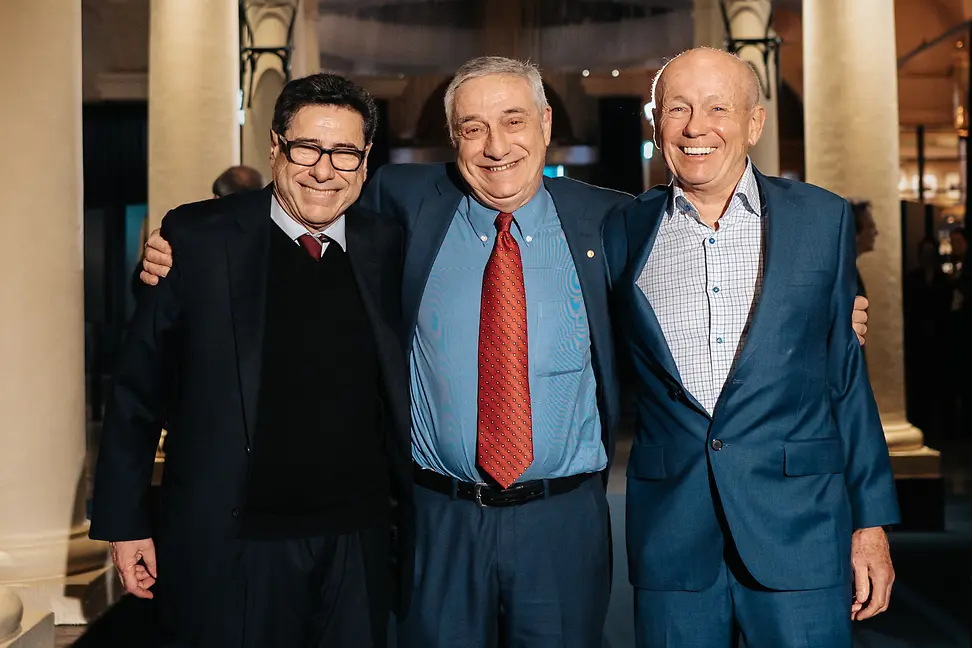
Fortunately, the 2025 Nobel prize in economics went to a trio of scholars: Joel Mokyr, Philippe Aghion, and Peter Howitt, whose collective endeavours show how the innovation that fuels economic growth can be made sustainable.
Their work suggests that success depends on innovation sufficiently disruptive to drive "creative destruction", which then allows new and better technologies to wipe out the value of their predecessors. Crucially, say the laureates, this process requires both society's acceptance and policymakers' active support.
Without this, warned the chairman of the Nobel committee when the prize was awarded, we risk "falling back into stagnation". Indeed, this was the norm for most of human history, until the 18th century British Industrial Revolution kick-started economic growth as we understand it today.
Significantly, half of the SEK 11 million (over USD 1 million) prize went to Joel Mokyr, an American-Israeli economic historian based at Northwestern University in the USA, who specialises in that breakthrough period.
Mokyr's research has shown that despite the development of many important pre-industrial technological innovations, for example, blast furnaces enabling cast-iron products like ploughs in the Middle Ages, the economic growth spurts these engendered were short-lived.
People understood that new technologies worked, but not why they did so, and as a result innovations failed to evolve, according to Mokyr. He won his half of the prize for "having identified the pre-requisites for sustained growth through technological progress."
Mokyr's research demonstrates that it took the joint evolution of science and technology, coupled with mechanical competence and a society open to potentially disruptive change - conditions unique to Britain in the mid-1700s - for the new technological innovations to be taken up and maintained.
The joint winners of the rest of the prize were Philippe Aghion, professor at the Collège de France and INSEAD in France, and the London School of Economics in Britain; and Peter Howitt, emeritus professor of social sciences at Brown University in the USA. They were recognised for their collaborative investigations over several decades into the precise mechanisms whereby innovation drives sustained growth.
Building on the insights of the great early 20th century Austrian economist Joseph Schumpeter, father of the notion of "restless capitalism", by which innovation is a constantly disruptive driver of growth, the pair developed their own theory of "sustained growth through creative destruction".
For Schumpeter, growth came not from order, but from chaos.
Introduced in a joint paper published in 1992, and now known as the Aghion-Howitt model, it explains how companies invest in new products and processes to outcompete their predecessors.
The model holds that because each innovation replaces the previous one, it is both creative and destructive. Growth, furthermore, arises from this continual process of quality-boosting innovation, creating value for both innovators and for society as a whole.

The Nobel committee made special mention of the Aghion-Howitt model's direct relevance to economic policymaking. They noted, for instance, its value in helping to optimise safety nets for workers whose jobs may be threatened by technological change. The model also assists with calibrating subsidies for research and development.
Yet the model, which is based on rigorous mathematical analysis, also shows that deciding on the right level of R&D subsidies is far from straightforward. For example, subsidies might help one company to displace another even if its new product is only slightly better than the original. In this case, the social benefit is minimal.
In recent work, however, Aghion has combined the theory of creative destruction with climate modelling to illustrate the benefits for the green transition of subsidising research on new technologies. He argues that an industrial policy that includes such subsidies can help clean energy to outcompete dirty energy. Indeed, in combination with carbon pricing, Aghion claims that green subsidies are essential for decarbonisation.
The 2025 Nobel economics laureates have revealed the secrets of sustainable economic growth.
Mokyr has demonstrated that new technologies must take root quickly. Unless they are seen as both practical and profitable, people will soon lose interest in them. And since Aghion and Howitt suggest that every successful new technology wipes out the value of its predecessors, existing elites often push back against newcomers. So there is nothing automatic about innovation leading to economic growth.
Much depends on encouraging the synergies and removing the hurdles that the Draghi report highlights. On ensuring that markets are neither monopolistic nor overly competitive. On pursuing a just and effective industrial policy, while still encouraging creative destruction.
That's a tall order for policymakers. Time will tell if they can rise to it.