- Home
-
Private banking
-
Market view e Insights

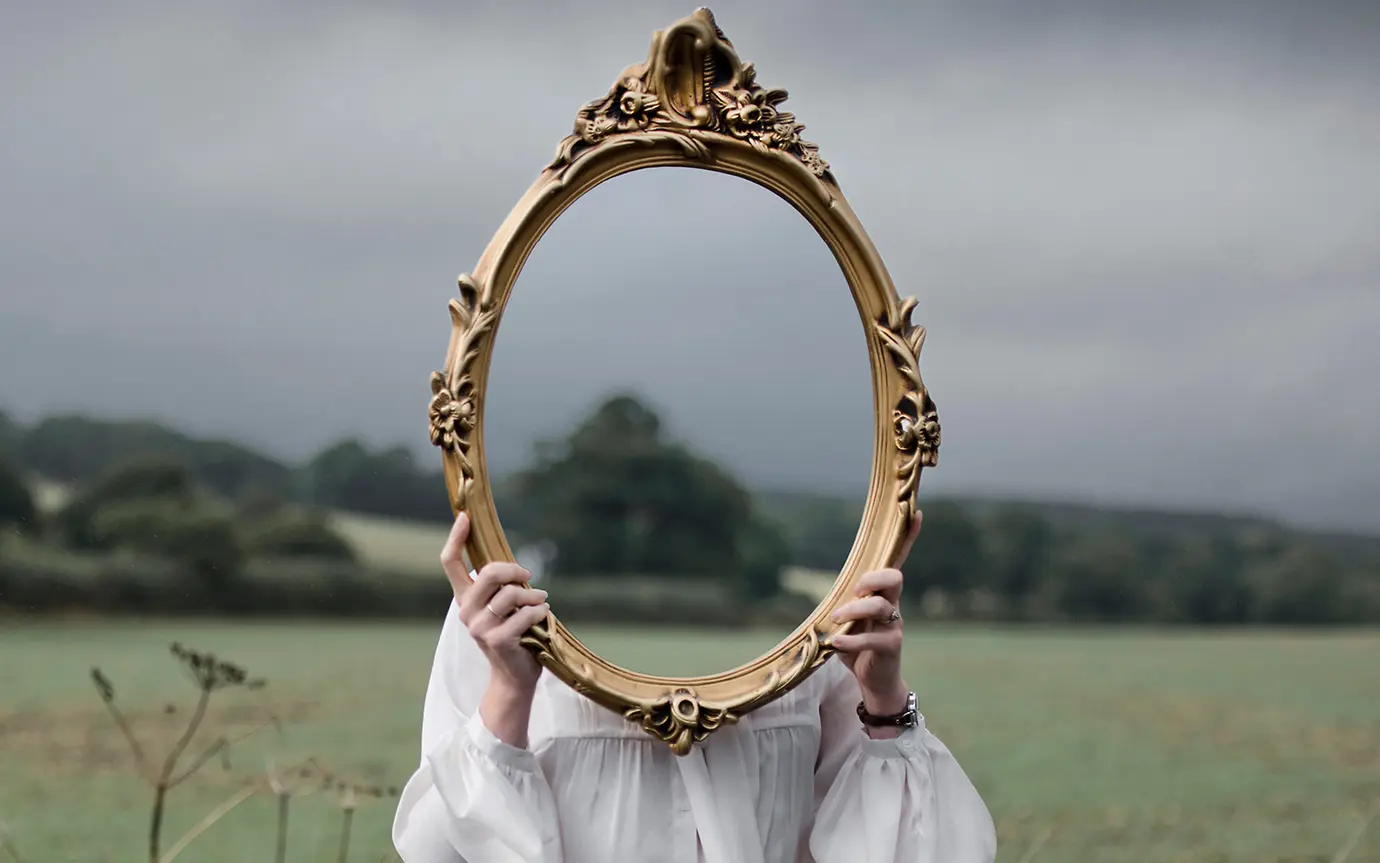
We may think of portraits as artworks that focus on capturing the physiognomic likeness of a sitter. Think again. Today’s artists are using everything from objects and smells to AI-generated images based on human DNA to reflect the presence and spirit of their subjects.
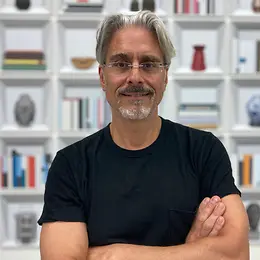
My dinner had ended, and as the guests departed, an artist friend asked me a strange question. Could he paint my shelves - not with a coat of eggshell, but by turning them into an artwork? White cubes housing everything from the wooden Madonna I picked up in a Mexican market to the teddy bears my grandmother knitted, my shelves are now a painting. It's titled Sarah No. 1, and it is essentially a portrait of me.
So what is a portrait? Does it have to be the traditional head and shoulders framed by a pair of classical columns, perhaps with a bucolic landscape in the distance? And does it rely on creating a physiognomic likeness of the sitter?
Not necessarily. In fact, whether they are old master paintings or contemporary artworks, portraits can capture a person's essence in many ways.
For New York-based Richard Pasquarelli, who painted Sarah No. 1, our personalities are reflected in the things with which we surround ourselves. "I'm not just painting people's possessions. I'm painting portraits of their minds", says Pasquarelli, who in "Collection", a 2019-22 series, created portraits of three women affected by hoarding disorder through the stuff in their homes.
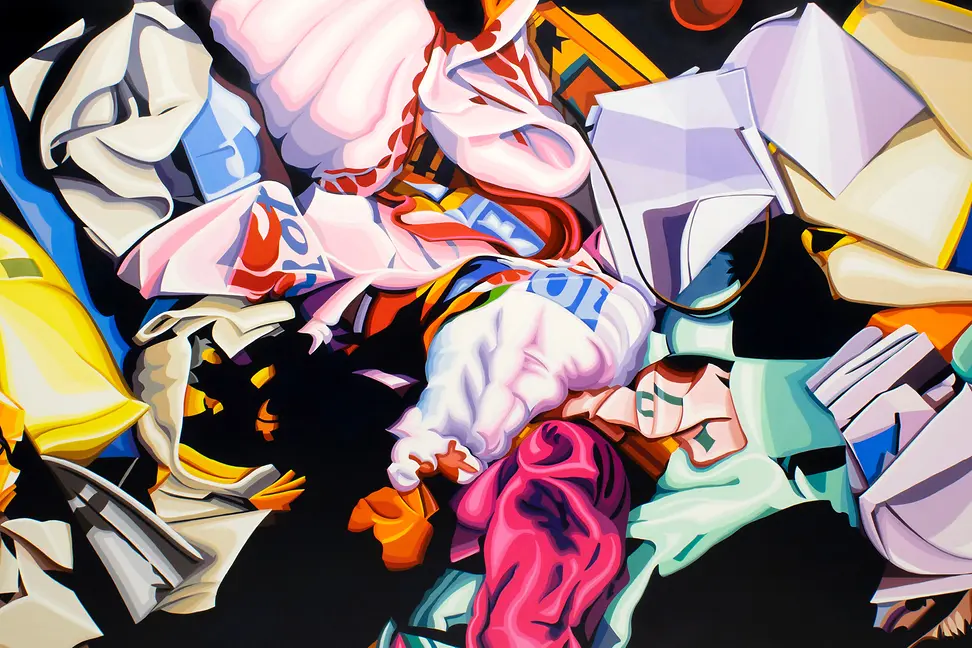
Pasquarelli is not alone in seeing the power of objects in portraiture. Over the centuries, objects have been used to tell us about the people depicted. Clothing, jewellery or furniture could indicate the sitter's wealth and status. Certain objects, known as attributes, became symbols telling viewers many things about the people on the canvas. In medieval art, for instance, lilies indicated chastity.
In "The Ambassadors" by Hans Holbein the Younger, objects speak volumes. Painted in 1533, this double portrait draws the eye towards a collection of books, astronomical instruments, a lute and a set of flutes - objects that reflect the political and religious tensions that would have shaped the lives of the two men depicted.
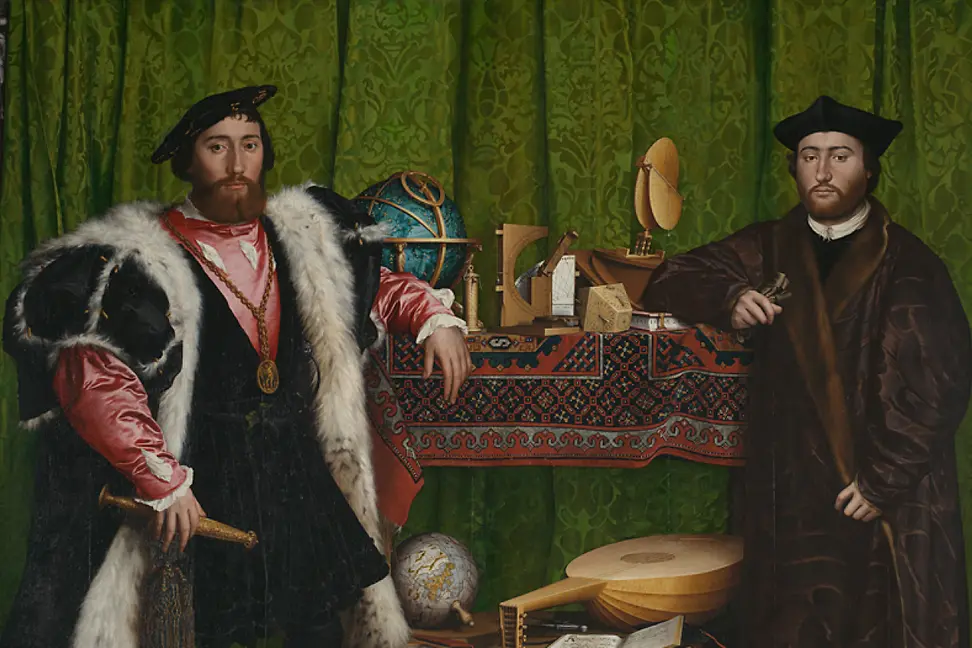
The lute's broken string points to discord, for example. And some say the choice of hymns on the open hymnal express optimism for religious reconciliation (it ultimately failed to materialise). "We can tell the story of these people. And the attributes are equally important as the faces", says Joanna Woodall, whose book, "Portraiture: Facing the Subject", is considered a seminal work on the topic.
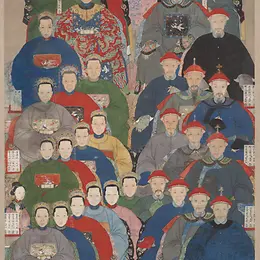
Woodall, an art historian at the Courtauld Institute of Art, says objects have often stood in for physiognomic likeness in portraits. She cites coats of arms, heraldic badges and garments. "In the past people's clothing was almost as important as their faces", she says.
Objects play this role in Chinese ancestor portraits, which families commissioned as part of their duty to care for the spirits of departed relatives. "These portraits were meant to keep the bridge open between the deceased and the living", says Marco Almeida, head of Chinese Ceramics and Works of Art at Christie's Asia Pacific. "For outsiders, we only have subtle clues as to who the sitter was based on their clothing and jewellery, which would give away their status within the family and society."

In the remarkable works of sixteenth-century Italian painter Giuseppe Arcimboldo, objects and faces are integral, with human heads constructed out of everything from animals and keys to fruits and books.
One of the most extraordinary, "Terra", is in the Princely Collections, the artworks of the Princely House of Liechtenstein. Here, Arcimboldo uses animals to construct a face, seen in profile: A hare for the nose, a cheetah for the chin, an elephant's head for the ears and cheeks. And a cow connects the shoulder (a lion's head) to the chest (a ram's fleece).
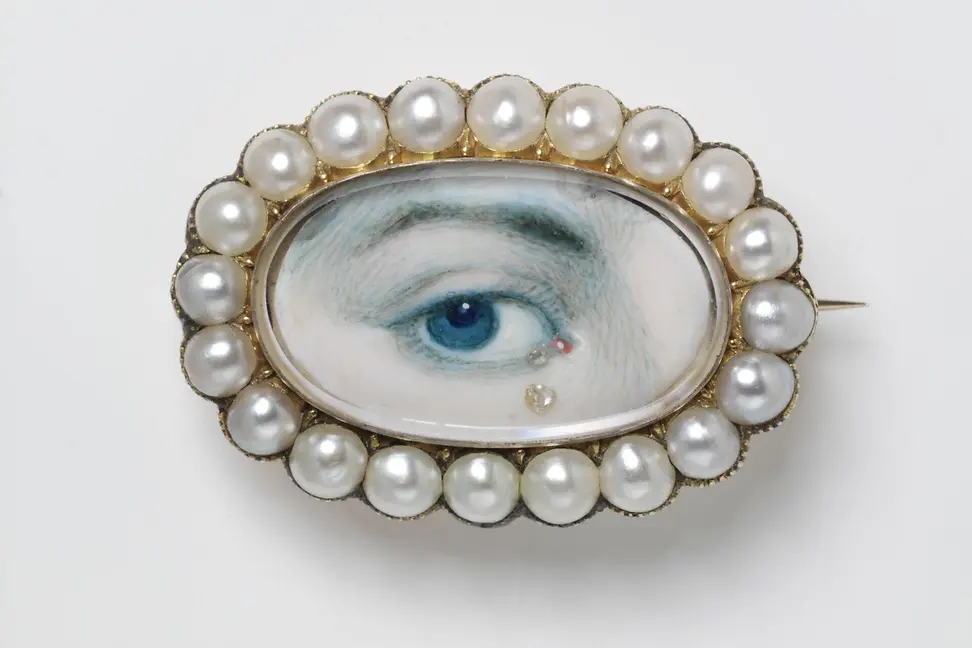
Fast forward to the eighteenth century, and an equally unusual form of portraiture became popular: the eye miniature. Set into brooches and lockets and exchanged between lovers, these tiny artworks depicted a single, disembodied eye. If eyes are the window to the soul, these miniatures must surely count among some of the most intimate of portraits.
For Sissel Tolaas, a Norwegian working at the intersection of science and art, smell is a critical part of what makes us who we are. Too often masked by artificial scents, she says a person's smell is as unique as their fingerprints. Smell molecules generated by emotions are also highly individual, she explains, with the acidity in tears of happiness different from that of tears of sadness, for instance.
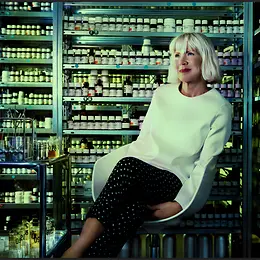
This makes smell a potent medium for portraiture. In a series called "Fear", for example, Tolaas captures the body odours of 21 men with phobias, who agreed to place a small device under their armpit whenever they felt a fear attack coming on.
Tolaas embedded their molecules collected in smell-neutral organic lacquer that only released their odour when touched. Visitors to the installation could touch different sections of the walls to experience the men's smells. "I take scratch-and-sniff to the next level", she says. "And the longevity of the technology is endless. These portraits will sit in those walls until the end of time."
The genetic material found in our cells is also of growing interest as a form of portraiture. For American-Canadian bio-artist Heather Dewey-Hagborg, it started in 2013 with a series called "Stranger Visions", a collection of life-size 3D printed colour portraits based on DNA extracted from the strands of hair, chewing gum and cigarette butts she collected from public spaces in New York City.
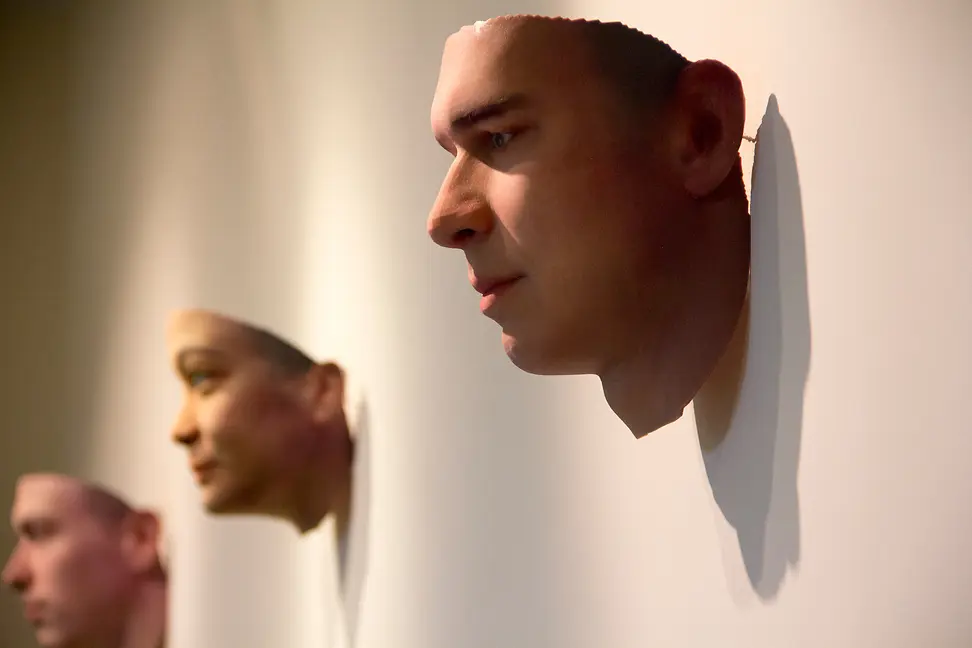
Genomic analysis provided details of what the individuals might look like - sex, eye colour, complexion, ethnicity - and AI-driven face generation technology filled in the rest. Dewey-Hagborg wrote randomness into the algorithm to prevent the faces looking the same. "It was about creating a speculative portrayal", she explains.
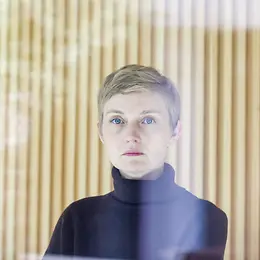
She continues to explore this blend of science and serendipity in DNA portraits of everyone from whistleblower Chelsea Manning to late scientist James Watson. "That's the space I like to work in", she says. "The space between scientific research and fiction."
Ultimately, the balance of fact and fiction governs all portraiture. Even when working to create a likeness, a portrait painter makes multiple creative decisions along the way.
And while it's said the camera cannot lie, portrait photographers make choices on everything from lighting and mood to camera angle and setting. So, if portrait artists have a single task - to capture a person's essence - in executing that task, the possibilities are endless.