

在此处更改您的语言和 LGT 位置。
私人客户的数字平台
登入 LGT 智能银行
金融中介机构的数字平台
登入 LGT 智能银行 Pro
常见问题解答 (FAQ)
LGT 智能银行帮助
常见问题解答 (FAQ)
LGT 智能银行专业版帮助
Whether you’re just beginning to invest or looking to deepen your knowledge of markets, a small shelf of the right books can take you surprisingly far. The following four classics do more than explain how financial markets work. They teach discipline, sharpen judgement and offer insights into how investors think and behave - all of which are essential if you want to invest well.

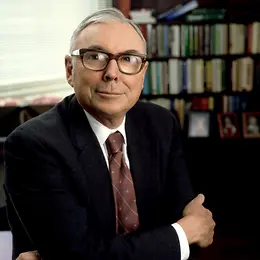
Charlie Munger's children once joked that he was "a book with a couple of legs sticking out." His long-time partner at Berkshire Hathaway, Warren Buffett, belonged to the same tribe. As Bill Gates recalls, Buffett once described his routine with characteristic understatement, saying: "I just sit in my office and read all day." For many of the world's most successful investors, reading is not a pastime - it's part of the job.
Gates, Cathie Wood and Abigail Johnson are also known to be voracious readers. But where should the rest of us begin if we want to think a little more like the best in the business?
Here are four classics you can rely on, especially in the age of social media and ChatGPT.
First published in 1926, publisher George S. Clason's enduring bestseller uses parables set in ancient Babylon to teach the fundamentals of personal finance. It is a stylised Babylon - more stage set than history lesson, and none the worse for it. The point is not archaeological precision, but clarity.

This Babylon provides the perfect backdrop for figures such as Arkad, the richest and wisest man in the city, the money-lender Mathon and the camel trader Dabasir. Each, in his own way, rises from hardship to prosperity and passes on his hard-won lessons along the way. As Clason puts it at the start of the book: "Money is governed today by the same laws which controlled it when prosperous men thronged the streets of Babylon, six thousand years ago."
The principles Arkad teaches still feel remarkably current. Save 10 % of everything you earn and invest it. Do not abandon the rule because of debts, taxes or other obligations. Only then will your gold, as Clason puts it, "bring thee more gold", describing the power of compounding.
"Pay yourself first," runs through the book almost like a mantra. Debt reduction and wealth accumulation, Clason argues, need not be mutually exclusive. His formula is straightforward: set aside 10 % for investment, devote 20 % to repaying debt and live on the remaining 70 %.
And, as if anticipating today's concerns about longevity and financial security, Clason urges readers to prepare early for old age and to ensure their families are protected.
One person who appears to have taken Clason's advice to heart is Robert Kiyosaki. After serving as a helicopter pilot in the Vietnam War, he founded a company that sold what he later described as the first nylon-and-velcro surfer wallets. The business eventually went bankrupt.
In 1997, Kiyosaki took a personal finance manuscript to a number of publishers. They all turned it down. So he self-published "Rich Dad Poor Dad", which went on to become a "New York Times" bestseller and has since sold over 40 million copies worldwide. It is often described as the best-selling personal finance book of all time.

The book is structured around two fathers. Kiyosaki's biological father, the "poor dad", was an educator who held a senior position in Hawaii's education system. Yet no matter how secure his job or how much he earned, he always seemed to be chasing his pay cheque, perpetually trapped, in Kiyosaki's telling, in the rat race.
The father of his childhood friend, the "rich dad", was an entrepreneur with little formal schooling who had devoted himself to understanding how to build assets that generate income. As Kiyosaki puts it: "The poor and the middle class work for money. The rich have money work for them."
More specifically, he argues that people should build income-producing assets - whether through business ownership, equities, bonds or property - while keeping liabilities to a minimum. He includes owner-occupied housing in the latter category, at least where it ties up large sums that could be invested more productively elsewhere.
This is where some of the book's limitations emerge. Parts of the logic are rooted firmly in the American tax system and do not always travel well.
Still, Kiyosaki's central argument is relevant: relying solely on a salary and a pension often leaves people more vulnerable than they realise. Financial literacy, he argues, is a life skill that everyone should acquire.
The hardest part of investing is rarely the theory. It is managing ourselves. In "The Psychology of Investing", John R. Nofsinger, the William H. Seward Endowed Chair in International Finance at the University of Alaska Anchorage and one of the world's leading authorities on behavioural finance, argues that the greatest trap for investors lies not in the market, but in themselves. The chief culprit is overconfidence: the tendency to overrate our own judgement. For private investors in particular, it is one of the costliest mistakes of all.

As Nofsinger demonstrates, our appetite for risk is shaped far more than we realise by past gains and losses. We anchor on reference points such as the price at which we bought a stock, for instance, rather than assessing each investment on its current merits.
The consequences can be expensive. We sell rising stocks too early because we are satisfied with the gain. And we cling to hopeless ones because realising a loss feels worse than carrying it on paper. More paradoxically still, many investors return to buy the very stocks that hurt them before, as though the market owes them vindication.
Modern portfolio theory tells investors to diversify broadly and seek the best possible return for a given level of risk. In practice, however, people rarely think in terms of the portfolio as a whole. They think in fragments: this holding for retirement, that one for a house purchase, another simply because it happens to be going up.
Nofsinger calls this "mental accounting" - celebrating gains in a favourite stock while barely registering losses elsewhere, treating a windfall differently from salary. But that is irrational. Money is money, regardless of where it comes from.
Even a casual barbecue can be hazardous to your portfolio. The urge to join the conversation about the latest AI darling or market sensation tempts many people into buying fashionable themes. By the time everyone is talking about them, however, much of the upside has usually gone.
"Seeking Wisdom: From Darwin to Munger" is one of those perennial insider favourites that has circulated on Wall Street for many years. Its credentials are formidable: Charlie Munger read and reviewed the manuscript, while Warren Buffett encouraged Bevelin to write the book and later praised the project.
The book is all the more intriguing because Bevelin himself remains relatively elusive. The Swedish author has never sought the limelight, and his motive for writing the book was simple: to learn how to think more clearly.
To that end, he draws on a remarkable range of thinkers, from the Stoic Epictetus to Michel de Montaigne, Blaise Pascal and Paul Feyerabend. One of the book's most memorable lines comes from Pascal: "All of humanity's problems stem from man's inability to sit quietly in a room alone." For investors, the implication is pointed enough. Much of the damage is done not by ignorance but by impatience.
Bevelin found inspiration in Munger, who advocates a "latticework of mental models" - in other words, thinking across disciplines rather than through a single lens. Financial indicators matter, but so do psychology, biology and physics. Better decisions, Bevelin argues, tend to come from combining these perspectives rather than relying on any one of them in isolation.
Darwin is a central reference point throughout the book. Bevelin is particularly struck by the extent to which human behaviour remains shaped by instincts that once served us well but now often misfire in modern markets. The topics he covers range well beyond investing, yet Bevelin keeps circling back to the same idea: our environment may have changed beyond recognition, but human nature has not.
The lesson, then, is not that we should strive to be brilliant, but that we should try to make fewer mistakes. That means resisting familiar traps such as greed, fear, overconfidence and herd instinct. And while reading alone will not produce investment returns, it may help investors think more clearly about the forces that so often lead them astray.