
Attribution research calculates the extent to which human-induced climate change has made an extreme event - such as a heatwave or heavy rainfall - more likely or more severe. These findings can help with disaster prevention and are increasingly being used as evidence in court, where they are raising important questions such as who is liable for climate change and who should pay for its consequences.
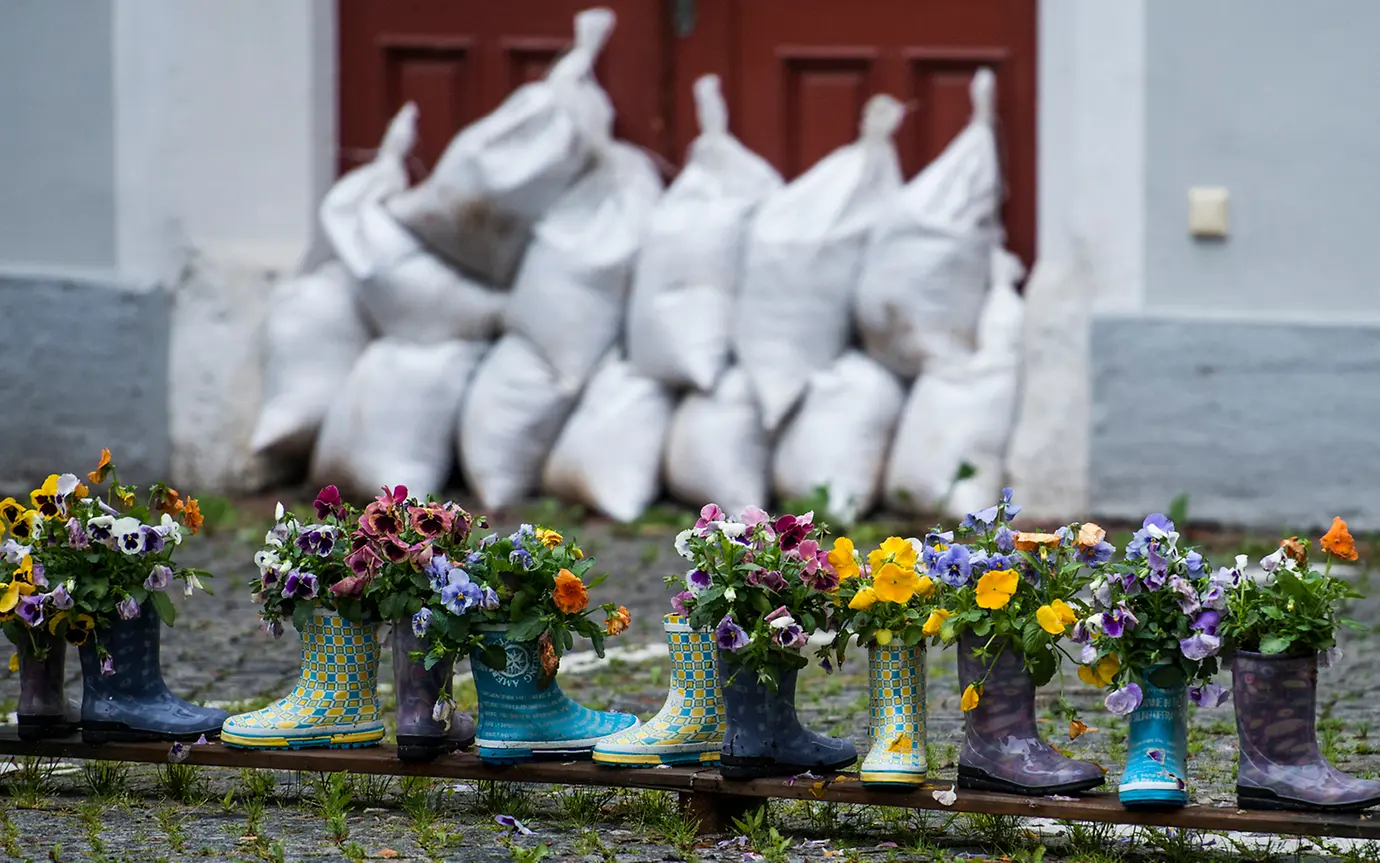
The small town of Drewitz in Saxony-Anhalt, Germany, made headlines on 27 June 2026, when temperatures reached 41.8 °C, the highest ever recorded in Germany. The record raised a familiar question: how much of this extreme heat was due to natural weather patterns and how much was caused by human-induced climate change?
Scientists can now estimate with increasing precision how much human-induced climate change contributes to extreme weather events. This field is known as attribution research - the science of determining how much specific factors contribute to an event.
Friederike Otto has has played a key role in advancing climate attribution research. The German researcher, who studied physics and has a PhD in philosophy, works at Imperial College London. Her book Angry Weather is a bestseller. Anyone who writes to her is sent an automated reply explaining that she receives more emails than she can reliably respond to; journalists are directed to her team.
One of those responding to media inquiries is Theodore Keeping, a climate researcher on Otto's team who works with the World Weather Attribution (WWA) network. "Ultimately, climate is defined by the range of possible weather events and how likely they are to occur. Climate change shifts these probabilities," he explains. "When it comes to extreme heat, these probabilities are changing rapidly. With every fraction of a degree of warming, the likelihood increases exponentially."
While climate change may be the subject of political debate, the science behind the greenhouse effect is not - it comes down to the properties of a molecule made up of just three atoms. In a podcast for the German weekly newspaper "Die Zeit", Otto explained how it works: a CO2 molecule consists of one carbon atom bonded to two oxygen atoms. It absorbs thermal radiation at certain wavelengths, causing the molecule to vibrate. As CO2 concentrations in the atmosphere increase, less heat escapes into space. The Earth absorbs more energy than it releases and becomes warmer. "We know this from very basic chemistry and physics," she says. As long as we continue to burn coal, oil and gas, we will continue to release more CO2 into the atmosphere.
This explains why the Earth is getting warmer. The harder question is how much climate change contributed to a particular event - a single heatwave, for example. To answer it, researchers use climate models to recreate the world as it would be without human-induced warming. Drawing on these models and on historical data, they compare how frequently the event would occur in each world, and how severe it would be.
The results come as probabilities, which are easy to misread. A "once-in-a-century event" occurs on average once every hundred years, which means it has a 1 % chance of happening in any given year. What matters is which of the two worlds the calculation is based on: a heatwave that would be a once-in-a-century event without climate change can occur every few years in today's climate. Such figures tell us how often an event can be expected, but not when it will happen. Someone who has just lived through one could, with a bit of bad luck, face another the following year.
What is rare in one place may be common elsewhere in the world. "I find it astonishing how many once-in-a-millennium events I come across every year," says Keeping. He led a WWA study of the June 2026 heatwave in Western Europe, carried out while the heatwave was still under way. The researchers analysed weather data going back to 1950 and used weather forecasts for the final days of the heatwave. The study focused on the three hottest days and nights. This time, the comparison was not with a world without climate change, but with the climate of 2003, the year of the great European heatwave. Since then, the Earth has warmed by around 0.6 °C on global average, and by about 1.4 °C compared with pre-industrial times. The result: such high temperatures were around ten times more likely during the day than in 2003, and more than a hundred times more likely at night.
These calculations are most reliable for heat, cold and large-scale heavy rain. For thunderstorms and tornadoes, however, there is often too little data, and models are less effective at capturing localised events of this type.
A case from Nepal shows where the method reaches its limits. On 26 August 2026, rock and glacial ice broke away from the Langtang Lirung mountain, sending a torrent of water and debris rushing down the valley. At least 1455 people died, and more than 5000 were still missing at the beginning of October. A conventional attribution study was not possible here: there was no single weather event that could be compared across the two worlds, but rather a chain of processes within the rock. The WWA therefore brought together what is known about the causes. Global warming probably weakened the slope, for example through thawing ice in cracks in the rock and the shrinking glacier. However, the mountain had already been weakened by the major earthquake of 2015. Climate change therefore acted as an aggravating factor rather than the sole cause.
Attribution research is also becoming increasingly relevant in legal disputes. Courts are being asked to determine what governments must do to tackle climate change and when companies can be held liable for its consequences.
Rikki Held grew up on a ranch in Montana, in the north-western United States. Over the years, her family began to feel the effects of a changing climate. As less snow accumulated over the winter, less water was available for grazing land. Grass became scarce, and the cattle lost weight, reducing their value. Together with 15 other young plaintiffs, she took the state to court with the support of a non-profit legal organisation.
They were not seeking compensation. Instead, they wanted to defend their constitutional right to a clean and healthful environment. A 2011 law had prohibited authorities from taking the impacts of greenhouse gas emissions into account in environmental assessments. The plaintiffs won their case in August 2023. Montana's highest court upheld the ruling in December 2024: the right to a healthy environment includes a stable climate system. The ban could no longer be enforced.
The ruling did not end the legal battle, however. In 2025, Montana's legislature passed new laws that once again make it harder for authorities to take climate impacts into account when approving projects. In January 2026, the young plaintiffs therefore returned to court, alleging that the state was undermining the rights they had won.
Another case involved Saúl Luciano Lliuya, a Peruvian farmer who sought compensation from the German energy company RWE to help protect his property against the risk of flooding from a glacial lake. In May 2025, the higher regional court of Hamm dismissed his claim because a sufficient flood risk had not been proven. RWE did not have to pay.
The judges nevertheless acknowledged that parties that contribute to climate change could, in principle, be required to help cover the cost of protective measures, even if they are far from the affected area. Better data could support future claims, provided they prove the specific risk and establish the grounds for legal action.
Thinking about climate change also means thinking about the future: how do we want to live, what can we afford and what will we leave behind for our children? For Ursula Finsterwald, Head of Sustainability Management at LGT Private Banking, these are questions that concern future generations. She points to the Princely Family of Liechtenstein, which owns LGT and has passed its wealth down from one generation to the next for centuries. "The next generation should have at least the same opportunities as we do," she says.
According to Finsterwald, this long-term perspective also shapes how LGT invests its own assets. The bank takes climate risks into account and aims to decarbonise its portfolio - in other words, to gradually reduce the CO2 emissions associated with its investments. "We offer sustainable investment strategies for clients who want to invest accordingly."
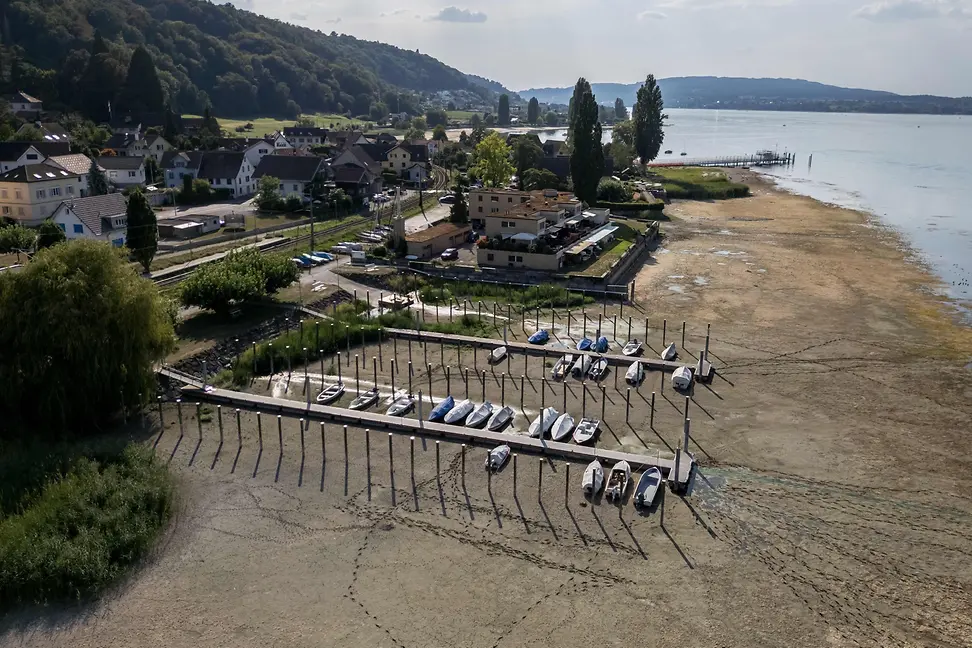
Beyond the courtroom, attribution research can also help society prepare for future risks. Keeping is particularly interested in its practical applications, "especially in water policy," he says. A better understanding of how often severe droughts might occur could help a farmer plan ahead, a canal operator manage water levels and a company identify whether the river it depends on will still be there in the future.
There is something reassuring about assuming that the future will resemble the past. But as the climate changes, the weather patterns familiar to our parents and grandparents are becoming less reliable guides for the future - especially when planning decades ahead. What was once a once-in-a-lifetime event may now happen twice in a decade.