
- Home
-
Private banking
-
LGT career

Japan is finally emerging from decades of deflation - and investors are taking notice. Stefan Hofer, Chief Investment Strategist for LGT Private Banking in Asia Pacific, explains why the shift matters, what policymakers will do next, and why Japan may offer a preview of what lies ahead for other advanced economies.

Stefan Hofer: This question matters because Japan spent almost three decades trapped in deflation - a period that shaped everything from consumer behaviour to corporate strategy. Delivering 2 % inflation was a central objective of Shinzo Abe's Abenomics reforms from 2012 onwards.
Today, we believe that Japan has convincingly escaped from that deflationary regime. Whether inflation will stabilise sustainably at 2 % is still uncertain. The key shift is psychological as much as economic: expectations are changing. And once that mindset adjusts, it tends to be persistent.
Japan is the world's fourth-largest economy and the only Asian member of the G7. Once the leading global economic power, it spent decades grappling with stagnation, characterized by deflation and a rapidly ageing population.

Stefan Hofer is Chief Investment Strategist for LGT Private Banking in Asia Pacific. He is responsible for communicating the global economic and market outlook, and helps define high-level investment strategies and themes for regional clients' portfolios. He has over 25 years of investment and wealth management experience.
Now that narrative is shifting. As policymakers begin to unwind years of extraordinary monetary support and corporate reforms gather pace, Japan is emerging from its long malaise. This offers a rare, real-time case study of how a mature economy resets after prolonged stagnation.
Japan has historically seen frequent changes in leadership; there have been nine prime ministers in the past two decades. But this time, the situation is different. Sanae Takaichi commands a strong majority in the lower house, giving the Liberal Democratic Party significant legislative power.
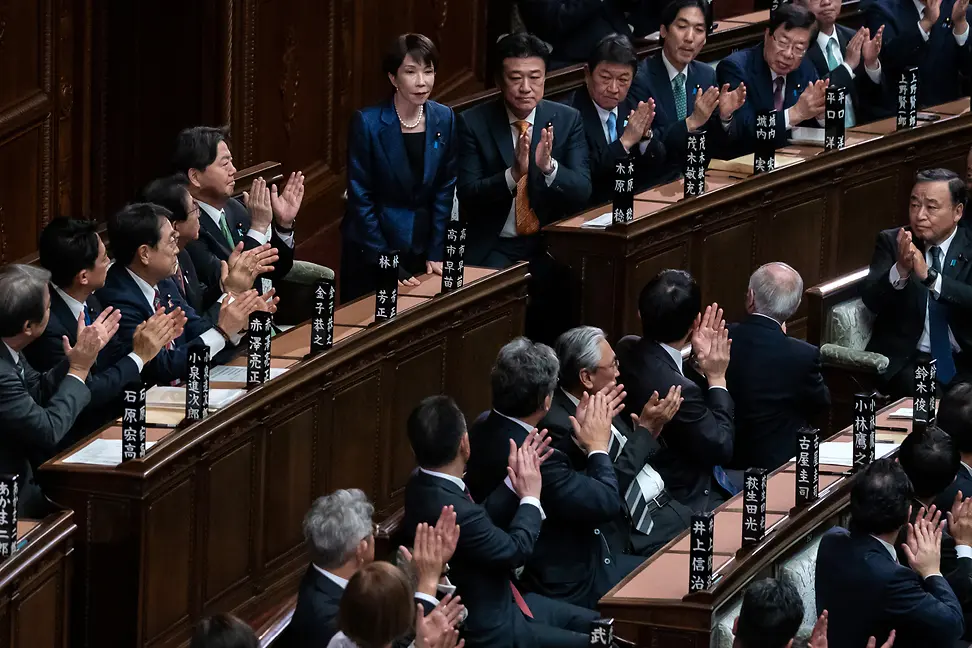
That said, her fiscal room to maneuver is not unlimited. Rising Japanese government bond yields are already signaling market sensitivity to additional spending. At the same time, having just won a snap election, there will be pressure to support households. The result is likely to be a balancing act: targeted fiscal support, but within the constraints imposed by the bond market.
The Bank of Japan (BoJ) operates in a more coordinated policy environment than, for example, the Federal Reserve or the European Central Bank. While it is formally independent, there is close alignment with government priorities.
LGT's experts analyze global economic and market trends on an ongoing basis. Our publications on international financial markets, sectors and companies help you make informed investment decisions.
Recent signals point to a cautious approach. Inflation dynamics would justify further normalising interest rates, but policymakers are wary of raising rates too quickly and jeopardising the recovery. The most likely path is gradualism: rates can rise further, but in a measured way. Communication will be key - guiding markets without triggering volatility.
Not at this stage. It is important to take rising bond yields and inflation seriously, but Japan's debt dynamics are often misunderstood. Under a reasonable set of assumptions: moderate growth, some inflation, and contained borrowing costs, the debt-to-GDP ratio could stabilise or even decline over time. Also, Japan has a vast amount of government-held financial assets. Taking this into account, the debt ratio falls from 230 % of GDP to 130 %. For now, concerns about debt sustainability appear premature. The structure of Japan's debt and its domestic investor base continue to provide a degree of stability.
First, wage growth. Sustained inflation in Japan depends on wages rising meaningfully and recurringly - this is the missing piece that would anchor the shift away from deflation. Second, monetary policy normalisation. How quickly the Bank of Japan exits its ultra-loose monetary policy will shape currency dynamics, bond markets and global liquidity. Third, corporate behaviour. Ongoing governance reforms are encouraging companies to improve capital efficiency and shareholder returns. If that continues, it could be a structural tailwind for Japanese equities.
Taken together, these factors suggest that Japan is no longer just a cyclical story, but a structural one with a fundamentally different outlook. And that is what makes it particularly interesting for long-term investors.