
- Home
-
Private banking
-
Market view and Insights

Viewers can look forward to Succession's "delightful vipers' nest of Shakespearean betrayal", but can entrepreneurial families learn from it?

“You bust in here, guns in hand. And now you find they’ve turned to f*cking sausages,” thunders media mogul Logan Roy. His avaricious offspring have just attempted a hostile takeover of Waystar Royco, the fictional conglomerate he owns in the HBO show Succession. As usual he has trumped their efforts in the final episode of the season. This time by conspiring with their mother. “We’ve just walked in on Mom and Dad f*cking us,” sighs Logan’s daughter Shiv.
Watching the credits roll on another series of Succession is a dismaying thing. It will be months until we learn the outcome of this concluding tableau. Fortunately for Roy-watchers, reassuring news arrived last week from the show’s creator, Jesse Armstrong. Talking to reporters at the Bafta awards, he teased that the scripts for season four are almost finished.

There are plenty of reasons this show has won such critical acclaim. Each episode shifts smartly up through the narrative gears, propelled by a script comprising of tack-tongued slights and absurd execuspeak. The plot is a delightful vipers’ nest of Shakespearean betrayal. The soundtrack is a visceral composition that teleports viewers to a world of stark hotel rooms and besuited boardroom savagery. It’s all excellent.
A clear lesson in boardroom etiquette for corporate princes on the make?
The premise that drives the plot is simple. A patriarch nearing retirement, and scheming heirs trying to finagle their way to the top job. The parallels with real-world business dynasties are clear. None more so than with News Corp owner Rupert Murdoch’s inner circle. Watching the action unfold against the backdrop of private jet cabins, Davos-style jamborees and palatial New York apartments you start to wonder: has James Murdoch ever accidentally sent a compromising photo to his father across a packed boardroom table?
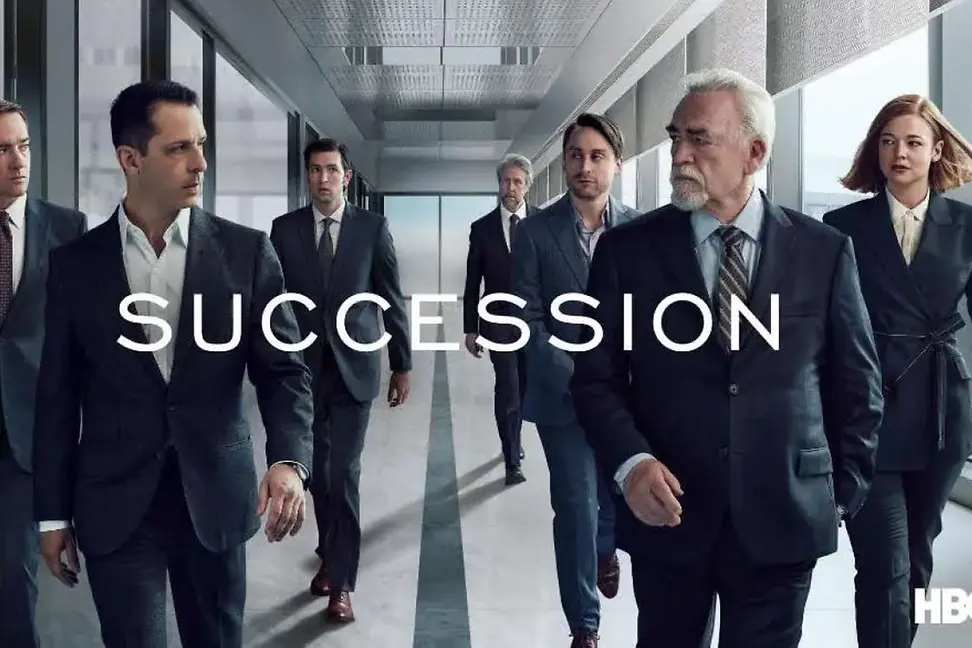
But while this moment contains a clear lesson in boardroom etiquette for corporate princes on the make, I think that the show’s twenty-nine episodes hold further pointers for families considering a transfer of power.
Consultants who help companies ease in the next generation are unanimous in this view: initiating your offspring into the ways of the company is best done early. This means that those next in line will be better equipped if they’ve had a career long experience in absorbing the minutiae of what the company does. By the same token, aging founders clinging to the tiller should look at Logan’s approach and do the opposite. So cruel and inconsistent was his tutelage, that – so far – none of his grasping children are fit to take the reins at Waystar Royco.

Succession planning requires a network of senior mentors to support incoming bosses. Consider the role of characters like Frank Vernon, long-time confidant of Logan and vice-chairman of the company. Or Gerri Kellman, who assumes role of interim CEO in season three. These snivelling lackeys are treated contemptuously by the Roy family – Frank is fired by Logan in the first episode – but in real life, figures like them would be pivotal to coherent governance.
Crucially, they would provide some checks and balances in the face of an ambitious new broom arriving in the corner office. In the show, the Waystar Royco top brass appear as the least empowered, but the most temperate of the characters. This might not be so far from the truth in real family businesses.
Succession plans rarely materialise as first intended. Some take decades of upskilling and personal development before a young gun is ready to replace a senior member of a family firm. During this journey, candidates’ priorities, responsibilities and interests change.
An heir to a big pharma company might have their eye on the top job months after graduating from Harvard Business School, but will their ambition have changed in a decade or so’s time? It’s likely. The long timeframes associated with succession planning mean adaptability and flexibility are crucial to getting it to work.
In der Serie sind die Roys durchaus flexibel. Logan scheint von einem Favoriten zum anderen zu wechseln, wobei er andeutet, dass jeder von ihnen genug Ansehen erworben haben könnte, um sich des Unternehmens würdig zu erweisen. Es gibt schnelle Rollenwechsel, bei denen Mitglieder des inneren Kreises in Jobs katapultiert werden, mit denen sie nicht gerechnet haben. Aber das liegt vor allem an Logan Roys undurchsichtiger Strategie. Wenn es darum geht, seine Söhne und seine Tochter zu führen, wendet er eine Philosophie wie aus dem Drehbuch eines Diktators an – er tadelt, dann lobt er. Er ist unberechenbar, aber gerissen. Er lässt seine Gegner (vor allem seine Kinder) verwirrt zurück, wenn sie versuchen, seinen nächsten Schritt vorherzusehen.
Am Ende der dritten Staffel zeigt sich, dass Logans Liebe zu seinen Söhnen und seiner Tochter verblasst im Vergleich zu seinem Wunsch, die Firma zu kontrollieren – die ihm mehr als Kind erscheint wie seine eigenen Kinder. Dieser Drang, alle Konkurrenten zu Brei zu schlagen, ist vielleicht der Hauptgrund für die Dysfunktion der Hauptfiguren – und ein wichtiger Treiber für den Erhalt der Spannung auch nach der dritten Staffel der Serie. So gesehen ist "Succession" die beste moderne Geschichte über die korrumpierende Wirkung von Macht und Gier. Doch lange bevor diese beiden Faktoren in der realen Welt die Oberhand bei Familienunternehmen gewinnen, sollten die Familienmitglieder womöglich darüber nachdenken, was sie über das Finanzielle hinaus verbindet und was sie kommenden Generationen hinterlassen wollen.
Header Visual © VINCENT TULLO/NYT/Redux/laif.