- Home
-
Private banking
- Market view
- Insights
-
LGT career

Climate change and extreme weather events are putting pressure on global food production, while the global population is growing. Meanwhile, the temperature increase and soil depletion are reducing crop yields. The good news is that companies in the agriculture sector are innovating to address these challenges.
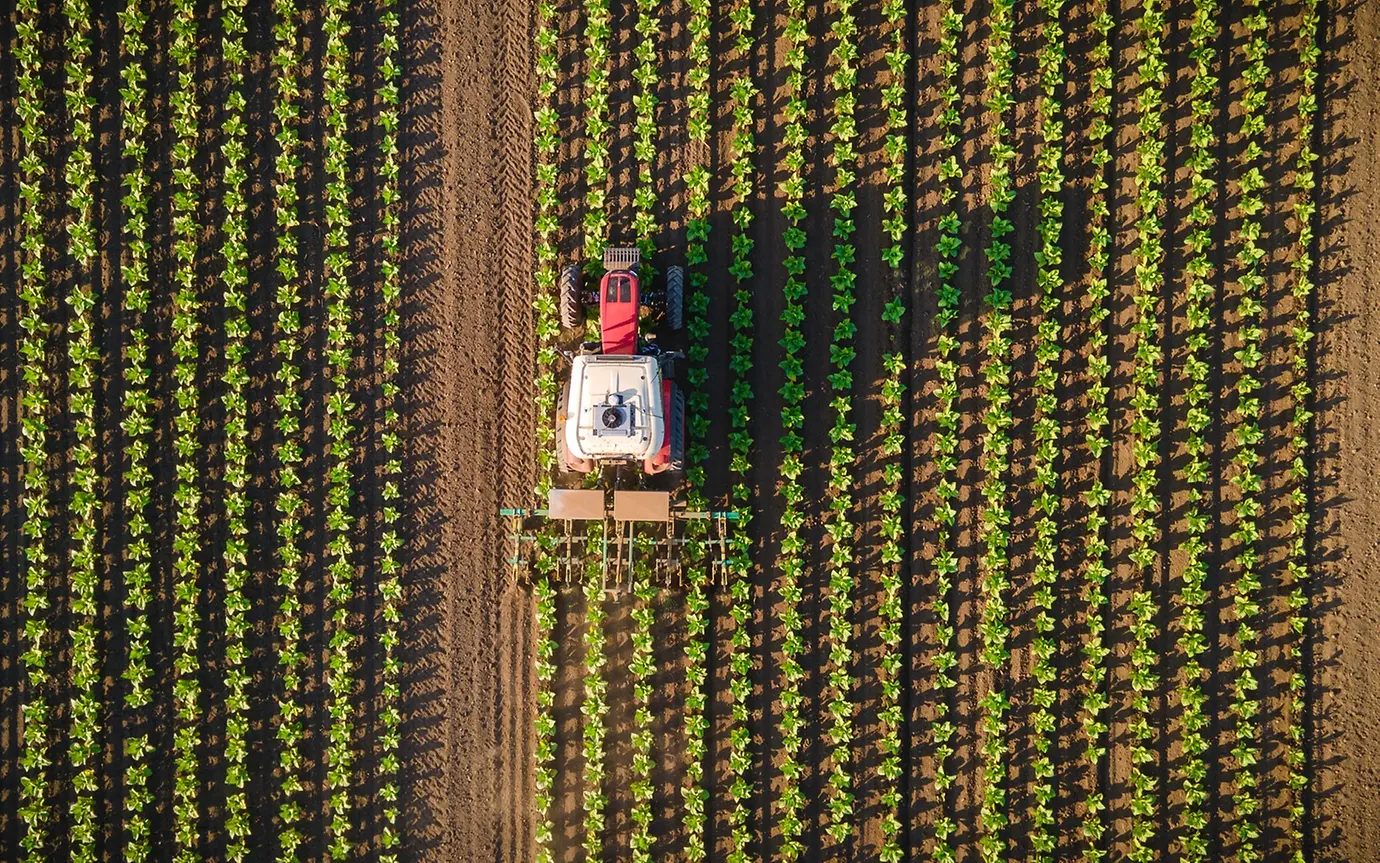
"Food, glorious food" sing the orphans at the beginning of the musical "Oliver!" Alongside water, food is essential to human life, so production must keep pace with demand no matter how the world’s population grows.
Rising global temperatures and more frequent extreme weather events due to climate change, plus the resulting scarcity of water resources and depleted soils, put increasing pressure on global food production and future food security. Furthermore, the growing global population and rising prosperity mean that significantly more food, and sometimes more resource-intensive food, is being produced.
Some 95 % of food production depends directly on land. But according to a report from the Food and Agriculture Organization of the United Nations (FAO), approximately 3.6 million hectares of arable land is lost each year, which is nearly the land area of Switzerland.

Cedric Baur is an equity specialist at LGT with a focus on sustainability, covering topics such as climate change, renewable energy, energy infrastructure, water and circular economy. The focus of his work is on companies in the energy, utilities, industrials and materials sectors.
Deforestation, over-fertilisation, and intensive agriculture are causing further problems, resulting in soils becoming less fertile. Lasting damage ranges from a decline in productivity to complete infertility. In the same report, the UN estimates that restoring just 10 % of human-induced land degradation on existing cropland would provide enough food to feed an additional 154 million people. But given the predicted population growth over the coming decades, this will still be insufficient.
In addition, food production already accounts for around a quarter of global greenhouse gas emissions, so is itself a driver of climate change. Even if emissions from energy production dropped to zero, those from food production alone would likely ensure we exceed the +1.5 °C target set out in the Paris Climate Agreement in 2015.

How can we actively reduce emissions and ensure sustainable agriculture and food supplies? Promoting a balanced, resource-efficient diet; reducing food waste; and improving agricultural practices could be effective. What we eat and how it is pro-duced are crucial for tackling climate change and water scarcity, preserving fertile soils, reducing land loss, and safeguarding sensitive ecosystems.
Nevertheless, it will be essential to adapt to constantly changing conditions. We need to restore soil in a sustainable way and use water more efficiently, as well as adapt seeds, plants, and fertilisation methods to changing conditions. None of this will happen overnight.
Clearly, food production will be increased. But the loss of arable land poses a major problem. Vital for food production, water filtration, and the nutrient cycle, soil is also a non-renewable resource. Once destroyed, it can take up to 1000 years for two to three centimetres of topsoil to form again.
The future of agriculture may depend on what lies beneath our feet.
Healthy soil with high microbial activity can withstand external stresses for longer. A stronger focus on organic farming would reduce the use of synthetic chemical pesticides and readily soluble mineral fertilisers. However, the conflict between organic standards and new breeding methods could intensify in future, as heat- and drought-tolerant varieties rise in importance.
Awareness over the benefits of regenerative agriculture is growing: the term refers to a farmer-led movement aiming to work with nature and respective natural processes to improve soil health, biodiversity, and water quality while maintaining food production and improving resilience to climate change impacts.
Water is essential for agriculture as well. Although access to clean water has increased globally in recent years, population growth and climate change pose challenges for the future. The UN estimates that an individual requires 50 to 100 litres of water a day to meet their basic needs. However, the FAO furhter states that approximately 2000 to 5000 litres of water are needed to produce one person’s daily food requirements.
LGT's experts analyze global economic and market trends on an ongoing basis. Our publications on international financial markets, sectors and companies help you make informed investment decisions.
Irrigation plays a crucial role here, as yields from irrigated fields are 30 % to 100 % higher than those from purely rain-fed areas. But intensive agriculture often leads to significant over-exploitation of water resources, and pollutes it with fertilisers and pesticides. Precision irrigation can reduce overall water consumption, improve plant health, and increase crop yields in the long term.
Two methods of precision irrigation are used most frequently:
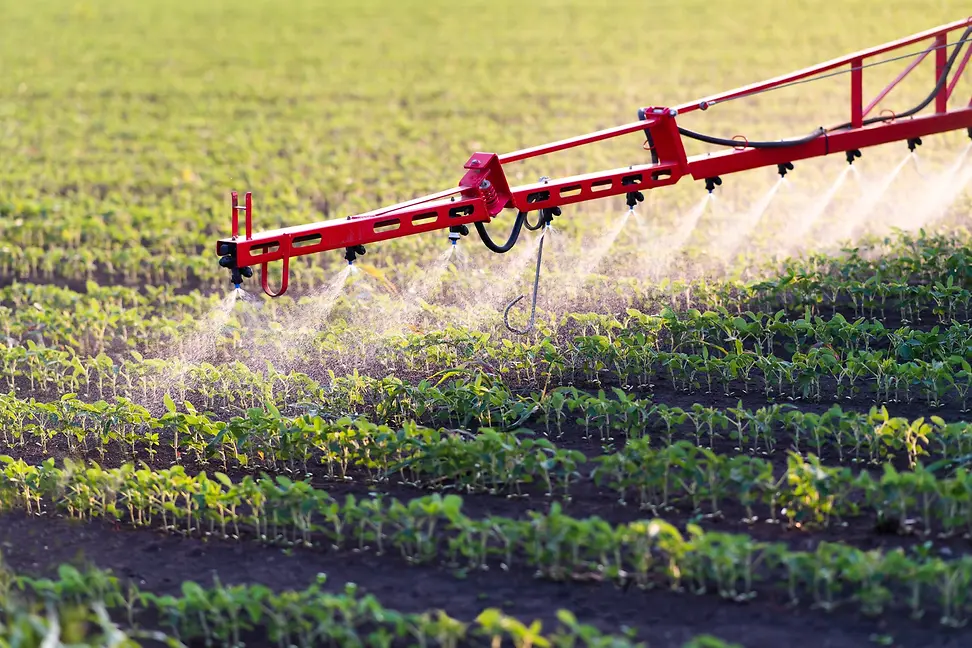
To increase crop yields and secure future food supplies, we also need increased plant resilience to adverse conditions like extreme heat or rainfall. According to the FAO, drought-, heat- and salt-tolerant varieties are crucial for reducing the yield gap.
Breeding plants is a long-term endeavour. On average, it takes up to ten years from initial crossbreeding to market approval of a new variety. Historically this tied up investment capital and created barriers to entry. In 2026, the EU relaxed the laws on new breeding methods, which may involve genetic engineering. This enables targeted interventions and can shorten development times, likely to be particularly significant for varieties that are heat- and drought-tolerant.
Fertilisation is also changing. Fertilisers are essential in the food system, but how much actually reaches the plant? The goal is to use less fertiliser and apply it more precisely. Sensors and satellite data can help determine the nutrient requirements of each subplot, with this information linked directly to the application technology of farm machinery via digital platforms. Similarly, biodegradable fertilisers are likely to become increasingly important for preserving biodiversity and avoiding further strain on groundwater reservoirs.
Companies supplying seeds, plant protection products, irrigation equipment, agricultural technology and water infrastructure may contribute tools relevant to agricultural adaptation. Similarly important are pure-play agricultural companies investing in seeds with specific traits like insect- or herbicide tolerance, or in genetic modification and biofuels.
Manufacturers of irrigation systems and precision technology for agriculture, as well as companies operating in the water management and infrastructure segments, will also be heavily involved in the multi-decade transformation of agriculture.
The challenges ahead for food production are enormous. But so too are the innovation and investment now being devoted to creating effective solutions.