- Home
-
Private banking
-
LGT career
-
Market view and Insights

Does the present give you palpitations? Insights asked three prominent forecasters to draw up scenarios to chart possible paths through a world in turmoil.
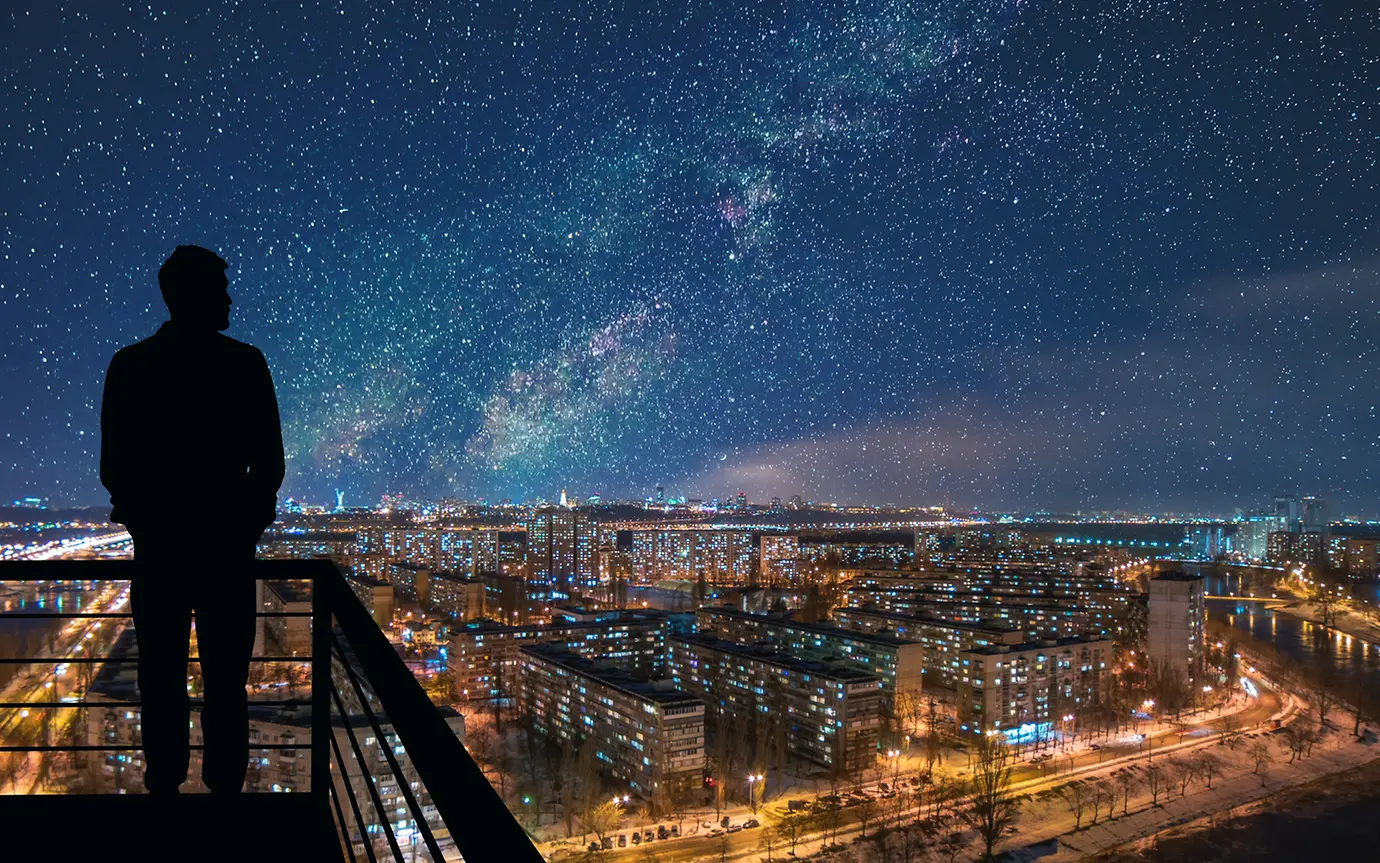
From gazing at the stars, to sifting through entrails, to combing through massive data sets for elusive hints of the future, humans have always tried to divine what’s ahead. But scenario planning as a quasi-scientific discipline is a relatively new phenomenon, which first arose during the Cold War in the shadow of the threat of nuclear weapons
Fast forward to 2025. The established order appears to be coming apart, so scenarios to explore the so-called "cone of uncertainty" have gained new urgency with governments and large companies. How can politicians, business leaders, and ordinary citizens make sense of the new tariff wars, jittery financial markets, political polarization, and alliances torn asunder? Insights asked three veteran practitioners of the forecasting profession to describe weak and strong signals, name the key drivers of events, and lay out possible futures for us, in the same way they develop forecasts for business executives and politicians.
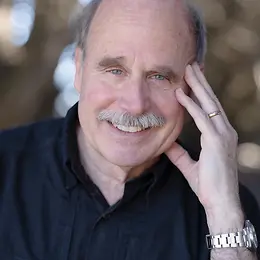
Paul Saffo is a Silicon Valley forecaster who teaches at Stanford University and advises organisations worldwide. Saffo is also a non-resident senior fellow at the Atlantic Council and a fellow of the Royal Swedish Academy of Engineering Sciences.
Saffo doesn't dabble in small-scale scenarios when he's talking to government officials and executives around the world. He wants to bring together details from the periphery of our vision to the centre and connect the dots for a new big picture.

In his view, the world is entering a new "Grotian moment" - named for the legal scholar Hugo Grotius who laid the foundations of the international order in the early 17th century following the disruptions of the Thirty Years' War. What's beginning to take shape, according to Saffo, is a move away from the nation state towards a patchwork of smaller networked states run like for-profit entities.
"Digital technology is the solvent leaching the glue out of our institutions, national and international, financial, cultural, and social. Out of this protean slush that we're in, something new is emerging," Saffo says. He sees the maelstrom churning around Washington as something "purposeful, and a key part of that purpose is to have chaos. Behind the chaos is a plan whose details are all very public, but nobody is seeing them," the veteran forecaster says.
As he sees it, extreme libertarians are pushing to accelerate the decline of traditional nation states. Their aim is to fill the void with zones that are free to set their own rules and attract well-to-do nomads, linked by the internet, virtual currencies, and similar ideologies. "The network state," says Saffo, "will live in cyberspace and it has territorial lily pads in the physical world." He envisions network states emerging around specific themes that their operators define, such as crypto currencies, life extension and immortality, or a specific technological niche. "They are not based on democracy, which is considered inefficient, but on a continuous plebiscite of their members. If members don't like it, they can move on and join another network state."
Behind the chaos is a plan whose details are all very public, but nobody is seeing them.
The big wild card in this scenario, according to Saffo, is China, which has been trying for 200 years to be recognized as a global superpower. "The biggest enemy of the network state crowd is the Chinese government. In this strange, topsy-turvy world, it may be that China is the nation that saves the international order from a complete takeover by gazillionaires."
As farfetched as this scenario might seem, in spring 2025 when Saffo presented a classified version to the Australian War College and another version to a group of several hundred legal scholars in Silicon Valley, he was greeted with stunned silence as well as applause. To him, exploring possible futures should come with some shock value: "You have to beware of conventional scenario thinking and reach down to the deeper driving forces."
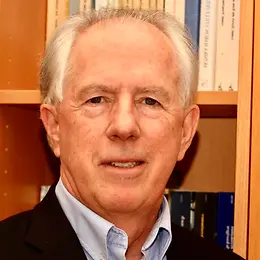
Banning Garrett is a strategic thinker, writer, and keynote speaker with more than four decades of experience in national security, US-China relations, and global trends. He is a consultant to the World Bank and has worked with the United Nations and the US government, including the National Intelligence Council.
"Looking forward six months is a fool’s errand; looking out a few years provides opportunities to foresee alternative futures," says long-time Washington insider Banning Garrett. Trying to sift through the current upheaval, he lays out four scenarios to make sense of where current events might lead, keeping in mind that they are not mutually exclusive.
This scenario is about the potential failure of autocrats around the world who will be unmasked as unable to govern competently, provoking popular backlashes from Hungary and Israel to Turkey and the United States. "These regimes take power but can’t make life better once they wield it. People want government to function effectively, they want a basic social safety net and affordability, and they want a liveable environment and the rule of law. What can’t go on forever, won’t go on forever," Garrett says. While China is also an autocracy that likely has an eventual "sell-by" date, in the near term, the Chinese will seek to take advantage of US missteps.
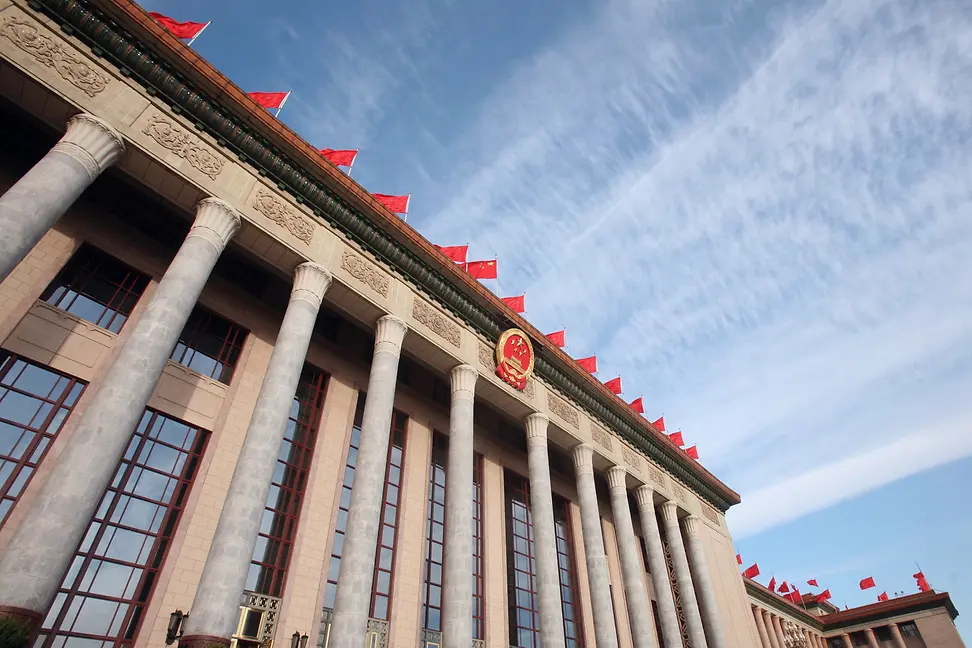
The 19th century Concert of Europe at the Congress of Vienna serves as a blueprint for this scenario. "Trump and Putin want to carve up spheres of influence globally where might is right in your respective sphere," Garrett explains. However, the reaction to this attempted reordering of the post-World War II global order may be greater international collaboration and pushback. Europe is already pulling closer together with Canada and US allies in Asia. "The European Union has a lot going for it. The fact that 27 countries have chosen not to go to war against each other is impressive and could cornerstone a global countervailing force." Garrett can even imagine that a chastened USA could reverse course in the next decade and seek to rejoin international organisations and treaties.
Like the proverbial butterfly flapping its wings in the Amazon and setting off a hurricane in Texas, unforeseen events and the many, mostly incalculable consequences they trigger could force the hand of any power or superpower. From the next pandemic to catastrophic climate change, such "butterflies" are key drivers. Increasingly frequent climate disasters like droughts, floods, rising sea-levels, and heat waves may topple even governments in denial and compel more international cooperation. "You cannot control the future of the biosphere," warns Garrett. Moreover, accelerating technological change - especially ever more powerful AI systems - is likely to have unforeseen and highly destabilising impacts.
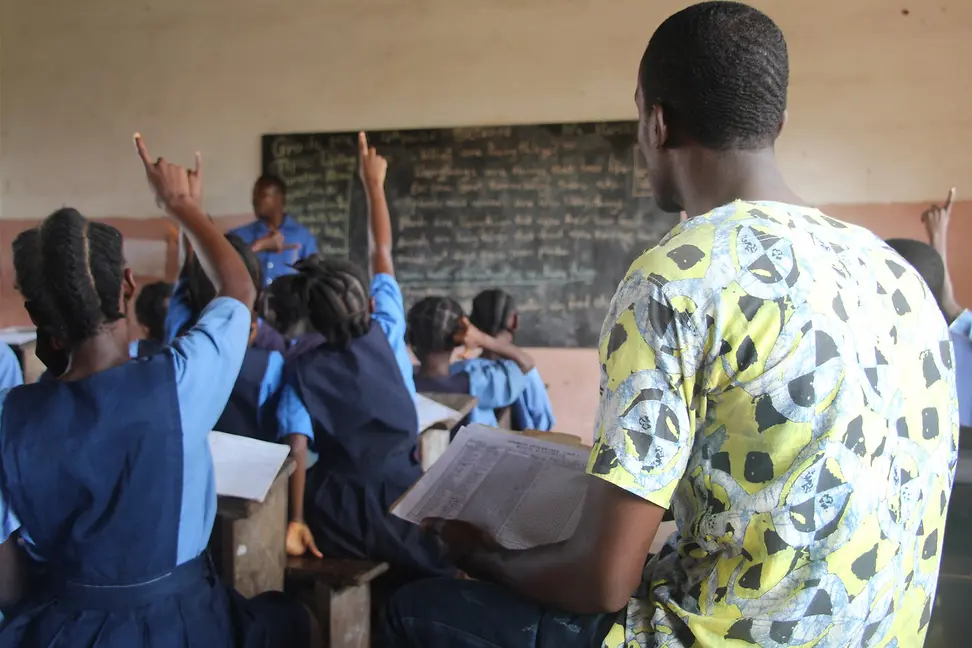
Whether one or even all of the above scenarios play out during the remainder of the decade, Garrett thinks a coming-together of humanity to fix things could also be on the cards. "We have the technologies and knowledge at our disposal, and are constantly developing more solutions to change things for the better, from decentralised energy generation with renewables, to sustainable farming and the rewilding of nature. Democratisation of technology is also a powerful force around the world that gives me reason for optimism."
Gerd Leonhard is a Zurich-based futurist who started out studying theology and music before focusing on the interplay between technologies and humanity, and how we can achieve "a good future". The German native runs the Futures Agency and has appeared at more than 2,000 conferences worldwide.
What most concerns Leonhard these days are four tightly intertwined "revolutions", as he calls the big trend lines. He compares the current period to the years 1925 and 1968, "pivotal times in history when we realized that old things didn’t work any longer or were breaking, but the new things to replace them were not quite there yet."
In 1991, following the collapse of the Soviet Union, the United States became the sole superpower in a unipolar world. Now the USA is stepping back from this leadership position, ushering in a multipolar world in which Europe, China, Russia, India, and Brazil will assume new roles. "Europe will be forced to become the United States of Europe within a decade," predicts Leonhard. "It's a tough but inevitable change to think about common defence, for example, finally taking risks to turn research into innovation and protecting humanity."
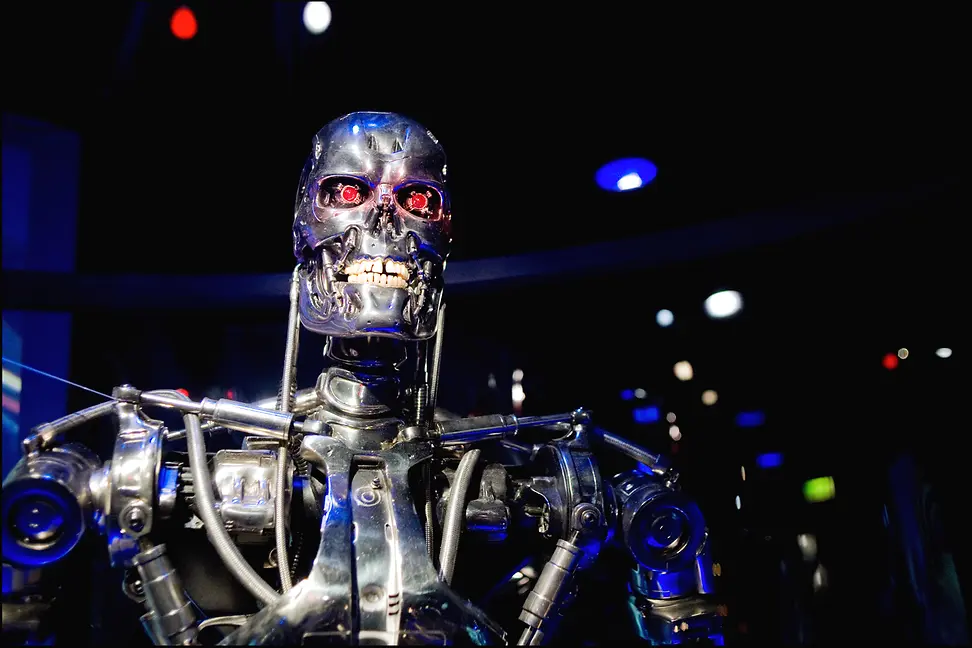
The rapid rise of AI will lead to the ubiquitous deployment of "thinking machines". There will be narrow AI throughout our lives, but the idea of artificial general intelligence - or god-like AGI - deserves our urgent attention. “It can lead us to nirvana or to hell. Put to good use, more narrow AI can help us solve every problem faster, from water and food security to energy, transportation, and space exploration.” Leonhard expects heated competition between the USA and China over AGI-fuelled dominance. "In this race, no human will win, but the AIs could emerge as the uncontrollable overlords." Leonhard expects this mad dash to continue until a major incident happens. "I call it the Hiroshima of AI, whether it’s by accident or on purpose, for instance machines triggering a collapse of the global stock market system."
Leonhard's environmental scenario is also full of potential devastation. "We saw climate change as something happening between 2040 and 2070, but it's happening now. If it goes on like this, we may see people die from heat in large numbers by 2030 in India," he says. "We have time until 2035 to use our technologies to fix things. Once we get to four degrees of warming, we are looking at hundreds of millions of climate refugees on Europe's doorstep."

By 2030, according to Leonhard, the current crop of leaders will be removed or step back from their roles and a new generation in their 30s and 40s will take over. "The GenYs don't just want profit and growth, but see things more holistically." The dichotomy between socialism and capitalism will become a thing of the past, says the forecaster. "We are witnessing the last battles of the old guard to hold back change. But," says Leonhard, "hitting a wall is often the trigger to finally getting over it. The present looks bad on so many fronts, but don't make the mistake of projecting from today into the future. Things may get worse before they get better - but a good future is entirely feasible!"