- Accueil
-
Private banking
-
Insights et vue du marché

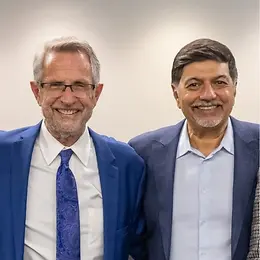
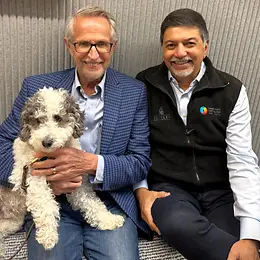
In this joint interview, American entrepreneur Bob Chapman and Raj Sisodia, co-founder of the “Conscious Capitalism” movement, discuss their new leadership approach, which combines human dignity with economic success, and talk about their groundbreaking book, "Everybody Matters: The Extraordinary Power of Caring for Your People Like Family".

This conversation was one of the last that Chapman gave before his death at the age of 80.
Bob Chapman taught us that leadership is not about power, but about care. "Management is the manipulation of others for your success. Leadership is the stewardship of the lives entrusted to you." He did not merely speak these words; he embodied them with rare consistency and courage.
As Chairman and CEO of Barry-Wehmiller, he transformed a struggling, unglamorous industrial company into a thriving, profoundly human enterprise, proving that dignity and love belong at the heart of business. His legacy lives on not in machines built nor profits earned, but in lives uplifted.
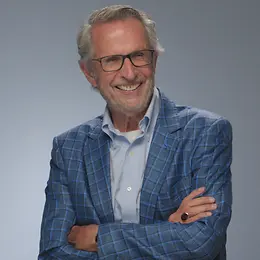
Bob Chapman: The original book that Raj joined me to create was really about capturing and sharing with the world a different view of what leadership should be. The fact that the book sold over 110,000 copies in six languages proved to us that there was an overwhelming interest in the message of caring. We thought, "We have learned so much in the last ten years, we really need to capture the impact of what we're doing." The five new chapters make the second edition much more powerful than the original book because they show this impact, which is so timely in a world where people don't feel valued.
Leadership is the stewardship of the lives entrusted to you.
Raj Sisodia: A lot has happened in the world since the book first came out. We've been through a pandemic, a lot of further polarization of society, and many other global challenges. Bob's company also evolved in those ten years. It's on a rapid growth path and continues to make the case that our ideas actually do work for the 150 companies under its umbrella. Then there's the question of what future generations of leaders are being taught in business school, to a large extent still under the old paradigm. Leadership is a universal skill that human beings can practice doing well, starting at an early age. Business education used to be about the head and the wallet; what we have introduced into the equation is that the journey from the head to the wallet goes through the heart.
Bob Chapman: We didn't start with caring, but changed the lens through which we saw the people we had the privilege of leading. I initially viewed people as "functions" for my success: I needed an accountant, an engineer, a sales executive. It was an economic relationship, and I thought that if I paid you fairly and gave you competitive benefits, and you gave me your gifts, that was a good exchange. It's the way I was taught. What I saw in practice made me realize that the 12,000 people in my care are not just engineers, accountants, secretaries, or machinists. Each one was somebody's precious child and is now in my care for 40 hours a week; the way I treat them will profoundly affect their health, and the way they go home and treat their spouse and kids and live their life. The word "care" evolved later on. When people feel valued, they start caring for others.
Raj Sisodia: The reason why we do things matters. A lot of people say that we should care for our employees because they become more productive and we become more profitable. A lot of leaders have suddenly discovered happiness. But people can see through this. They recognize whether you genuinely care about them, or if you're just viewing them as a way to make money. I think we should do everything from a place of love and care, because that's who we are called to be as human beings.
Bob Chapman: I'm frequently asked, "How do you justify this investment?" I don't have to justify caring for people. How do you justify not caring for people? I have listening sessions all over the world, and the feedback is amazing, from China, to India, to France. When people feel cared for, the impact it makes on their lives is profound. Statistically, three out of four people in the USA are disengaged from what they're doing. They don't feel cared for, or motivated. So what is the downside of caring? If you pay people well and they get good benefits, and that's all you care about, you shouldn't be a leader. I speak to every section of society - education, the military, government, hospitals - and the same issues exist everywhere. People feel used, not because their leaders are bad people, but because they were never taught to care. They were taught to achieve results.
Bob Chapman: Barry-Wehmiller is a combination of 150 "adoptions" - some people call them acquisitions - around the world. It's a universal truth that people simply want to know that they matter. It is not a cultural issue. Our leadership model is focused on what the title says: everybody matters. Is a receptionist who does an exceptional job of welcoming people to your company any less successful than the CEO? If she's sharing her gifts fully and going home with a sense of joy, isn't that the definition of success?
Raj Sisodia: A quick story. We were acquiring a company in France from Dannon Yogurt. My board was very concerned about French government involvement and labour laws. I had to fly over to meet with the workers" council, a group of eight men and women from their late 40s to early 60s, and share our vision. After a vibrant discussion, they said they were going to approve the sale of the company. And then a gentleman named Philippe said: "Mr. Chapman, we've been waiting for you for 32 years." Here's a country that does everything it can legally do to protect workers from the greed of management, but the government can't protect your soul. They were profoundly touched with hope. The level of hurt and suffering that we are imposing with the economic model we've used since the Industrial Revolution, because we thought money would create happiness, doesn't work. We need a model where we create human and economic value in harmony, pay people fairly, and treat them superbly.
Bob Chapman: During the pandemic, a lot of people got used to sitting in their bedroom with a computer and their dog on the bed behind them. They liked it because they didn't have to drive to work and could have lunch at home. But a good team plays together. I believe it compromises the opportunity to impact people's lives if we are simply a data-entry point at a computer and a screen. Personal presence and the interactions that occur directly with other people are a key part of our evolution and bring joy. Some companies have gone with remote work because they save money. I don't think people do it to improve the quality of life.
Raj Sisodia: We know how to let people work at home, at least part of the time. But overall, the emphasis is on a cohesive culture. When people look forward to going to work it's not a punishment to be around your colleagues. The social dimension of work is a very important element in people's lives.
I won’t go to my grave proud of the machinery we built, but the lives we cared for.
Raj Sisodia: We are living through a moment of backlash towards some of the more recent changes that have been happening. We've been moving towards a more gentle way of operating and being. It's not replacing masculine and feminine. We need both. In the business world, it's caring and accountability at the same time. But the norm has been only on the masculine side: numbers, competition, winning at all costs. That becomes domination, aggression, hyper-competition. We have enough metrics or KPIs. We also need caring, compassion, listening, empathy, and inclusion. Yes, these are considered feminine traits, but they're all human qualities. Over the last 50 years, we have seen women rise. Women outnumber men in college by significant margins. Now they're rising in banks and leadership positions; all that is a good sign. The world right now seems to be speaking a harsher language and talking about all this kind of macho stuff, but I don't think that is a long-term trend.
Bob Chapman: We hold up the Mark Zuckerbergs and Jack Welches of the world. A lot of these people built amazing companies in terms of impact and growth, but do you know what Welch called people in his company? Cost suckers. The language we use is so broken. We need to create a future for our team members where they can feel safe and valued. I won't go to my grave proud of the machinery we built, but the lives we cared for.
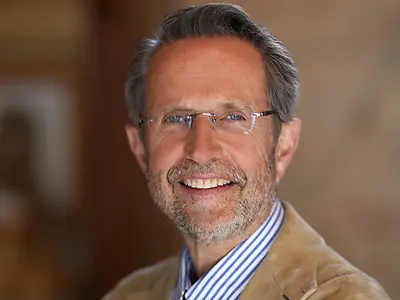
Bob Chapman was the Chairman of Barry-Wehmiller, a global manufacturing and engineering firm, after serving as its CEO for 50 years. The privately-held company based in Missouri reported revenues of USD 3.6 billion for fiscal year 2024. He was the co-author of "Everybody Matters", first published in 2015 and reissued in 2025, in which he laid out his philosophy of "Truly Human Leadership". He died at the age of 80 shortly after this interview.
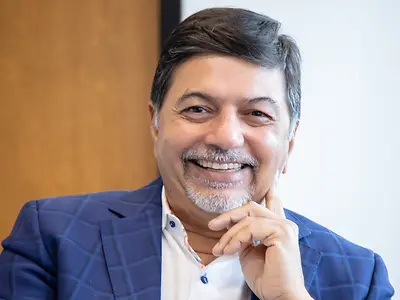
Raj Sisodia was a long-time collaborator of Chapman's and co-founder of the Conscious Capitalism movement. He is a professor and Chairman of the Conscious Enterprise Center at Tecnológico de Monterrey in Mexico, arguing for purpose-driven business as a force for societal good.

Everybody Matters: The Extraordinary Power of Caring for Your People Like Family - Expanded 10th Anniversary Edition (Optimism Press, 2025).