- Home
-
Private banking
- Market view
- Insights
-
LGT career

Bangladeshi architect Marina Tabassum was named one of Time magazine's 100 most influential people in 2024. With climate-resilient designs such as the Khudi Bari, she shows that sustainable architecture isn't a luxury - and why climate resilient architecture is increasingly in demand in Europe too.

The house is small, so unassuming that it almost vanishes into the grounds of the Vitra Design Museum. But that's exactly the point. The Khudi Bari, built on bamboo stilts, isn't supposed to dominate its surroundings. "It should breathe", says Marina Tabassum, the internationally acclaimed Bangladeshi architect.
Khudi Bari means "small house" in Tabassum's native Bengali. In Bangladesh's Ganges Delta, more than a hundred Khudi Bari have already been built. These small houses can be assembled by hand - quickly and without electricity. And in an emergency, they can be dismantled, moved to another location and assembled again just as quickly.
And such emergencies are on the rise.
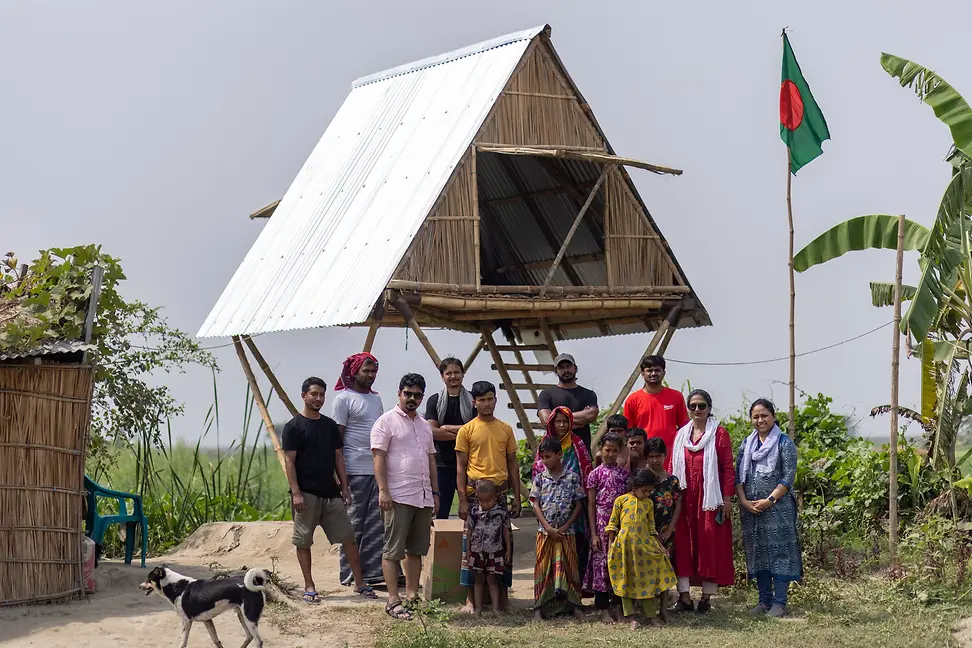
Climate change is causing the Himalayan glaciers to melt, sending ever-larger volumes of water into the lowlands and continuously reshaping the landscape. Farmers seek refuge on temporary river islands, called chars, and build their homes there. Until the next flood comes.
Roughly 170 million people live in the Ganges Delta. And although their carbon footprint is negligible, they are among those who suffer the consequences of climate change most directly. Tabassum designed her small houses with these modern nomads in mind - temporary shelters built without pomp or pathos. Her Khudi Bari is an answer to one of architecture's most pressing questions: how should we build today?
The solution isn't just using resource-efficient materials. The solution is climate-resilient construction - buildings and villages designed to withstand the effects of climate change. Like the Khudi Bari.
In addition to adapting to the needs of its inhabitants, Tabassum's small house can also be expanded to accommodate larger households thanks to its clever modular system that uses bamboo, reminiscent of an Ikea shelf unit. The house is highly adaptable to the changing environment; built on bamboo stilts, it allows floodwaters to pass beneath while keeping inhabitants safe and dry above.
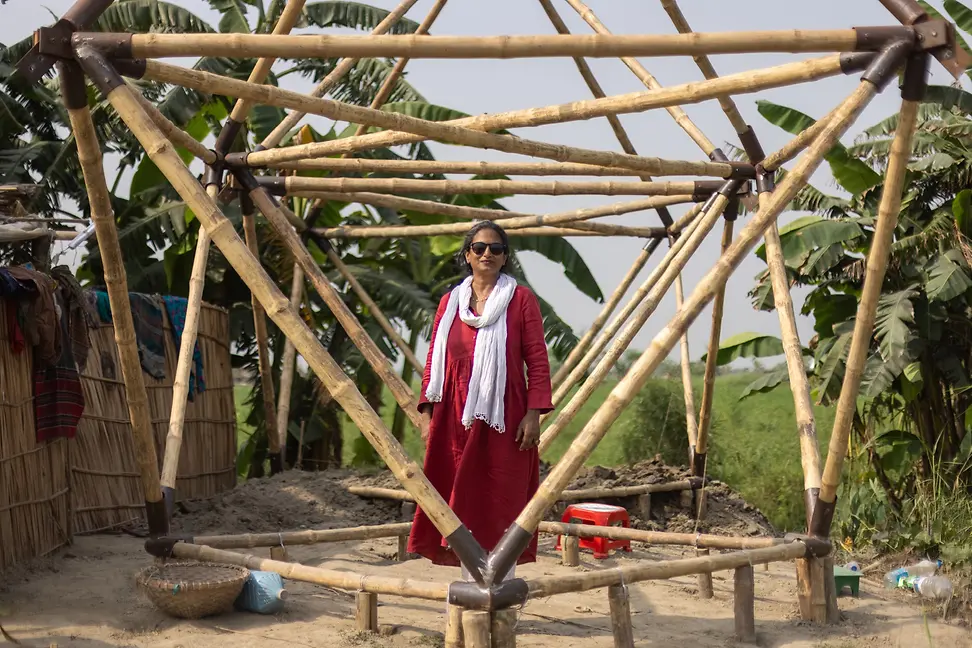
This is architecture borne of necessity - and a vision for the future. Through her work, Tabassum shows us that it's possible to overcome pressing social challenges with smart and affordable solutions. Her buildings don't proclaim their presence from afar like the signature works of many star architects. Instead, they form part of a natural system, integrated with the landscape and ecosystem.
"It wasn't until I visited the villages of the Ganges Delta in 2013 that I truly understood what it means to live with nature", Tabassum said in 2023.
"We need spaces that breathe", she said. "We need alternatives to glass façades with air conditioning. Rooms need air and light; they teach us to live with rain."
Marina Tabassum grew up in Dhaka, in a three-room house she shared with her parents and two siblings. "Every room served multiple purposes", she recalls. "It was a very communal way of living." Even during her studies, she felt that architecture had to be more than form or aesthetics.
Tabassum is known for her concept of "Architecture of Relevance", which frames architecture as an ongoing, dynamic dialogue. Her designs respond to the specific needs and conditions of a place, its people and its environment.
She is openly critical, on the other hand, of the profit-driven construction sector. Architecture, she insists, should be guided by "social and economic justice", rather than being solely profit-driven.
A sustainable building is one that lasts and can be reused. That idea runs through Marina Tabassum's architecture, and it also guided LGT's new office building in Altenbach, Vaduz. Designed by Zurich-based Fischer Architekten, the building is meant to last at least 90 years. Its load-bearing structure and facade are made of ash wood from the region, cut at a local sawmill. Inner courtyards and open, light-filled spaces shape the workplaces, and clay ceiling panels provide heating and cooling. Much of the structure can be taken apart, so the wood, glass and clay can later be reused or recycled. The building is certified LEED Platinum and SNBS Gold and was inaugurated in early 2026.
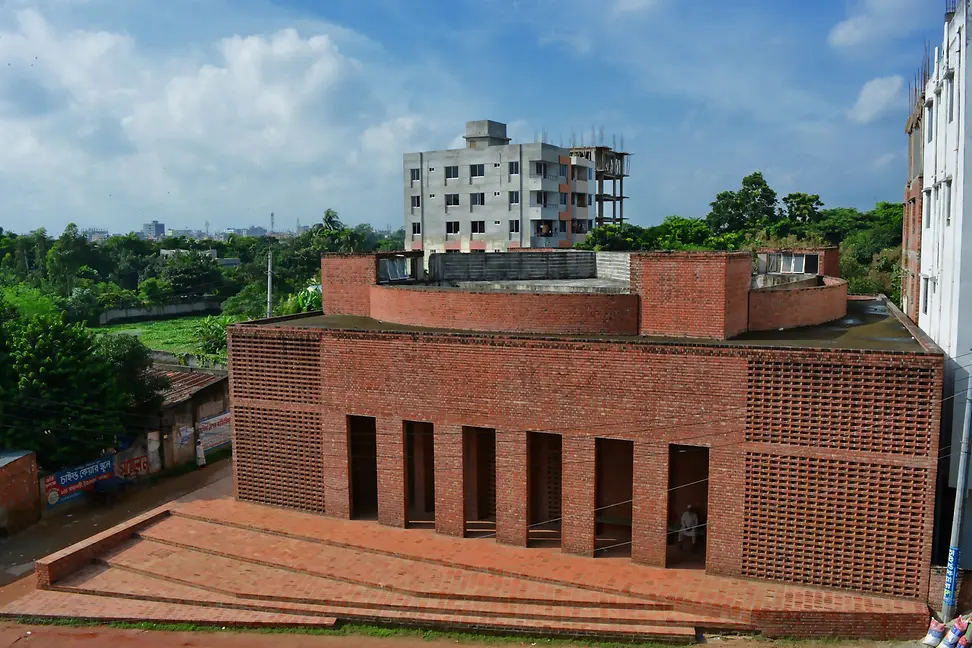
In 2012, Tabassum completed the Baitur-Rauf-Jame Mosque in Uttara, a suburb of Dhaka.
Because Uttara is subject to frequent flooding, the mosque stands on a brick plinth. It has no minaret, no dome. And yet, it is a deeply spiritual space, inviting visitors to not only find God, but also themselves.
The New York Times named it one of the 25 most significant architectural works since World War II. Its interior has been designed to channel air along the bare brick walls, naturally cooling the various rooms and allowing them to breathe. The various spaces are not only used for prayer - another typical Tabassum feature - but also as a school, a meeting place and even a playground for children.
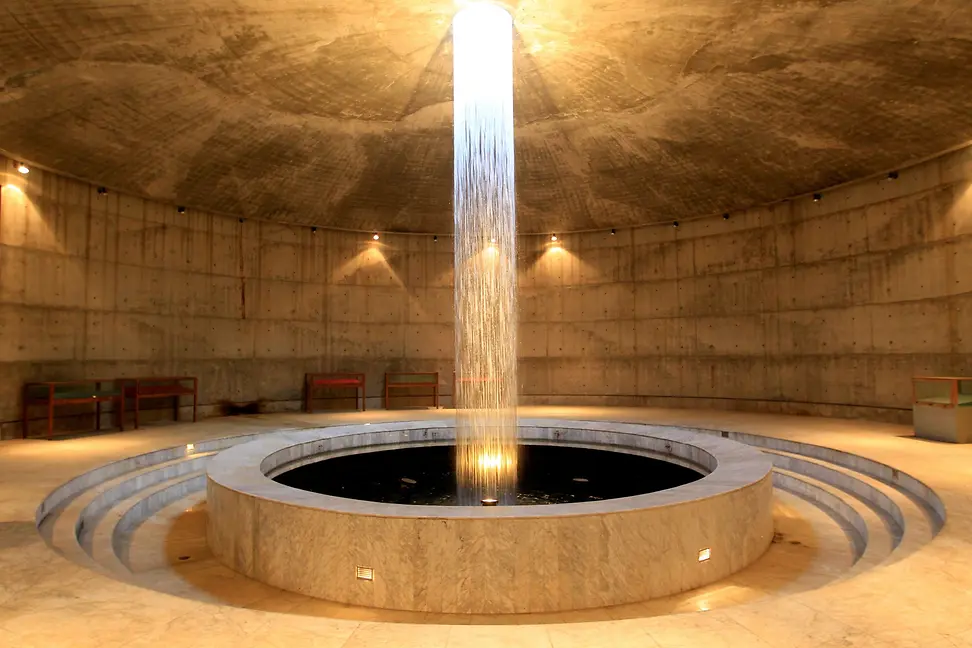
But the truly breathtaking element of this structure is the light. It falls through the holes in the ceilings and walls like divine rain from the sky above, lending the building more spirituality than any minaret, no matter how imposing. For Tabassum, light is a building material in its own right. "Daylight is free, why shouldn't we work with it?" she often asks.
She applies this philosophy to schools in impoverished rural areas, to private museums, monuments and residential buildings in Dhaka. She has also applied it to the bamboo shelters she designed for the more than one million Rohingya refugees who fled Myanmar. "As architects, we have a responsibility", says Tabassum, "to create good design for everyone, not just the wealthy."
She regularly returns to the marshlands of the Ganges Delta to observe how people live. Where do the children play? Where do families hang their laundry to dry?
Tabassum wants to learn from the people who live in her Khudi Bari. "They're excited about their new homes", she says. And these exchanges matter to her. Architecture is about dialogue, about give and take, she explains.
The importance of Tabassum's work is rapidly stretching far beyond the global south. It is becoming increasingly relevant in Europe too. Summers are growing hotter.
Here, too, there's growing talk of the importance of courtyards. For Tabassum, courtyards are "the soul of every house" because it is in the shelter of their thick walls and cooler spaces that communities form and families come together.
Because architecture shapes not only our individual lives, but our collective future.
Or, as she puts it: "Sometimes small changes in the world bring about big shifts."