
在此处更改您的语言和 LGT 位置。
私人客户的数字平台
登入 LGT 智能银行
金融中介机构的数字平台
登入 LGT 智能银行 Pro
常见问题解答 (FAQ)
LGT 智能银行帮助
常见问题解答 (FAQ)
LGT 智能银行专业版帮助
Despite our constant digital connectedness, loneliness is on the rise - particularly among young adults. Why is that, and what can we do about it?
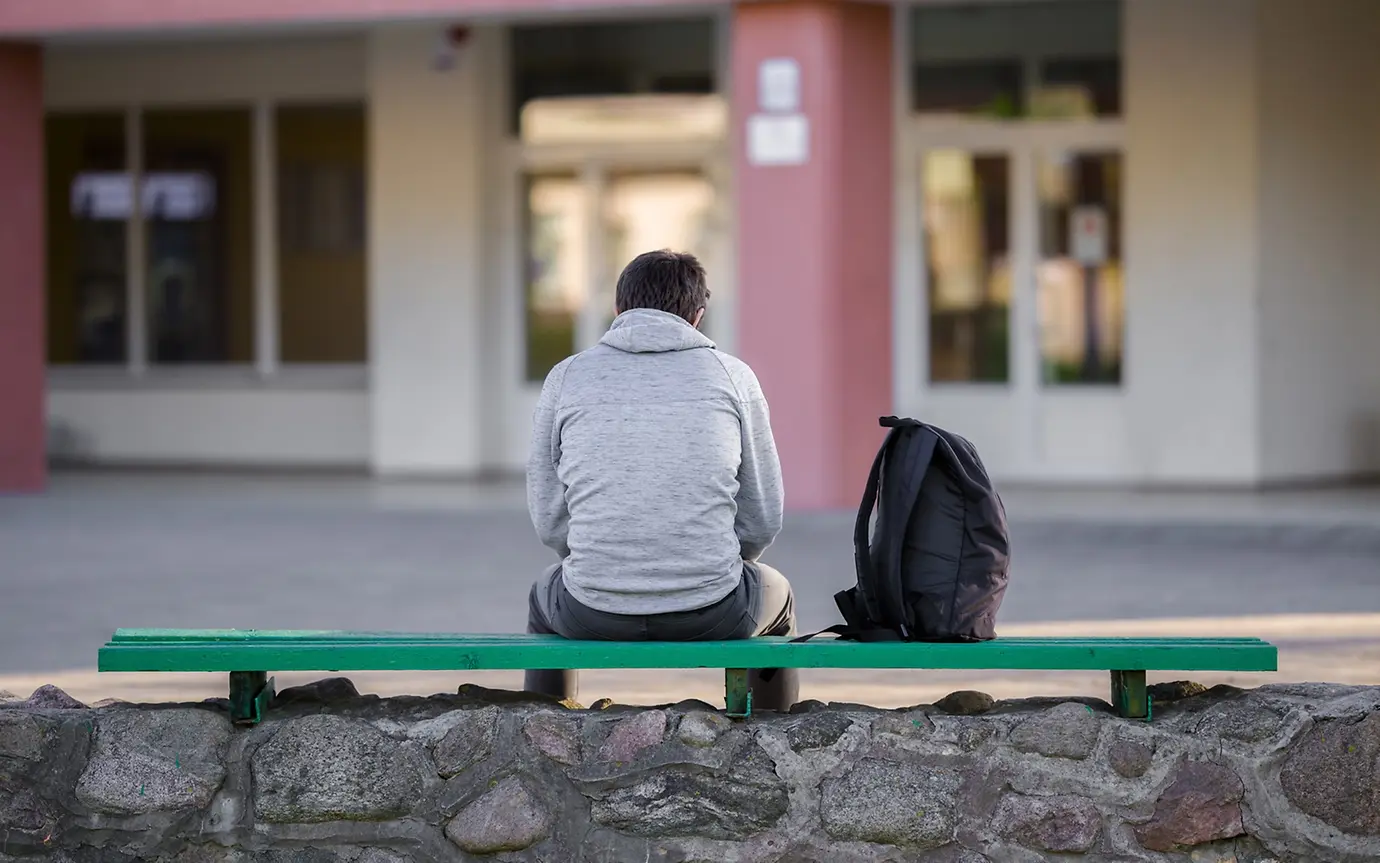

Let's begin with a quick self-check: imagine you suddenly needed help or advice in the middle of the night. Who could you call, spontaneously, at half past two? If one or two names (or more) spring to mind, count yourself lucky. It suggests you're socially integrated - not lonely or isolated - even if you feel like you could use a few more Instagram followers.
But Instagram aside, in real life, many people - especially young adults - are experiencing a growing sense of loneliness. According to a recent online survey, 57 % of 18- to 35-year-olds in Europe are moderately to severely lonely. And this survey wasn't conducted during the pandemic, but last year.
Such findings have fuelled talk of an "epidemic of loneliness", and governments have started to take notice. In 2018, the United Kingdom appointed its first Minister for Loneliness. Japan followed suit in 2021. Germany recently drafted a national strategy to address the issue.
When this echo is absent, every situation - even a lively party - can feel hollow. We quickly feel out of place, disconnected. We are left feeling nothing, even if we are surrounded by many people.
This is what makes loneliness so difficult to measure scientifically. Resonance is deeply subjective and personal. Even defining loneliness is a challenge: typically, it is described as the difference between the social relationships one has and those one would like to have. According to that definition, someone with a hundred friends could feel lonely - if they wished they had two hundred friends instead.
Without resonance, it's easy to feel out of place.
This elusiveness has led many researchers to question whether there really is a loneliness epidemic. Because not only are there no objective benchmarks, but there are also no long-term historical data to suggest that people today are lonelier now than in the past.
What is often overlooked in discussions about loneliness is that it is, to some extent, an inevitable part of the human condition. Most people pass through periods of loneliness at some point in their lives - especially during transitions. Leaving school, starting university, moving to a new city, beginning a job: these are moments of change that often leave us feeling disconnected and isolated.
Yet, such periods are not necessarily a bad thing. Time alone and without distractions can help people be creative, find their voice and develop new ideas without constantly comparing themselves to others. The history of art, literature, philosophy and religion offers countless examples of the creative power of solitude.

Jesus withdrew to the desert to gain spiritual clarity; Thoreau built his cabin in the woods to seek a deeper understanding of life; Virginia Woolf advocated for a room of one's own as a space for creative independence; Isaac Newton developed some of his most groundbreaking theories while isolated during the plague; and Yuval Noah Harari spends several weeks each year in silent meditation to clear his mind and regain perspective.
The point is: constant peer pressure can be just as detrimental to personal growth as prolonged solitude. The trick is to strike the right balance - we need human interaction just as much as we need time to absorb and process external stimuli on our own.
When this balance is upset, we suffer - creatively and physically. Involuntary loneliness not only weighs on the mind; it also takes a toll on the body. People who feel lonely are more prone to high blood pressure, weakened immunity, dementia and depression. Loneliness can even increase the risk of premature death. Without the invigorating spark of resonance, a person's will to live can fade. Life can begin to feel empty and meaningless.
And yet, in today's hyperconnected world, where social media is used to share every aspect of people's lives and even the most remote valley has internet access, you might expect loneliness to be a thing of the past. News from around the globe is just a tap away, and for every niche interest, there's an online community waiting. So why, despite all of this digital closeness, do so many people feel more disconnected than ever?
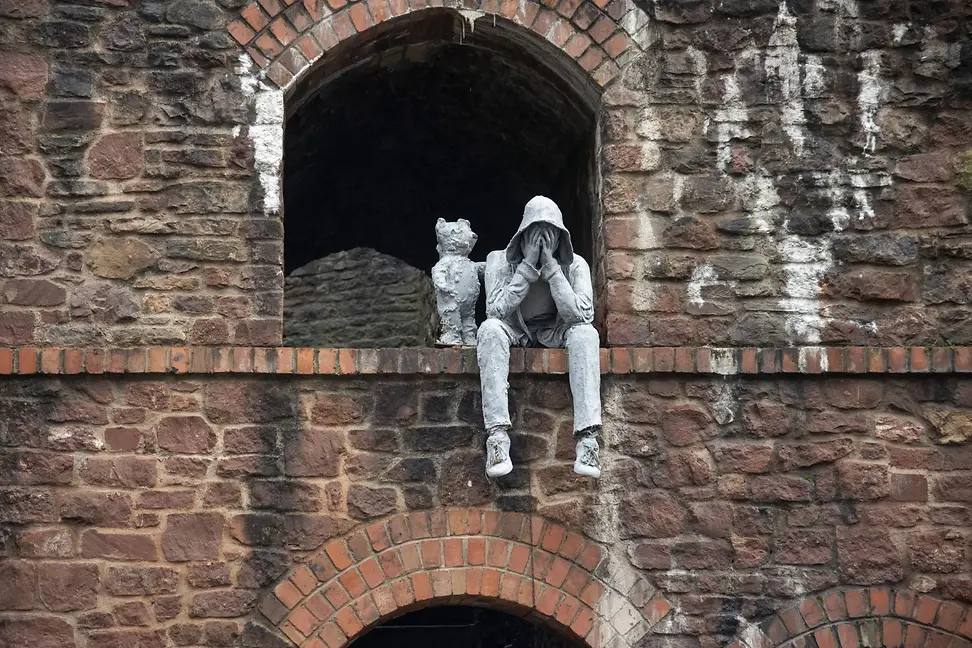
Paradoxically, it may be this very connectivity that is part of the problem. It encourages people to withdraw from their public lives and thus decrease their real-world human interactions. Instead of going to the cinema or theatre, many opt for a comfortable at-home Netflix evening. Restaurant visits are also seeing a significant decline, while delivery services and takeaway orders are booming.
This trend is particularly evident in the United States. According to the American Time Use Survey, the amount of time spent in face-to-face social interaction fell by more than 20 % between 2003 and 2023 - precisely the period during which mobile phones and social media became ubiquitous. Among those under 25, the drop was even more striking: 35 % less time spent interacting with others compared to two decades ago.
Digital services now allow us to attend meetings, shop, eat and even attend church services from home. As The Atlantic recently wrote in a compelling article titled The Anti-social Century, the rituals that once brought people together have been transformed "into an experience of homebound reclusion and even solitude."

Unsurprisingly, studies show this retreat into domesticity is linked to declining levels of happiness and a reduced sense of meaning. Humans are social creatures. We thrive on connecting with others, which is far harder to do through a screen than in person.
Admittedly, human contact also comes with certain risks. It can be exhausting, awkward, even irritating. Staying home and interacting online can feel safer and less stressful. But this safety and comfort-first mentality fuels the loneliness that so many people suffer from today - and traps us in a vicious circle. The more insecure and lonely we feel, the more we withdraw, which deepens our feeling of loneliness...
Breaking out of this loop requires effort - and a willingness to move out of our comfort zones. Instead of withdrawing, we must seek contact. Apps now exist to help with this: Timeleft arranges dinners with strangers, The Breakfast sets up morning coffee meet-ups between people who have never met and After 5 brings women together to foster new friendships.
But perhaps more effective - and simpler - is something older, more traditional: conversation. A few years ago, psychologists Nick Epley and Juliana Schroeder from the University of Chicago demonstrated this with an experiment: they asked commuters who regularly travelled to work by train to strike up conversations with random fellow passengers. The participants were reluctant at first, preferring to keep to themselves. But when they finally overcame their hesitation, they consistently reported positive reactions and feeling significantly more positive afterwards.

The psychologists conclusion was clear: "A fundamental paradox at the core of human life is that we are highly social and made better in every way by being around people," Epley noted. "And yet over and over, we have opportunities to connect that we don't take, or even actively reject, and it is a terrible mistake."
The Epley/Schroeder experiment shows that it often pays to take the risk and give yourself and others the chance to connect.