
- Home
-
Private banking
-
LGT career

The US midterm elections are always critical, particularly for presidents. They're equally important for investors, because changes in Congress can move markets.
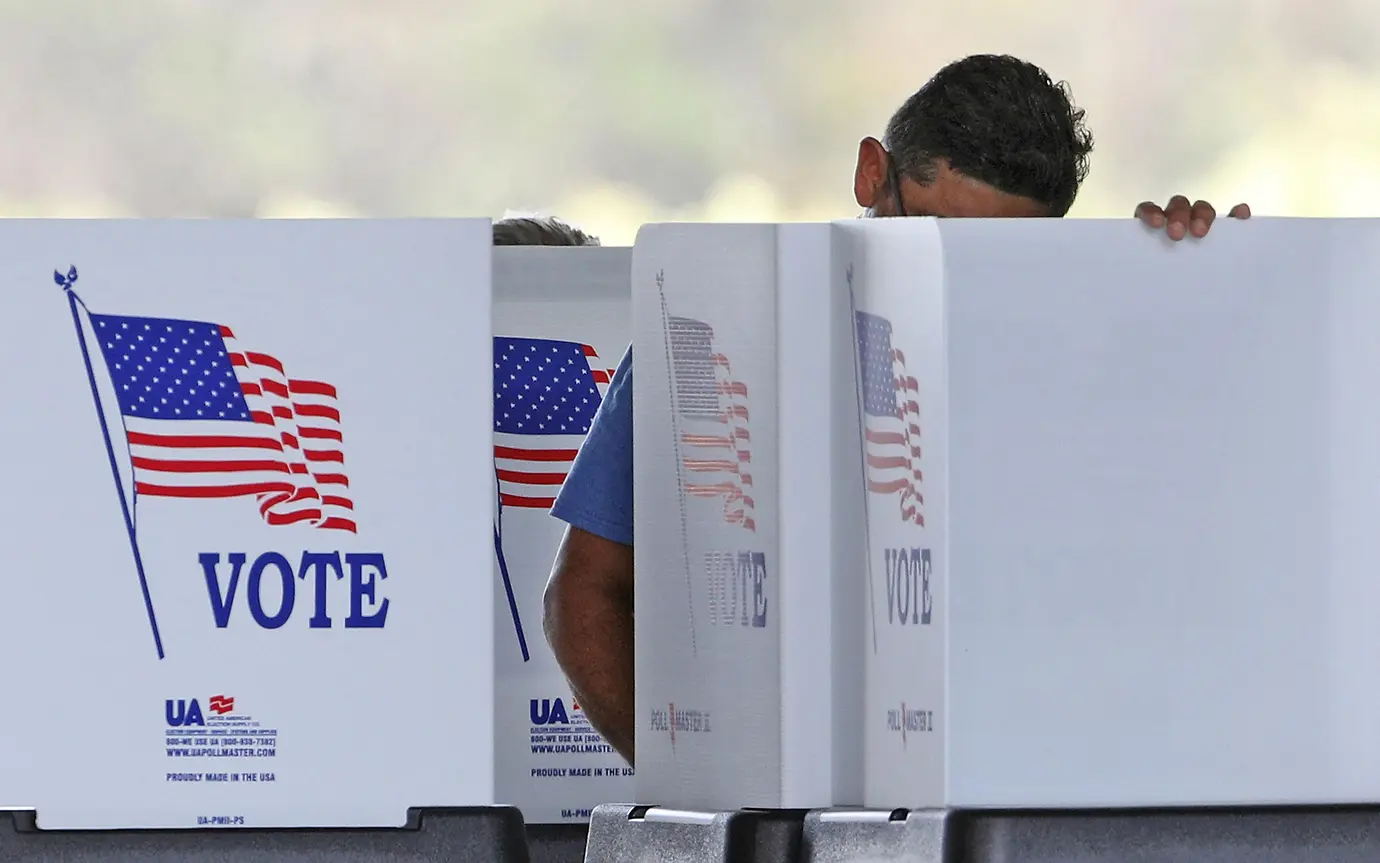
This November, voters in the United States won't be electing a president, but they will be participating the pivotal midterm elections. These are Congressional elections, with all 435 seats in the House of Representatives and one-third of the 100 Senate seats up for grabs. Held midway through the four-year presidential term, these elections more often than not see a change in the political party controlling Congress.
Currently, Republicans hold the majority in both the House and the Senate, although the House margin of control is exceedingly slim. When Congress is controlled by the president's party, it is much easier to enact legislation. However, the president's party has lost seats in the House of Representatives in 36 of the 38 midterm elections since the 20th century. Even a few losses by Republicans in this November's elections could mean a change of control in one or both houses of Congress.

The outcome of the midterm elections has always had significant implications for investors. A divided Congress, where the House and Senate are controlled by different political parties, historically produces legislative gridlock. Financial markets tend to view this favourably as it limits the possibility of abrupt policy reversals. When both chambers of Congress are controlled by a single party, however, this can lead to rapid regulatory change and concentrated policy risk.
The United States Congress has two chambers: a lower body, the House of Representatives, and an upper body, the Senate. The 435 members of the House of Representatives are elected every two years for a two-year term. The 100 members of the Senate are elected for six-year terms using staggered elections; approximately one-third of the Senate seats are up for election every two years.
The composition of Congress directly determines the trajectory of tax rates, federal spending levels, and infrastructure investment. Expiring provisions from bills such as the 2017 Tax Cuts and Jobs Act, which greatly reduced the corporate tax rate, make the fiscal stakes particularly high in this election cycle.
The composition of key Congressional committees changes when majority control flips. This means that new voices could be involved in shaping, for instance, technology antitrust enforcement, AI governance frameworks, and data privacy legislation. This could have direct implications for valuations in the technology sector.

Jürgen Lukasser is Deputy Chief Investment Officer Europe for LGT Private Banking, where he helps oversee investment-related areas for the bank's clients in Europe, including portfolio management, advisory, research, strategy and sustainable investment. Jürgen Lukasser has more than 30 years' experience in capital markets and fund management.
The Senate has important powers when it comes to the confirmation of regulatory appointments and Supreme Court nominations, as well as appropriations authority to control federal spending. If the majority changes here, it could influence the US posture toward China and NATO allies, as well as domestic energy policy, with critical impacts on commodity and defence sector exposures.
History suggests that control of one or both chambers of Congress could switch. Other factors also point to this outcome. The contest is particularly heated in the Senate. Of the 33 regular seats and two special vacancies up for grabs this year, Republicans are defending more seats this cycle, meaning that Democrats require only marginal net gains to reclaim a Senate majority.
Markets are often shaped less by election results themselves than by the policy choices those results make possible.
One predictor stands out from the rest: the presidential approval rating. Midterm elections are effectively a referendum on the president's performance. When a president's approval rating is below 50 %, losses become inevitable. The only question is: how many seats will be lost?
What is often known as the midterm curse is not really a measure of candidate quality, campaign spending, or short-term news cycles, which often affect electoral outcomes. Rather it reflects a deep, structural dynamic: opposition parties are systematically more motivated in midterm elections, while the president's base can often only manage a lower turnout.

It is critical to remember that it isn't just the overall majority in the House or Senate that matters. Who loses and who wins can affect leadership positions and committee memberships within each branch.
The predictive power of the presidential approval rating in midterm election outcomes is clear, stable, and quantitatively measurable over nearly a century of electoral data. But the approval rating does not determine whether the president's party loses; rather it determines how badly. This distinction is important for the statistical modelling that can provide a range of scenarios for investors.
Investors need to keep in mind that the 2026 election will be highly competitive, with midterms historically favouring the party that opposes the sitting president. So it's important to think about the implications of any changes this might lead to in Congress.
The election outcome will be most consequential for fiscal policy and the broader legislative agenda. This includes taxation, public spending, the debt ceiling, major entitlement reform, and any permanent statutory changes. By contrast, a degree of policy continuity can be expected in areas that fall largely within executive authority, including deregulation, immigration enforcement, trade and tariffs, China resilience, and selected aspects of defence.