- Accueil
-
Private banking
-
Vue du marché e Insights

Rapid adoption of new technologies sees China economically leapfrogging its competitors worldwide, while US tariffs have created headwinds for its much-lauded integrated supply chain.

The Chinese economy is moving in two directions simultaneously. In 2024, China accounted for a staggering one-third of global automobile production - some 30-plus million units - including some 7.7 million battery-operated electric vehicles, an eight-fold increase from 2019. This widespread adoption of new technologies can be seen across the country.
Yet on the other hand, the double-digit economic growth rates seen in the last two decades are long over, with sustainable GDP growth of 5 % now established as a new normal.
Tech is China's brightest star - and it shines at home.
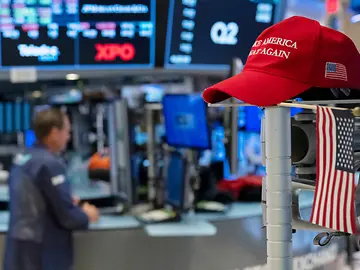
The fact is that China's integrated supply chain, covering manufacturing to shipping logistics, relied on a suite of trading partners to function. With the Trump administration's abandonment of its post-World War II commitment to free trade and globalisation, China's export sector has come under scrutiny. In 2024, China's exports to the US accounted for nearly 15 % of its USD 3.5 trillion total; in the first ten months of 2025, imports of Chinese goods to the US dropped by roughly 20 % per month.
These statistics demonstrate the effect of punitive import tariffs imposed by the US government. Yet China does have alternatives. Europe is China's most important trading partner with an overall 20 % share, while shipments to other Asian nations are growing.
The global economy is being recalibrated. What does this mean for investors? Find out in our investment outlook 2026.
We expect the US and China to continue a complex dialogue that will eventually see tariffs fall, but not to former levels. This is because China holds the cards when it comes to agricultural imports. US farmers, who tend to be Republican voters, have been hit by China's halting of US soybeans imports last year. This tension looms ahead of mid-term elections in the US in November.
While talk continues around a fundamental reappraisal of the US-China relationship, we believe that the US consumer market remains critical for China, just as the US relies on Chinese supplies of rare earth metals, high-end magnets and other items for which alternative producers are hard to find.

Stefan Hofer is Chief Investment Strategist for LGT Private Banking in Asia Pacific. He is responsible for communicating the global economic and market outlook, and helps define high-level investment strategies and themes for regional clients' portfolios. He has over 25 years of investment and wealth management experience.
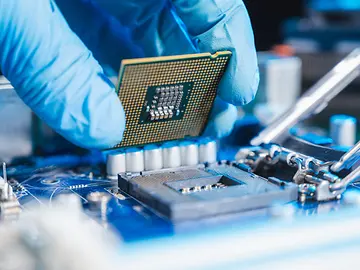
When it comes to investing in China, the shining star is the booming tech sector. The e-commerce and internet giants generate most of their revenues domestically and are some of the most innovative companies in the world. In targeting exposures to technology, equity investors should sidestep sectors such as real estate where oversupply and profitability remain a challenge.
As it races to become a fully digital economy with a globally competitive high-end manufacturing sector, India is reaping the benefit of the successful delivery of large-scale infrastructure projects. Thanks as well to the deep economic reforms implemented by the Modi government, businesses and households are being connected with greater reach, intensity and speed. The result is that economic activity is surging.
While India still lags China in terms of per capita income, the transformation of the Indian economy is well underway. Over the past ten years, both economies have generated an average per capita income growth rate of about 5 %, but India has more than doubled the number of its airports, expanded power generation by 50 % and invested heavily in transportation infrastructure. In addition, India has become a legitimate competitor of China in global manufacturing, offering a sizeable labour cost advantage.
The outlook for 2026 is positive, as inflation in India is in line with central bank targets, which provides room to lower interest rates and spur domestic lending. The government is also rolling out a fiscal stimulus programme worth about 2 % of GDP, which runs through 2028 and is designed to help lift consumption. Finally, US-Indian trade relations are on an improving path, removing a headwind that would have risked worsening labour market conditions.