- Accueil
-
Private banking
-
Vue du marché e Insights

Fashion is taking the museum world by storm. But while visitors are flocking to blockbuster couture shows, fashion has long been on display in the portraits and old master paintings of museums around the world.
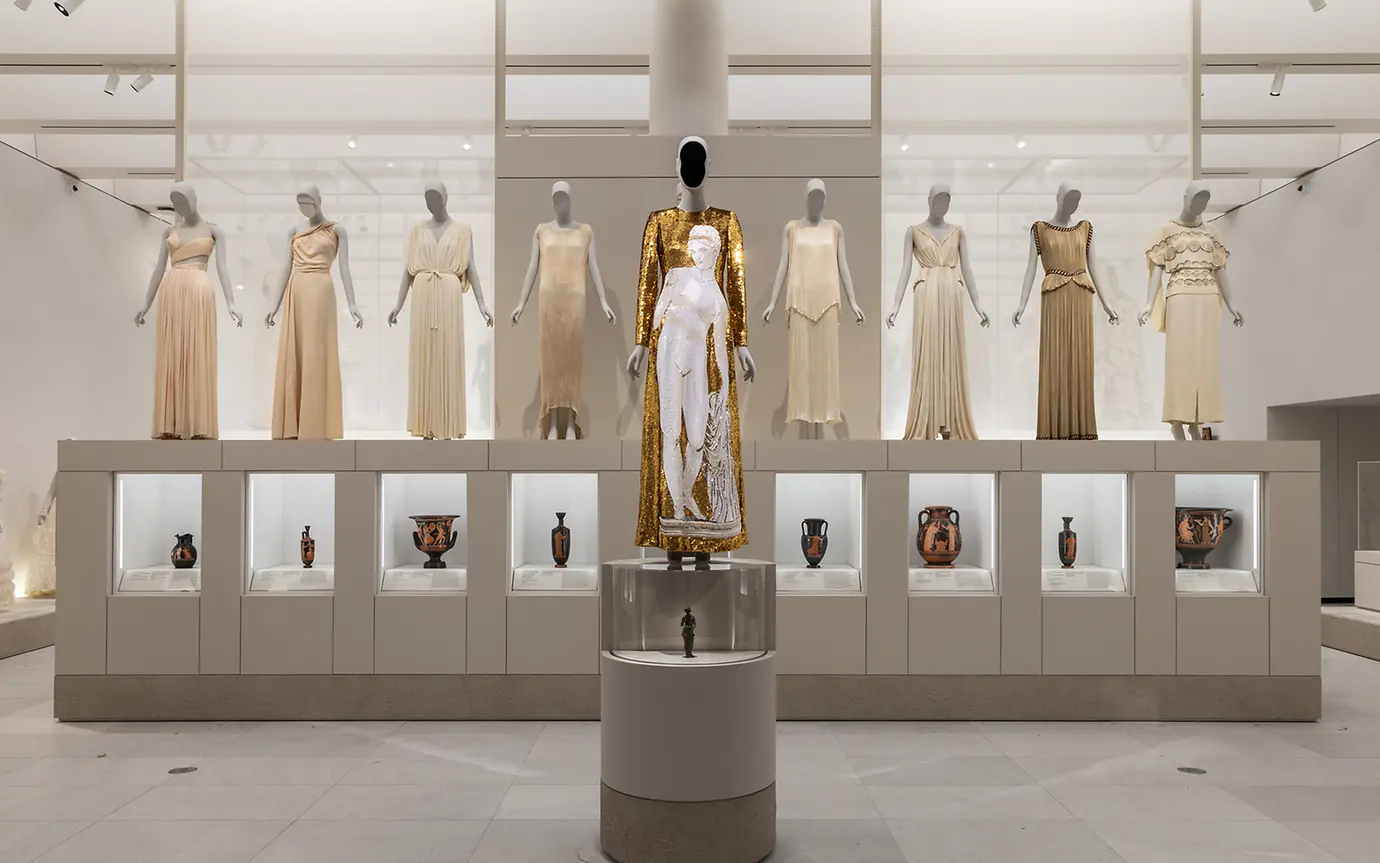
At one of this year's most high-profile exhibitions, the title says it all: "Schiaparelli: Fashion Becomes Art". Running at London's Victoria & Albert (V&A) Kensington until November 8, the show celebrates the work of inventive Italian designer Elsa Schiaparelli, and Maison Schiaparelli, the fashion house she founded. But if the V&A is among a growing number of museums putting fashion at centre stage, galleries housing their permanent collections have always had fashion on their walls.
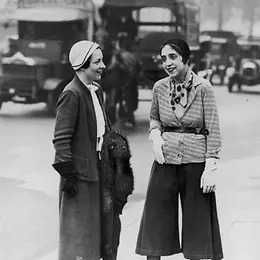
For our ancestors, clothing was a means of shielding our bodies from the elements and our nakedness from public view. Yet dress soon became a potent means conveying messages about everything from power and status to individuality and creativity. Today, fashion draws the attention of everyone from magazine readers and cinema goers ("The Devil Wears Prada" sequel has so far brought in more than USD 676 million at the global box office) to fashion week attendees.
In recent years, museums have been capturing some of this attention by staging fashion-focused exhibitions. And Schiaparelli is not the only designer currently being featured. At Berlin's Kunstgewerbemuseum (Museum of Applied Arts), for example, "Many Shades of Grès" (running to October 11) presents the work of early twentieth-century French fashion designer Madame Grès, known for her sculptural draping of fabric. And in Antwerp, "The Antwerp Six" (at MoMu until January 17, 2027), features the group of contemporary fashion designers that put Antwerp on global fashion's map.
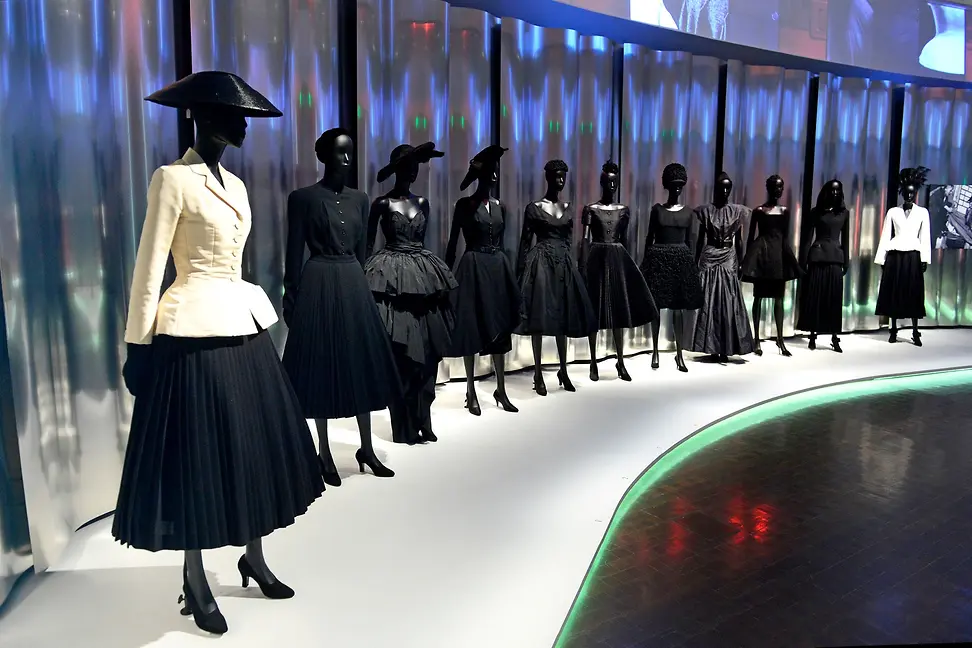
Yet museum curators must tread carefully. Since their shows often celebrate designers whose fashion houses became giant global businesses, they must remain curatorially rigorous and not appear to be crossing the line between art and advertising. "Institutions are expected to remain public, scholarly, accessible, inclusive, and conservation-led, while also behaving like competitive cultural businesses", writes art historian and University of Cambridge lecturer Ane Cornelia Pade in an article on the topic.
As Pade suggests, striking the right balance is not easy. Yet what is certain is that for museums, fashion is a crowd pleaser. In 2019, the V&A show, "Christian Dior: Designer of Dreams", attracted almost 600'000 visitors in seven months, a record for the museum, while in 2023 another V&A show, "Gabrielle Chanel. Fashion Manifesto", devoted to the French couturière, drew about 376'000 visitors. In Paris last year, more than a million people flocked to the Louvre for Louvre Couture, which presented works from prominent designers and fashion houses.

Of course, individual designers or fashion houses are not always the focus for curators. At the Los Angeles County Museum of Art, the exhibition "Fashioning Chinese Women: Empire to Modernity" (running to October 12) presents Chinese women's dress from the Qing Dynasty to the 1960s. And at The King's Gallery in London, visitors can see what Britain's longest-reigning monarch wore in "Queen Elizabeth II: Her Life in Style" (an exhibition running to April 18, 2027).
Meanwhile, many museums have been moving their fashion collections from dusty basements to dazzling displays in upper-floor galleries. V&A South Kensington is among them, with a new Fashion Gallery opening in 2028. And in May, New York's Metropolitan Museum inaugurated its expanded Costume Institute. In almost 12'000 square feet, displays of more than 33'000 objects span seven centuries, from contemporary designs to fifteenth-century garments and accessories.
Still, dedicated fashion galleries and blockbuster shows are not the only way museums track clothing's history. Their permanent collections also show us what our predecessors wore, with artworks capturing in paint, pencil, print and marble the designs and textiles of physical garments that have long since been lost. "Fashion has always reflected the values of society. What we now understand as individual style was, in earlier centuries, a carefully codified system of rank, belonging, and representation", says Stephan Koja, director of the Princely Collections. "Old Master paintings reveal how clothing made social order visible. Even today, our notions of style and elegance are shaped by historical visual traditions, which continue to shape fashion and design today."
For the Princely House of Liechtenstein, Austria is home to many of the artworks that make up the family's Princely Collections. In the Garden Palace and the City Palace, both in Vienna, members of the public can see works from a collection that, thanks to an ongoing acquisitions policy, is now made up of more than 30,000 objects. Built up since the 16th century and featuring major works from five centuries of European art, this is one of the world's largest private art collections
When it comes to the ancient world, the way people dressed is often recorded in sculpture. For Copenhagen's Glyptotek, the role of clothing in antiquity has inspired an exhibition called "The Power of Fashion in the Roman Empire". Opening on October 1 2026, the show will include marble and bronze sculptures portraying men and women in different forms of dress.
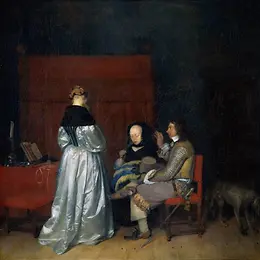
The skill with which painters do this can be breathtaking. This is the case for Gerard ter Borch, a Dutch Golden Age master known for his depictions of satin gowns. Take the dress worn by a woman in "The Paternal Admonition" in Amsterdam's Rijksmuseum. The fabric shimmers as its surface catches light, revealing the artist's astonishing ability to create lustrous, flowing fabrics using canvas, brushes and oils. But beyond his virtuosity, ter Borch gives us something else. Depicting narrow waists, lantern sleeves and voluminous skirts, his artworks show us in exquisite detail what the fashionable seventeenth-century woman liked to wear.
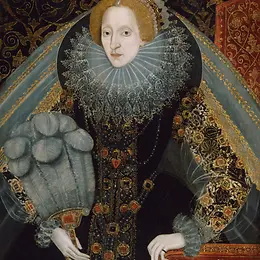
Equally fascinating are the giant starched ruffs seen in paintings of Queen Elizabeth I at London's National Portrait Gallery. The wheels of lace framing the queen's pale face and flaming red hair were more than fashion statements. Along with dresses laden with gemstones, pearls and gold thread, they spoke of status, wealth and power.
At Lichtenstein's Princely Collections in Austria, the extensive collection of Flemish and Dutch masterworks provide a rich visual record of the messages clothing sent about social status and wealth. "The so-called Burgundian Black of the Renaissance was far more than a colour - it was a privilege", says Koja. "The term derives from the Burgundian court of Philip the Good in the fifteenth century, where black dress became established among the nobility. Only those who could afford the costly, deeply saturated black fabrics were permitted to wear them. In the portraits of Anthony van Dyck and Frans Hals, black becomes a visual signifier of status, wealth, and elegance. This historical understanding of black as a symbol of prestige continues to shape fashion to this day."
Paintings in the collection such as the 1618 portrait of a man by Anthony Van Dyck reveal that women weren't alone in favouring ruffs, which stand out against their inky black garments. However, male ruffs could also be more modest, as seen in another sixteenth-century Dutch portrait in the Princely Collections. In a painting dated 1568, the subject is also dressed in black except for the white starched fabric that has been moulded into delicate figure-of-eight folds at the top of his collar.
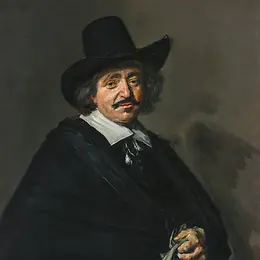
Also at the Princely Collections, a portrait by Frans Hals depicts another man dressed in black. We know little about who he was. But with impressionistic flicks of his paintbrush, Hals portrays a man whose attire - notably his large broad-brimmed hat, set at a jaunty angle - enables the artist to convey an inner confidence.
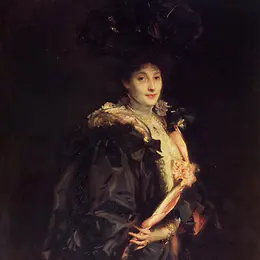
Not all artists simply recorded the clothing they saw. For one great portrait painter, John Singer Sargent, fashion was part of the creative process. This was highlighted by a 2023-2024 exhibition called "Fashioned by Sargent" at Boston's Museum of Fine Arts (MFA), which presented both paintings and the clothes worn in them. The exhibition showed how Sargent frequently chose the clothes his subjects wore and even altered their details - a way of expressing something about the sitter.
To illustrate this, Erica Hirshler, the MFA's senior curator of American paintings, points to Sargent's portrait of Aline Rothschild Sassoon in a black silk taffeta opera cloak with a bright pink lining (the cloak itself was also in the show). What Sargent does in the painting, explains Hirshler in a webinar, is to "take charge of that opera cloak". By opening it slightly so that the pink lining links the sitter's face and hands, Sargent creates a dramatic moment. "That great swoop of pink paint adds energy and liveliness to the portrait", she says, "assisting with the idea that this was a woman on the move".

But if Sargent used fashion as an expressive tool, artists and designers have always been closely linked. Schiaparelli collaborated with surrealist artists. In 1937, she worked with Salvador to create "The Lobster Dress", an organza gown with a giant, hand-painted lobster on its front that is on display in the V&A's show and was immortalized by Wallis Simpson, Duchess of Windsor, whose relationship with King Edward VIII led to his abdication.
From surrealist designs and old master paintings to portraits in which clothing is an expressive tool that conveys the sitter's character, there is an inescapable truth: When it comes to art and fashion, the two can be hard to separate.