- Home
-
Private banking
-
Market view and Insights

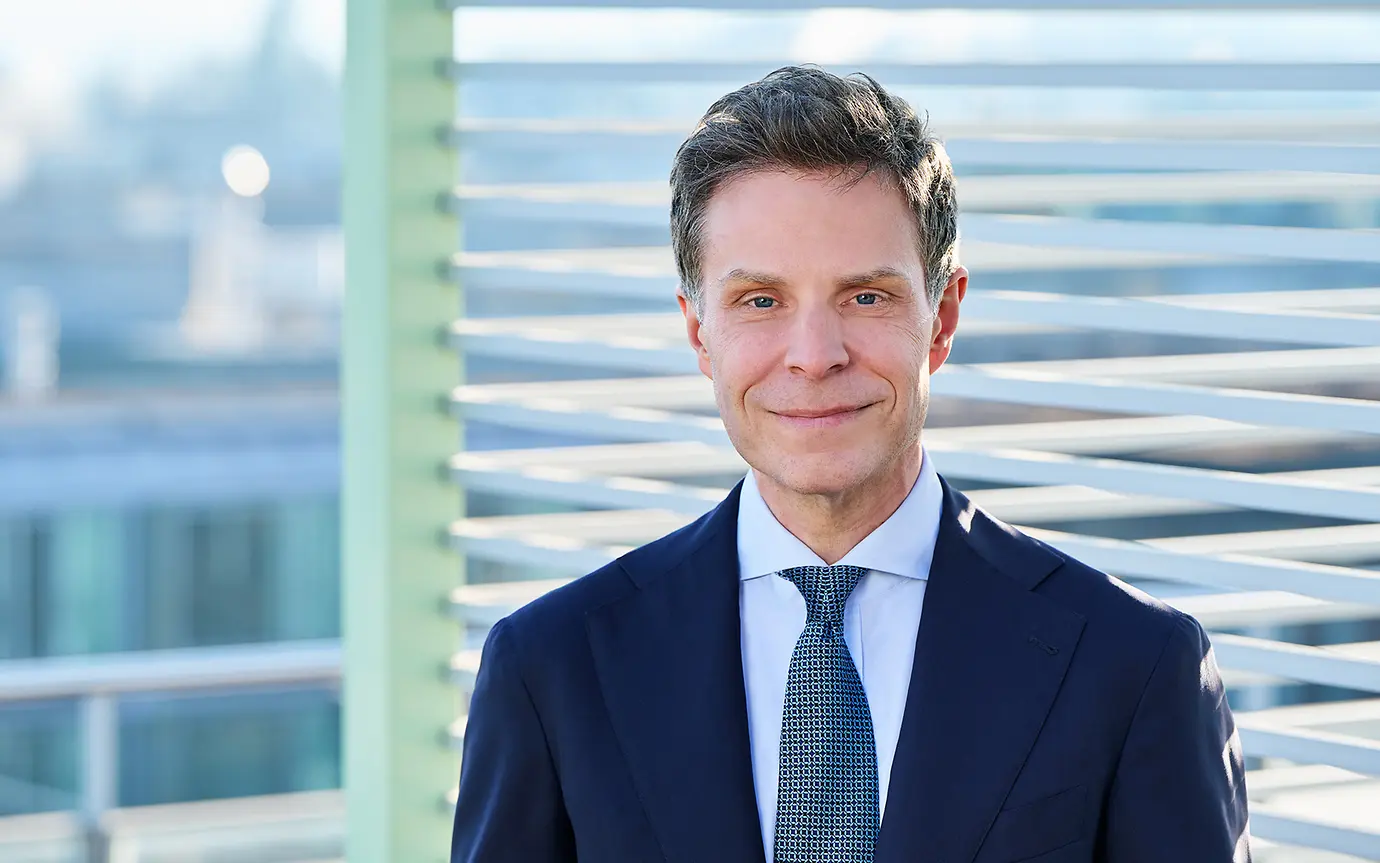
Dr Mika Kastenholz, LGT Global Head Investment Solutions, says that today's distorted business cycles mean investors need a clearsighted, global, and long-term focus more than ever.
Dr Mika Kastenholz: In astrophysics, the event horizon marks the boundary beyond which the gravitational pull of a Black Hole becomes so overwhelming that escape is no longer possible. It's where, to an outside observer, time itself appears to stop. Space curves inward, light bends, and signals from beyond the threshold arrive distorted or not at all. Global markets now find themselves at such a threshold.
Investors have become used to predictable business cycles where periods of growth are followed by times of recession. Over the past two decades, central bank interventions have stretched the business cycle almost beyond recognition. Recessions that might have cleansed the economy of excess leverage were shortened, or just never happened.
For investors who have become used to this prolonged calm in the markets, time appears to slow. Volatility is compressed, credit spreads narrow, and the urgency to discriminate between quality and speculation fades. Yet this artificial equilibrium hides accumulated imbalances (e.g. global current account) that do not disappear simply because their reckoning has been deferred.
Mika Kastenholz is the Global Head Investment Solutions at LGT Private Banking. With an academic background in science and technology, Mika Kastenholz has more than 20 years' experience in capital markets, trading, and investment products including cross-asset derivatives. He is the author of a book on derivatives trading and also co-founded a fintech firm specialised in private banking and wealthtech solutions.
Not really; in fact, it adds another distortion. Technology is developing at an unprecedented pace, but this produces a temporal paradox. For instance, in biotechnology, new discoveries now take years, not decades. AI-assisted software development is collapsing delivery cycles from months to days. As this rate of change accelerates, the time it takes to complete tasks reduces. Time speeds up, but as we saw above, it also seems to stand still. I don't see a return to more conventional economic cycles.
The main global economic actors are finding it difficult to cope at the event horizon. Sovereign debt levels exert persistent pull on growth, monetary policy, and asset prices. Central banks find themselves caught between inflation mandates, sovereign funding costs, and the need to keep markets calm.
The post-Cold War unipolar order - that brief interlude some people mistook for the end of history - is fracturing. A G2 configuration is emerging in which China and the United States exert competing gravitational fields, reintroducing the spectre of direct or proxy confrontation. Hot wars, once considered over for good, have returned in Europe and the Middle East.
Capital flows, supply chains, and technology standards - once the subject of multilateral agreements - are increasingly diverging along strategic lines. Geopolitical risk is a central concern, not an exceptional scenario. We explore the investable consequences of this in more depth in in our Global Investment Outlook.
The global economy is being recalibrated. What does this mean for investors in the second half of 2026?
Operating at the event horizon requires a different orientation. Traditional mean-reversion theory assumes a stable equilibrium, provided by anchoring institutions. Without these familiar reference points, investors need to focus on the long-term with a global focus, and stay alert: many previously accepted models no longer apply.