
- Home
-
Private banking
- Market view
- Insights
-
LGT career

We know more about each other than ever before - and trust each other less than ever. In this interview, AI researcher and marketing professor Peter Mathias Fischer explains why.

Companies' knowledge of their clients has grown enormously - but so too has the knowledge of the clients themselves. Today, they can access information in real time. At first glance, this sounds like a win-win situation, but it isn't quite that simple. Because this also gives rise to a new challenge: how do you distinguish between fakes and misinformation and what is genuine? We live in an age of both information and disinformation, and that is precisely what breeds mistrust.
That is precisely the irony. Thanks to technology and connectivity, we are better informed today than ever before - and yet we are more distrustful. In an age of countless options, we have rightly become more discerning. This makes it increasingly difficult to forge a lasting, emotional bond between clients and a company.
Peter Mathias Fischer is Professor of Marketing at HEC Paris (École des hautes études commerciales Paris), Academic Director at the Creative Destruction Lab Paris and a member of the University Council at the University of St Gallen. His research focuses on topics at the intersection of strategy, managerial decision-making, international business, (big) data, AI, psychology and technology. He has also been working as a consultant and keynote speaker for over 15 years.
From data, more than ever before. Websites, apps - every interaction with digital channels is analysed. From these digital footprints, knowledge is generated that is intended to lead to better offers and ultimately increase loyalty. That is the theory.
In practice, this is precisely where the danger lies. Companies can easily lose their way in their digital channels - particularly when these channels serve as both a point of contact for customers and a source of data. They optimise data collection whilst forgetting the people behind it.
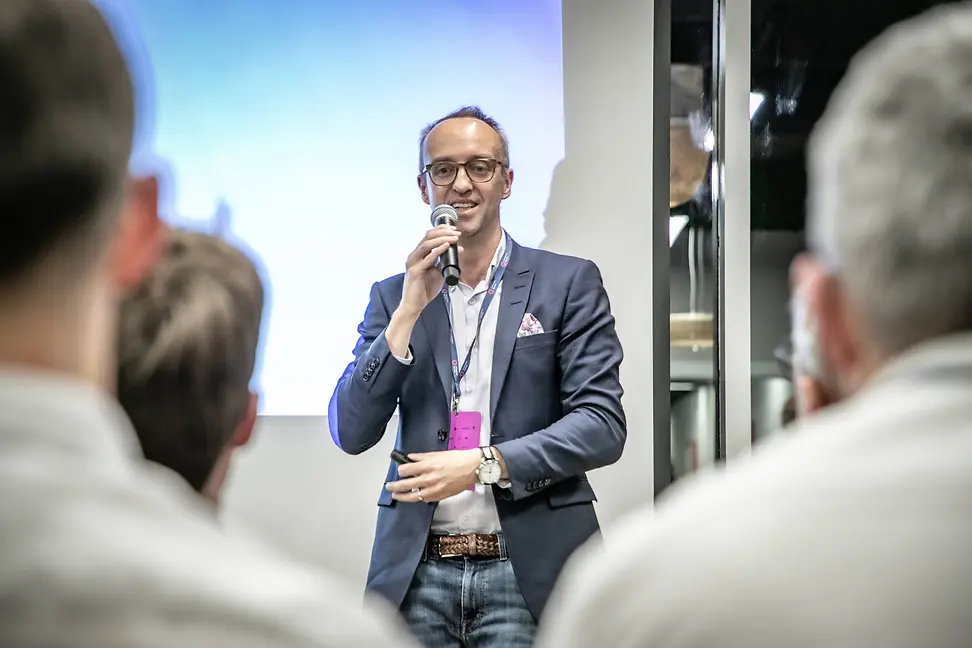
Particularly in the age of artificial intelligence, personal client contact is becoming a real differentiating factor. For complex products - think of financial services - or for a premium positioning, it is even indispensable. The formula for success is therefore: high tech and high touch. Those who combine a personal approach with state-of-the-art technology offer discerning customers exactly what they want - individual, personalised support, backed by intelligent systems.
When the public increasingly views corporate statements with suspicion, corporate communications are forced onto the defensive. A very concrete example of this is the phenomenon of "greenhushing": companies deliberately refrain from talking about their sustainability achievements - for fear of being accused of greenwashing. This shows just how deep-seated this mistrust has become.
The way customer data is handled could be the key to this. It is not enough simply to interpret customer data correctly. What is crucial is that staff translate this data into offers with genuine added value, drawing on empathy, motivation and expertise. Companies that succeed in doing this are perceived as authentic and particularly trustworthy. And that is precisely what constitutes a strong competitive advantage today.
Data is not an end in itself. It is only as good as the people who translate it into genuine added value with empathy and expertise. Those who understand and put this into practice can successfully set themselves apart from the competition in an age of widespread mistrust.