- Home
-
Private banking
- Market view
- Insights
-
LGT career

Is art the most beautiful form of investment? Yes - but only if it genuinely brings you joy. It should never be bought purely for financial reasons, says Jennifer Greenland-Pessina, Art Advisory Specialist at LGT. She explains what collectors should consider - from appraisals and provenance to succession planning.
During a recent discussion about a family's estate planning, a client raised a concern, almost in passing: "My mother has a huge amount of art at home, and I don’t think any of it is insured. What should we do?" For Jennifer Greenland-Pessina, who works in the Art Advisory team in LGT's Wealth Planning department, this is exactly the kind of question that should be addressed early on.
"It's important that situations like this are brought up early," says Greenland-Pessina. "That way, we can identify the questions that need to be addressed - and where any risks might lie." She knows from experience that, when it comes to art ownership, even a seemingly straightforward move abroad can raise complex questions involving several jurisdictions.
Paintings, sculptures and other valuable objects can have enormous personal significance. They are often admired, marvelled at and loved - yet they are still sometimes overlooked in wealth and succession planning. Beyond their emotional significance, art can also constitute an asset in its own right and should be considered alongside financial investments, property and business interests.
"Clients are often surprised when I share an appraisal of their collection with them," says Greenland-Pessina. Sometimes the news is disappointing: a collection of pewter figures, for example, may no longer be in demand the way it once was. The same may be true of silver cutlery that the family had traditionally reserved for Easter but that no longer appeals to contemporary tastes. In other cases, the surprise can go in the other direction: clients discover just how valuable some of the objects they grew up with may be.
"I find it a shame when someone has to sell high-quality art simply to buy out co-heirs and, in the process, break up a harmonious collection," says Greenland-Pessina. She sees herself as an independent sparring partner. LGT does not make specific recommendations to buy or sell art. Nor does it offer art financing or lend against artworks.
"My job is to work with clients to ensure that the art component fits into their overall wealth plan - not just today, but in the future and for the next generation."
Jennifer Greenland-Pessina was an avid painter as a child and later studied art history and management. Before joining LGT's Wealth Planning department in 2022, she worked for many years at a renowned auction house and managed a private art collection. At LGT, she is responsible for Art Advisory services.
So what does this art expert, who spent many years at a renowned auction house, make of the record sums that some works command at auction?
Less than the headlines might suggest. "Even when a painting is sold at auction for many times its purchase price, people tend to overlook the costs incurred - for proper storage, restoration, transport and insurance," says Greenland-Pessina. Research shows that once these costs are taken into account, even top-tier works may deliver long-term annual returns of less than 6 %. So from a purely financial perspective, for example equities may offer more attractive returns.
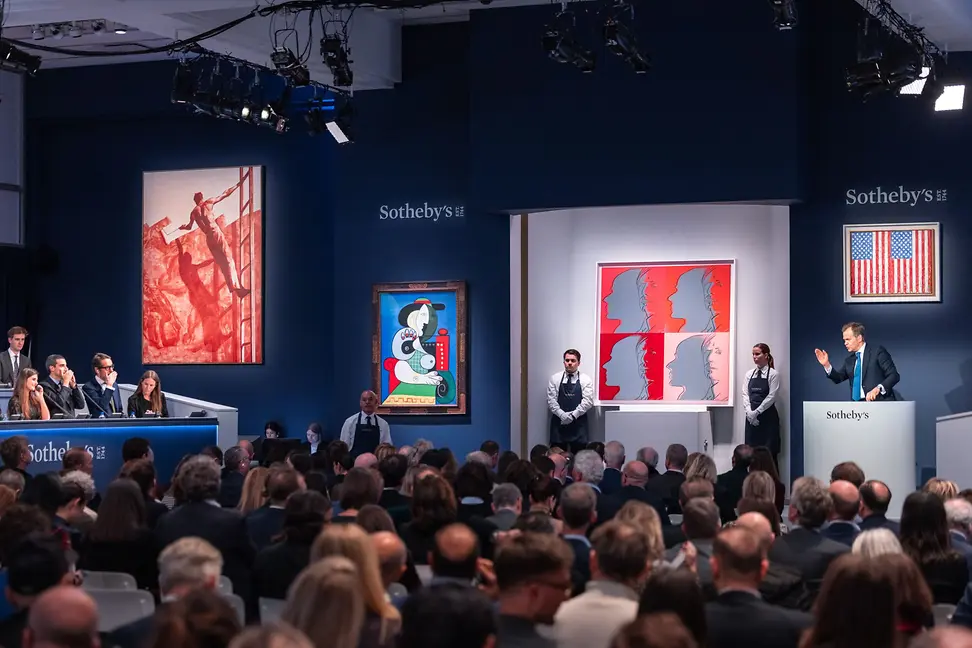
"Art enriches life, but you shouldn't treat it like an ordinary asset class," says Greenland-Pessina. Fo investors interested in art primarily as a means of diversification, she suggests that an art fund may be more suitable than buying individual works directly.
Greenland-Pessina particularly enjoys hearing from younger art enthusiasts. "Many want to start collecting but don't know how - and are afraid of making bad investments," explains Greenland-Pessina. Her advice? "Buy what you like!"
She does, however, also have a few practical rules of thumb to share. Smaller works are generally easier to display in the home, and are often easier resell. Also, traditional techniques such as oil on canvas can endure for centuries, whereas with newer techniques and materials it can be difficult to know how they will age over time.
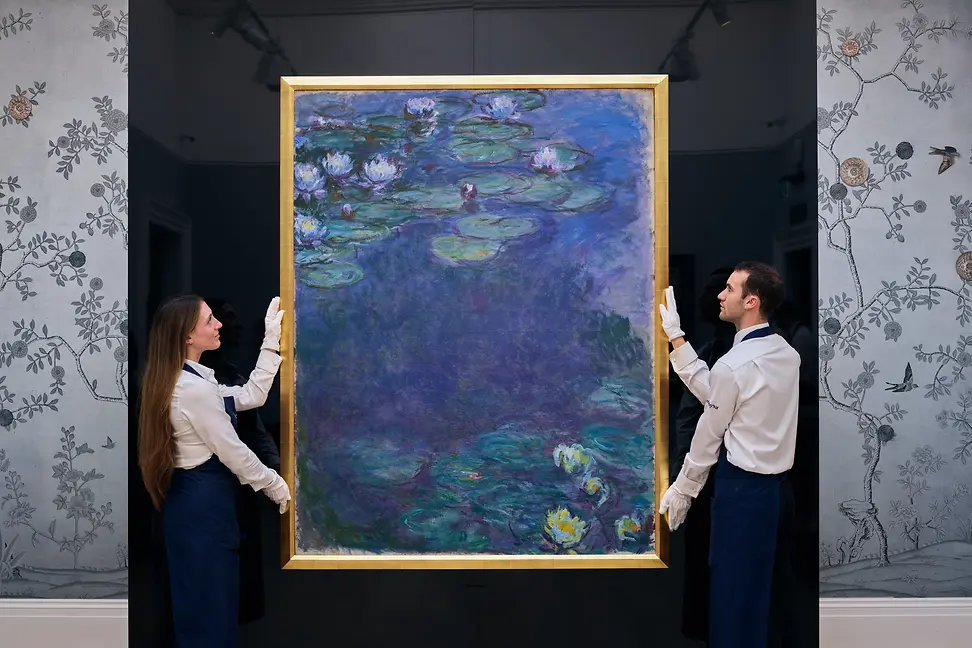
Greenland-Pessina recommends auctions as excellent places to learn about investing in art; places where enthusiasts can train their eye, experience the market first-hand and get a feel for different techniques and prices. But beginners shouldn't start bidding right away. A small gallery may be a better place to begin, she explains. "Emerging artists often sell their works for relatively modest sums. As a collector, you can build a relationship with them and follow their development through different creative phases." Many major collections have been built in precisely this way.
And what about art being sold on Instagram? Greenland-Pessina smiles: "There's no reason not to buy a painting if you like it." But artists who choose to manage and market themselves entirely on their own need to have the right structures in place and keep very good records. "In my experience, galleries offer more support and opportunities. After all, they're interested in developing their artists' careers over the long term."
Old Masters are highly sought after. And the more uncertain the times, the more the market tends to gravitate to more established names and works. But regardless of the period or artist, one topic comes up in almost every consultation: provenance.
"Without a fully documented provenance, it is now virtually impossible to sell a work of art credibly - no matter how famous the artist," says Greenland-Pessina. She recalls an enquiry concerning a collection of Chinese art. "I had to explain to the person I was dealing with just how important it is that objects have left their country of origin through legally verifiable channels."
Depending on the situation, Greenland-Pessina also puts her clients in touch with external specialists in LGT's network. As a child, she was a passionate painter. Today, she has mastered a different art: guiding families, like the one whose mother had so much (potentially) uninsured art, towards a solution that satisfies everyone involved.
Over the past 500 years, the Princely House has assembled one of the world's most important private art collections, comprising masterpieces ranging from the Early Renaissance to Austrian Romanticism – including works by Lucas Cranach the Elder, Frans Hals, Raphael, Rembrandt, Peter Paul Rubens, Anthonis van Dyck, Rudolf von Alt, Friedrich von Amerling and Ferdinand Georg Waldmüller. Works from the collections are on public display at the Liechtenstein Garden Palace and the Liechtenstein City Palace in Vienna, as well as in exhibitions at many major museums around the world.