- Accueil
-
Private banking
-
Vue du marché e Insights

More energy infrastructure is needed to support the rising demand for data centre capacity. But rapid power expansion will have to be compatible with decarbonisation commitments.

It isn't just tech bros who use artificial intelligence (AI) today - we all do. The spread of AI has sparked unprecedented investment in power-hungry data centres, where data processing for AI model training and use takes place. While the financial input needed to build more of these "AI factories" is immense, their realisation will depend on the ability of the power system to meet their vast energy demands.
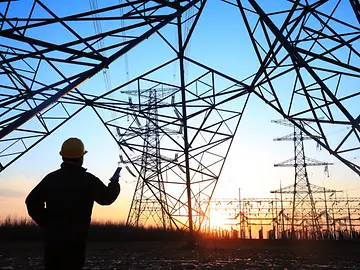
Global data centres' power consumption is expected to more than double by 2030. This shift will put considerable strain on local power grids, particularly in the USA and Europe, where electricity networks are in dire need of upgrades. Data centres drain power grids due to their power surges in specific locations. Meeting this increasing demand requires solutions across the entire power value chain.
AI-focused tech giants have already shown their willingness to pay to get their data centres up and running as quickly as possible. This bodes well for companies offering alternative ways to connect to the grid, as well as off-grid solutions, such as local power generation.

Tobias Aellig is a Senior Equity Specialist at LGT. He focuses on companies in the information technology and industrial sectors, with a specialization in the semiconductor and capital goods industries. His areas of expertise include artificial intelligence, cloud computing and data centers, automation and robotics, and energy efficiency.
Global electricity demand has been rising on average by 2.9 % a year over the last decade, nearly twice the rate of growth of total energy demand. China has been the dominant driver, accounting for almost two-thirds of the demand, while consumption in the EU, Japan, and North America has largely stagnated as efficiency gains and slowing industrial production have offset new demand.
However, this trajectory is now shifting, with new demand drivers emerging in advanced economies, such as the adoption of electric vehicles (EVs), AI, and re-industrialisation. The International Energy Agency projects that global electricity demand will increase by almost 1100 Terawatt (TWh) per year until 2035. This is equivalent to adding the electricity demand of all the advanced economies combined over the next decade. In advanced economies, data centres look set to be the second-largest source of rising demand after EVs.
Electricity consumption by data centres is driven not only by a growing number of facilities, but also by a surge in power density. A 10 mega-watt (MW) data centre was considered large ten years ago; today 200 MW is a normal size, with gigawatt-scale facilities on the drawing board. Although most of the electricity is used to power the accelerated AI servers, a lot of energy is required to cool these systems.
Data centres are not only multiplying rapidly - their power requirements per facility are rising sharply as AI workloads expand.
Historically, data centres have been clustered in specific regions, and this concentration is intensifying with the development of AI. So although data centres account for only a small proportion of global electricity consumption, their high power drain in periods of peak demand puts a strain on local power grids. This makes grid integration more challenging and has led to significant grid connection delays.
Connection queues for new data centres already span several years in key markets. New connection requests require a careful assessment of grid capacity to ensure that it can meet the additional demand. And data centres don't just need electricity to operate; water to cool systems and a skilled labour force are just a few of the other requirements for successful data centre operation. Furthermore, policymakers must take environmental implications of data centres into account, in the context of their sustainability and decarbonisation committments.
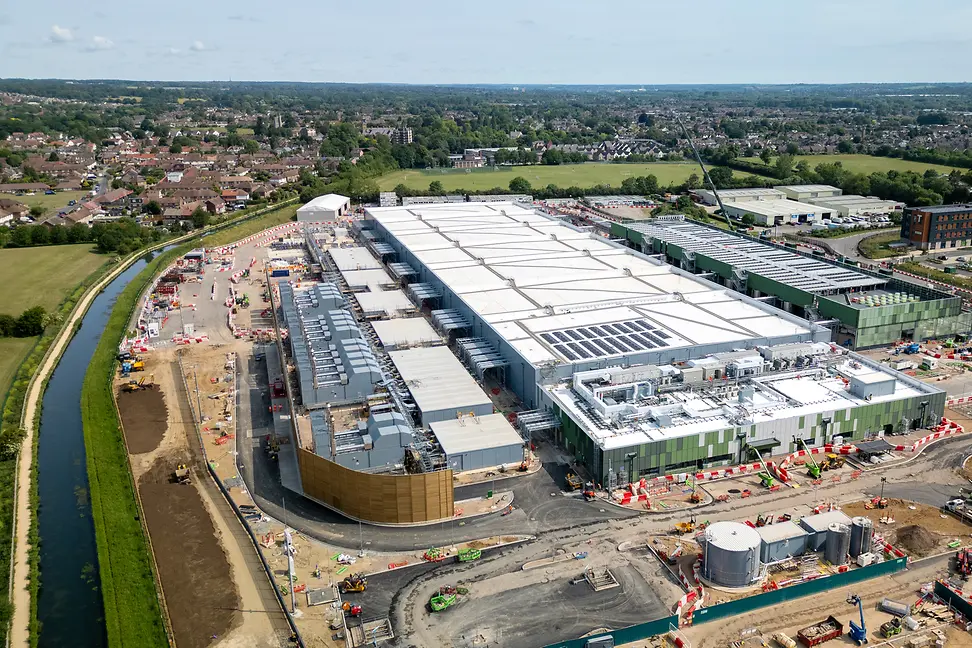
Grid infrastructure plays a key role in the twin transitions of digitalisation, which includes AI, and decarbonisation. However, building and modernising grid infrastructure takes time and is costly. Critical components like transformers have also been in short supply. AI's strong growth in demand for power is a wake-up call to invest in grid infrastructure, and data centre operators are increasingly looking for solutions to address the looming power gap.
Data centre operators are responding to these challenges by adopting a variety of approaches to secure reliable and scalable electricity supply. These strategies include configurations that reduce or bypass reliance on a grid connection, such as on-site and co-located power generation. They are often used in combination to mitigate grid bottlenecks, accelerate deployment timelines, and enhance operational resilience.
On-site generation: Power assets installed at data centre facilities supply electricity directly to the user, eliminating or reducing reliance on the main grid. The key advantages are faster deployment timelines, improved reliability, and reduced exposure to interconnection constraints.
While natural gas-fired generation represents the most scalable on-site solution, hyperscalers (large-scale data centres) are also assessing lower carbon alternatives, including geothermal energy, solar paired with storage, and for the longer term, small, modular nuclear reactors (SMRs), as potential sources of low-carbon baseload power.
Co-located generation: Another option is to develop data centres close to large-scale power plants that are under-utilised or retired. This allows operators to secure a dedicated electricity supply while using established grid interconnections. Amid land scarcity, utilities may welcome the opportunity to monetise valuable existing grid connections with retired coal or nuclear sites.
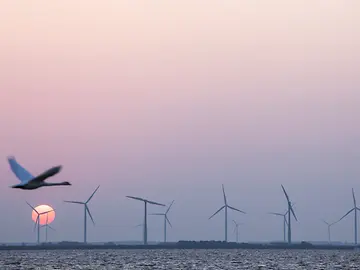
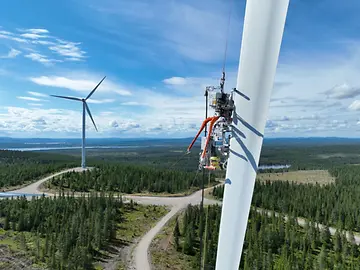
The supply of electricity to meet data centre demand may come from a wide range of sources, each with different characteristics in terms of power supply, costs, emissions, the development process, and lead times. Although today's electricity supply mix remains dominated by fossil fuels, the IEA projects that renewables will supply almost 50 % of the additional demand by 2030, with nuclear power becoming increasingly important after 2030.
LGT's experts analyze global economic and market trends on an ongoing basis. Our publications on international financial markets, sectors and companies help you make informed investment decisions.
The rapid expansion of AI data centre capacity is expected to drive sustained investment across a wide range of power generation and energy infrastructure technologies. As hyperscalers and data centre operators prioritise speed, reliability, and scalability while balancing their decarbonisation commitments, a diverse energy mix is likely to emerge.
While any equity investment carries risk of losses, this energy mix may create opportunities for investors in both traditional and renewable generation technologies and infrastructure solutions, including electrical equipment and storage systems. The primary risks to this theme include a lower-than-expected buildout of AI infrastructure, due to revisions in demand or bottlenecks in supply.