- Accueil
-
Private banking
-
Vue du marché e Insights

There's no shortage of thrills or novelty in Las Vegas. Between its resorts, casinos, restaurants and shows, visitors can fill their days chasing whatever form of excitement takes their fancy. Yet in mid-July, several hundred people gathered at the city's Wynn hotel for something that might seem out of place in this hub of endless novelty - a chess tournament.
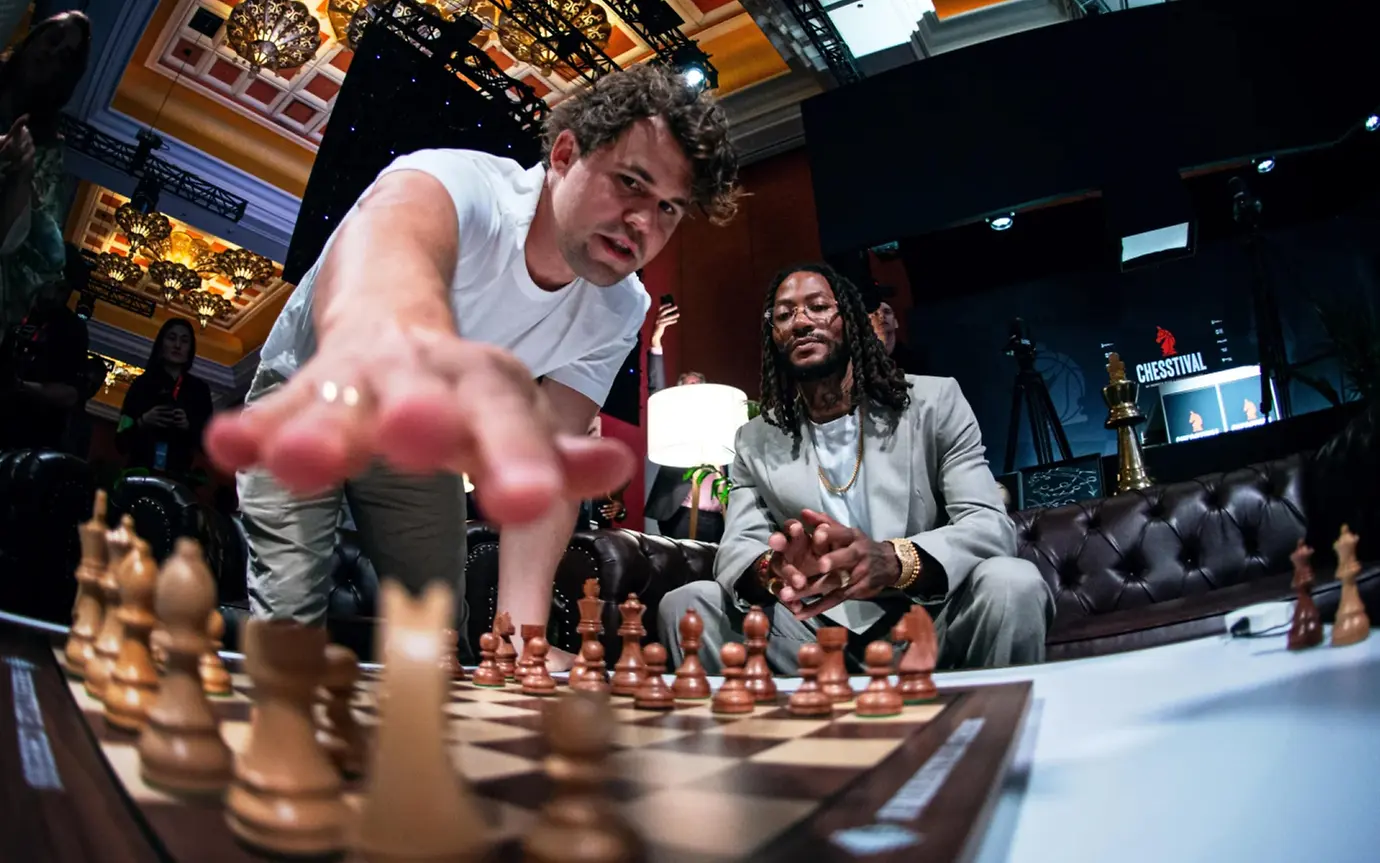
It was the latest leg of the Freestyle Chess Grand Slam. In the final, Hans Niemann played Levon Aronian for first place, while Magnus Carlsen and Hikaru Nakamura competed for third. In a new twist for the Grand Slam, the finalists were cheered on by a live audience. Spectators sat just a few metres from the players, headphones on, eyes darting between the competitors and the giant screens showing their every move. For the viewers streaming from home, digital boards shared screen space with close-ups of the players, low-angled shots looking up from the board, and a stream of commentary and analysis.
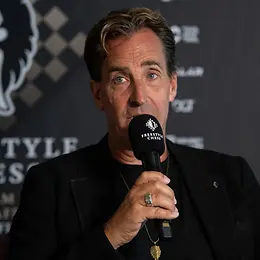
Aronian ultimately won the tournament, with Carlsen finishing third. At the trophy ceremony, the top three players stood on stage holding giant cheques as Jan Henric Buettner, the German entrepreneur who co-founded the tournament with Carlsen, announced upcoming events culminating in a tournament in South Africa in December. He also teased a few format changes as the Grand Slam evolves, because while it's a big show, it's still a work in progress.
"Of course, we have it much easier", he says over the phone a few days after the Las Vegas tournament. Formula 1, he explains, requires race tracks; chess requires far less space and equipment. Still, the Grand Slam travels with more than just a few chess boards and pieces. The stage is packed with cameras and photographers. There are trophies and leather couches, and spotlights that swoop around the venues.
These flourishes are less for the players than for the audience - designed to set the experience of the Grand Slam apart from other chess tournaments. And the potential fanbase is vast: millions of people around the world already play and follow chess. The Netflix hit "The Queen's Gambit" and the COVID-19 lockdowns brought a surge of new players, many competing online and learning tactics from YouTube videos posted by a growing army of chess influencers.
Buettner sees this as a ready-made market. "You don't have to make chess popular. It already is popular", he says. "There is an interest in what is going on in this market. And if you present it in a more accessible, interesting and entertaining way, you will have more people watching."
Attempting to create new sports, or to re-invent or turbo-charge existing ones, is nothing new. Think of the XFL, Arena League Football, Slamball or the periodic televised revivals of Roller Derby. Cities have even invested in infrastructure for esports, betting that video game competitions could fill stadiums too.
While there's no exact recipe for success, Michaël Mrkonjic, a sports economist at Switzerland's Federal Institute of Sport, says there are three key factors to consider.
The first is participation - whether in clubs and leagues, or among enthusiastic amateurs. "You always need to think about what sports kids are playing without being told they need to play them", Mrkonjic says.
Chess has an advantage in that regard. TechCrunch reports that 200 million Chess.com users play some 20 million games per day. The site is to chess what countless makeshift football pitches are to the rest of the world - a place where athletes, hobbyists and anyone killing time can find a match. On flights or trains, it's not unusual to look over a stranger's shoulder and see them moving pawns on a chessboard on their phone.
Of course, playing chess is very different from watching it. A serious player might watch a competition to learn strategies from professionals, but to outsiders, the sport can seem a bit static. "I found the perfect sleeping pill watching two people play chess", Buettner jokes, recalling a competition he watched several years ago.
That's where the "freestyle" in the Freestyle Chess Grand Slam comes in. The format, also known as Chess960, was popularised by former world champion Bobby Fischer. It randomises the placement of all non-pawn pieces, shaking players out of traditional gambits and defences. "As someone who treasures the creativity of chess, I wanted to focus more on this aspect of the game", Carlsen wrote in The Economist. "The most compelling aspect of the grand slam isn't the venue or even the participants. It's the format."
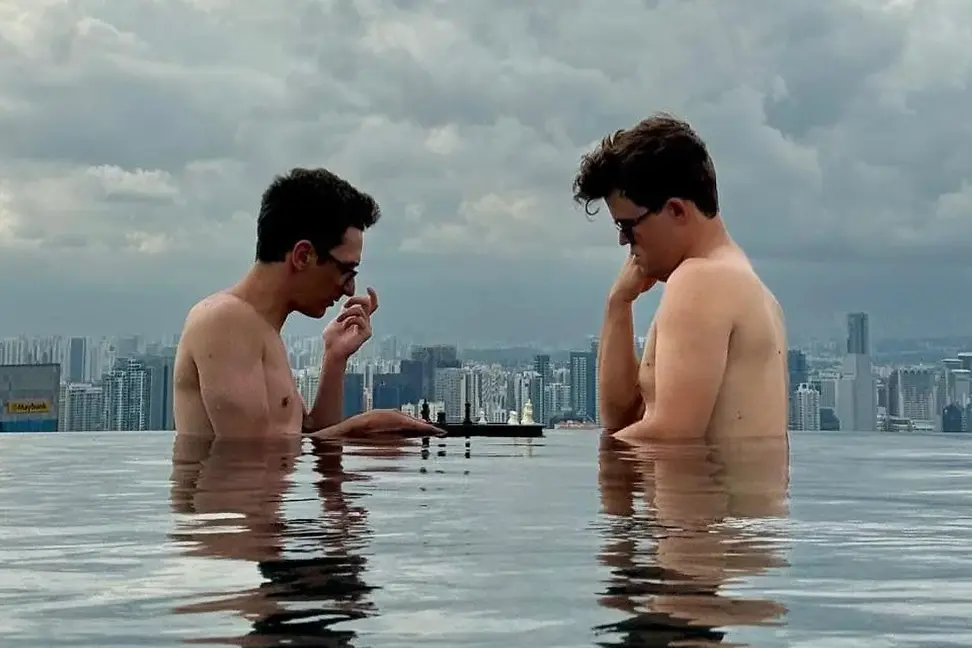
He calls freestyle "a revitalisation of the sport." Watching it, the scrambled starting positions feel jarring at first but soon become intriguing. Seeing the rooks and knights placed differently takes some getting used to, but forces players to reconsider what each piece can do and how it could be used. It challenges armchair strategists to rethink the rules, and adds an element of surprise to each game.
A sport doesn't necessarily need dynamic physical action to draw audiences. "When you have more static competition that is less action-oriented, you have to develop a narrative around the sport", Mrkonjic says. Which ties in to the second factor for a successful sport: format and presentation.
Sports thrive on compelling narratives such as historic rivalries and Cinderella stories. Social media now amplifies these tales, as athletes share reactions to matches and talk with one another. Fans can spend days immersed in the lives of their heroes, and athletes and leagues can craft stories around each new competition.
The travelling nature of many sports adds an extra layer of glamour. Mrkonjic points to the Tour de France, with its lush views of the French countryside. "You can sell nice images of a city, different types of competition, a narrative, a historical background", he says.
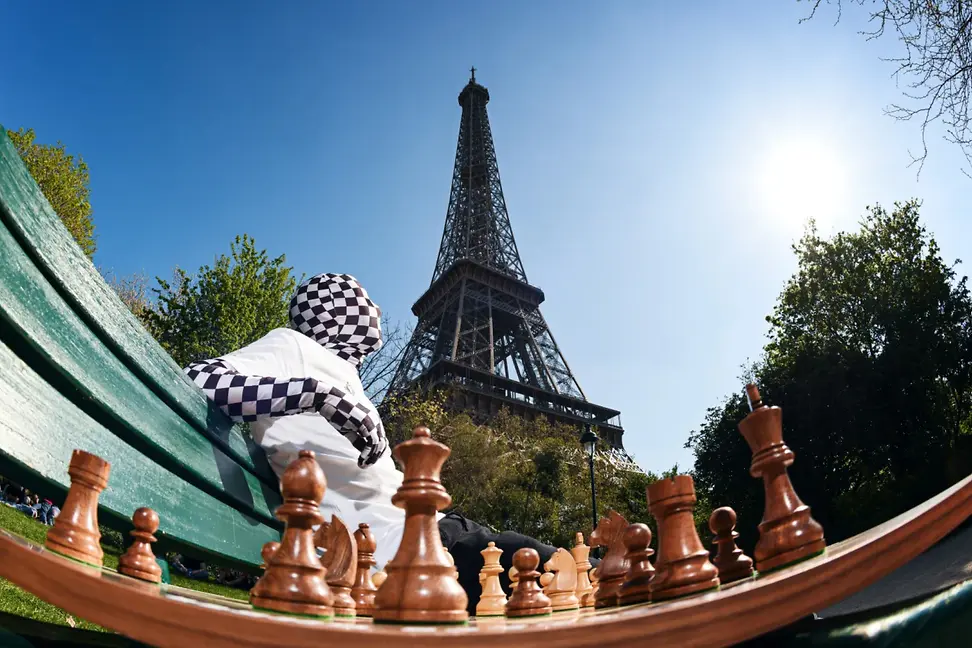
That's Buettner's approach. Freestyle Chess Grand Slam events have been held in Singapore, Paris and Buettner's own Weissenhaus resort in northern Germany. The world-class players don colourful blazers for visual flair, and broadcasts feature "confession booths", where they discuss strategy and mindset, reality TV-style. "We are putting people in the foreground", Buettner says. "If you know about the players and what their struggles are, it's much more interesting", he adds.
The nearly seven-hour livestream of the Las Vegas final drew almost 100,000 views on the Chess24 YouTube channel, which has over half a million subscribers. In the comments, fans cheered on their favourite players, debated the quality of the announcing and generally had the kinds of conversations you'd hear in a stadium. Afterwards, players posted their own videos, and fans and followers uploaded their commentaries. The result? Watch one chess video, the algorithm will serve you a slew of deeper dives hosted by compelling commentators.

Even celebrities are getting joining the wave: before the Las Vegas tournament, Freestyle Chess hosted an event with retired NBA star Derrick Rose, and Bloomberg reported in June that several well-known athletes play incognito on Chess.com.
Formula 1's surge in popularity owes much to Netflix's documentary series "Drive to Survive," which introduced outsiders to both the sport and its celebrity drivers. Buettner says a production team has been filming the Freestyle events to create a similar show that will be pitched to streaming networks.
Mrkonjic's third success factor is the live event itself. Fans, he says, "want to go home with an experience" - one that extends beyond the match. This experience is something fans can share, and it happens both inside and outside the stadium. "It's what you can eat, who you meet, the VIP possibilities".
The real competition, he adds, is against all the distractions and options available to us today. "You now have so many possibilities to be entertained", Mrkonjic says, "so you always need to find the thing that makes your event a bit cooler than the others."
Chess has no shortage of tournaments. During the Las Vegas Freestyle Chess Grand Slam, FIDE, the international governing body for chess, was hosting the Women's World Cup, and in June, NPR reported an exceptionally strong turnout at the Chennai Grand Masters in India.
Buettner's VIP model, inspired by the Formula 1's Paddock Club, offers something different: an opportunity to eat, drink and make new friends. "They are there to connect with other people, to socialise, to have good food, to enjoy the atmosphere", he says. People with a VIP package can attend the event all day and sometimes not even watch a single game. As a bonus, the players themselves attend VIP dinners. These factors gives people a different way of watching chess that appeals both to chess fans and to anyone more interested in being seen than in watching a match.
Buettner hopes the Freestyle Chess Grand Slam will generate over USD 200 million in annual revenue by 2031, through sponsorships, hosting fees, media rights, and ticket and merchandise sales. He also plans to introduce betting for fans. Having launched the current season with USD 20 million in venture capital, he's now raising funds for 2026 and expects to make a profit next year - if all goes to plan.
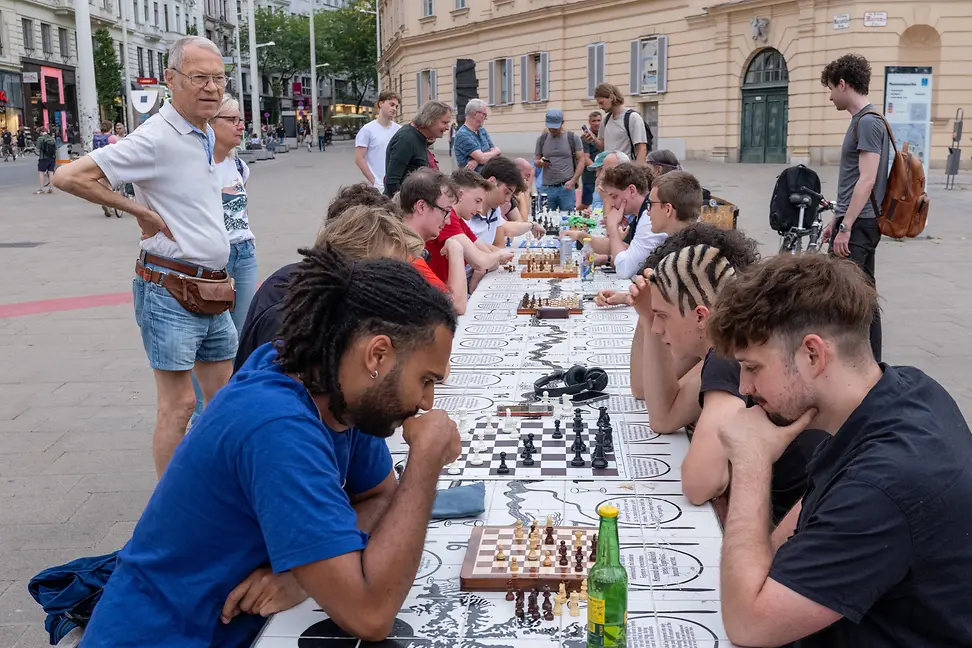
Yet chess runs far deeper than any trend. It remains universal and democratic, played by people from all walks of life and across every level of ability. It can be played on a park bench, in a café or online, anywhere two people can sit and think. However viewing habits evolve, its essence will endure - two minds, one board and the timeless battle of wits.