
- Accueil
-
Private banking
-
Insights et vue du marché

How artificial intelligence is driving the global shift towards fully autonomous cars and shaping the future of mobility.
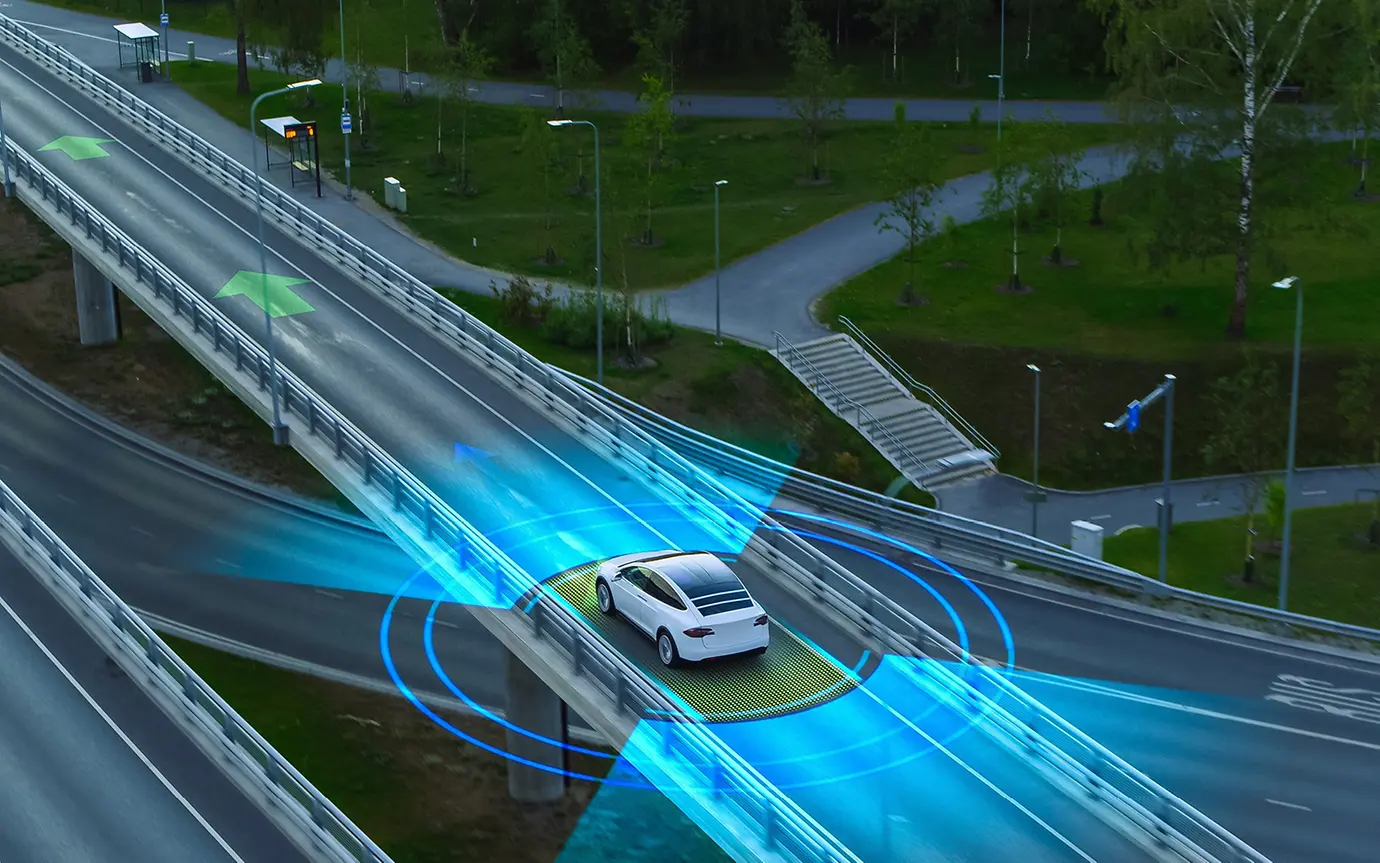
We know them as self-driving cars. And while they may not be on your street today, it is likely that the arrival of an autonomous vehicle (AV) in your neighbourhood isn't all that far off in the future.
Many cars already offer advanced driver assistance systems (ADAS) and device connectivity, which are the precursors to more autonomous driving applications. The fact is that the automation of personal vehicles will be a process of incremental evolution rather than a disruptive revolution.
Progress towards higher levels of automation depends on technological feasibility, market availability, regulations, and cost. Currently, most personal vehicles sold around the world operate at relatively low levels of automation.
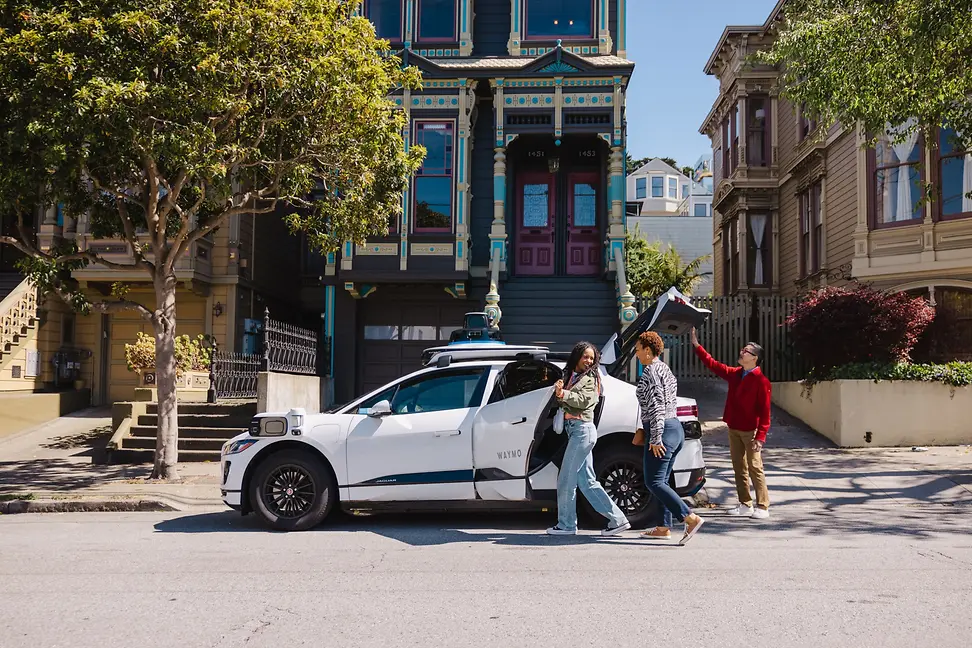
But change is coming fast. Self-driving robotaxi services are already operating in cities in the USA and China. They currently represent a very small proportion of the global operating fleet of cars, but feature the most advanced technology.
Fully commercial robotaxis run on public roads, accept passengers, charge a fee, and are fully driverless, without a safety driver. They can operate 24 hours a day, seven days a week, in all weather conditions. Although only three AV companies have fully commercially available robotaxi fleets on the road today, there are around 20 firms now testing or working on commercialising robotaxis.
While AV developers operate their own robotaxi fleets, many are looking to partner with other more established car manufacturing and ride-hailing businesses. Both car makers and ride-hailing operators have decided to work with robotaxi businesses rather than shutting them out. The most viable and attractive business models will emerge over time.
So how should we think about self-driving cars? The levels of automation extend from those you may be familiar with, like lane-keeping assistance and blind-spot detection, to full driving automation. The Society of Automotive Engineers has defined a six-level classification system to help understand the progression to full autonomy.
The AV market could be vast - but so are the hurdles.
Most new cars today range from Level 0 automation, where the driver is always responsible for operating the car, to Level 2, partial driving automation, where under specific conditions, the system can control both speed and steering. Here the driver must continuously monitor the driving environment and be prepared to take the wheel. However, there is an ongoing push towards higher levels of autonomy, with the first personal vehicles featuring Level 3 automation being launched.
At Level 4, by contrast, the vehicle can operate autonomously in predefined areas without driver intervention. At Level 5, the highest level, the vehicle performs all driving tasks in all conditions and environments, no driver is required and all the human occupants are strictly passengers.
It's clear that the car of the future will be electric, software-defined, and increasingly autonomous. This transformation is being propelled by two interlinked megatrends: electrification and digitalisation, and super-charged by advances in AI. As traditional car manufacturers adapt to the rise of these new technologies, cars are evolving from "dumb" internal combustion engine vehicles to electrified computers on wheels. Eventually they will become intelligent robots on wheels - true AVs.

The market opportunities for AVs are potentially enormous. Attention has been focused mainly on personal vehicles, with most independent forecasts estimating a USD 300 billion to USD 400 billion market by 2035.
However, autonomous driving has many other potential applications across different vehicles in many industries. Some autonomous farming and mining vehicles are already in use, achieving impressive productivity gains of up to 30 % and labour cost savings of up to 50 %.
Policymakers are also recognising the potential benefits that AVs provide. Theoretically, AVs could enhance road safety, a particular concern given that road accidents cause 3,000 deaths and up to 50 million injuries and disabilities per day, with most accidents caused by human error
AVs can potentially help address growing demographic challenges, as an ageing population already means fewer drivers of both trucks and taxis. The automation of transport could help to mitigate these structural labour shortages.
Furthermore, cars today are underutilised, with most personal vehicles not in use for 95 % of the time. This makes car ownership very inefficient. Robotaxis, if reliably instantly available and very cheap, could make car ownership less attractive for many people, and even help to reduce parking problems in urban areas.
AVs could also potentially free up time for those used to commuting by car, increase mobility efficiency if vehicles communicate while traveling to optimise traffic flow, and improve access to mobility for the many people unable to drive at all.
More autonomy means more sensors - and more cost.
Transitioning from lower-level driver assistance systems to fully autonomous ones requires highly sophisticated hardware and software. Key components in this development are sensor technologies like radar, cameras, and Light Detection and Ranging (LiDAR). These play a critical role in real-time perception while also collecting data to continuously improve the underlying AI models.
Each car manufacturer has its own strategy and approach to placing sensors, depending on the capabilities it intends to deploy. This is not unusual in the nascent development of a new technology. Some companies believe that a camera-focused combined with AI will be sufficient to ensure safety. Conversely, most leading AV companies today believe that redundancy and sensor fusion - combining data from multiple sensor types - are necessary to create a more comprehensive and accurate understanding of the environment. Time will tell whether AI-augmented camera systems can match the depth perception of LiDAR and sensor fusion, and what the total cost of this approach will be.
For now, integrating LiDAR remains the conventional approach among most carmakers, often used as a selling point for enhanced safety and perception reliability.
Autonomous driving relies on data, computing power, algorithms, and AI models. Although simulated data is being used to train AVs today, real-world data will be essential for improving their capabilities - and safety. Having an early-mover advantage and a large fleet will help the leading companies accumulate mileage and collect data faster, theoretically keeping them ahead in terms of performance.
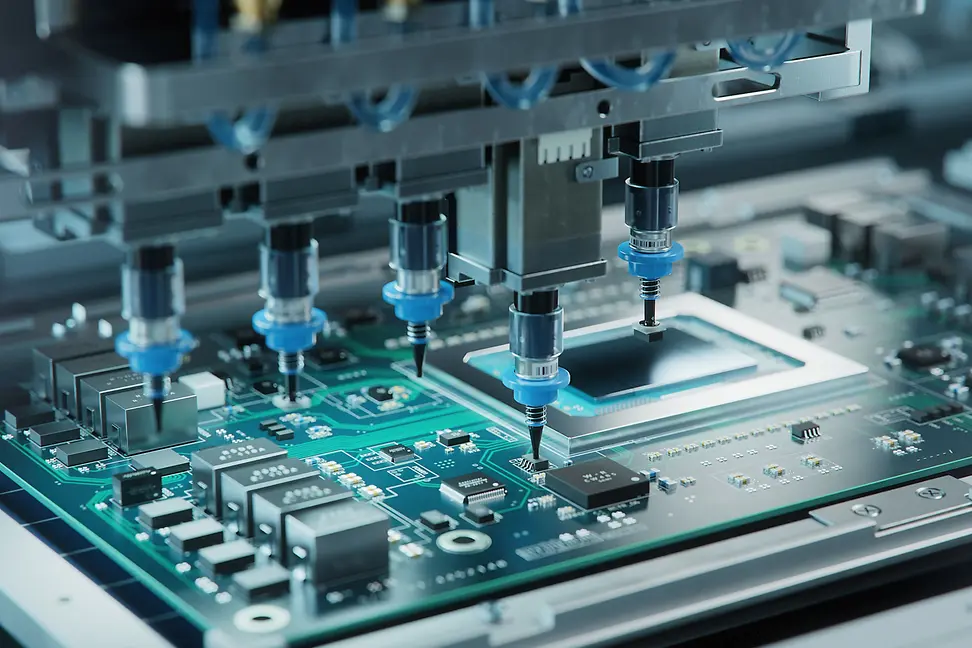
Computing power is necessary to train and develop the AI models in data centres and to deploy them in cars. This requires dedicated semiconductors, such as processors with high parallel data processing capabilities. As a result, AV developers are increasingly using purpose-built chips. However, not only to bring the computing power to the car, but also to increase energy efficiency, as data processing is very energy intensive. This is important as a sophisticated Level 4 self-driving system can account for up to 50 % of an EV's power consumption, almost halving its driving range.
Although self-driving cars present the greatest opportunity in the AV market, other modes of transport can also be automated. The underlying self-driving technology needed for AVs is highly complex and requires different sensor technologies, data, computing power, software, and AI models. Companies that either provide these key elements or can integrate them successfully are expected to benefit from the structural trend towards fully autonomous vehicles.
LGT's experts analyze global economic and market trends on an ongoing basis. Our publications on international financial markets, sectors and companies help you make informed investment decisions.