- Home
-
Private banking
-
Market view e Insights

The drought took away Kenyan farmer Nancy Kemboi's livestock and crops. But that was in the past. Today, she has enough feed reserves to last two years. She owes this to the FMNR reforestation method, the return of biodiversity to her land - and her innovative spirit.
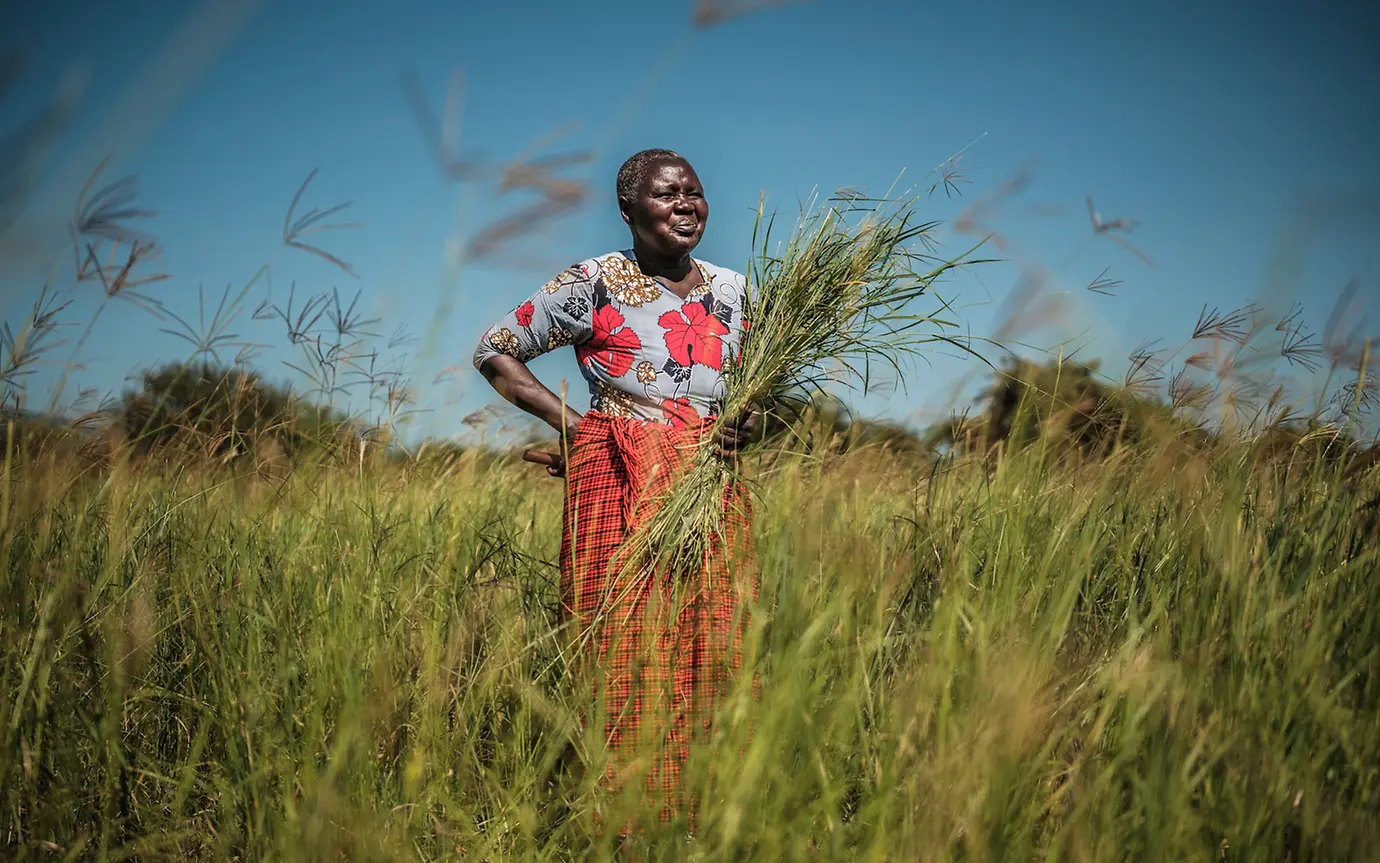
Nancy Kemboi kneels in the heavy, dark soil, bare hands gently prising loose the roots of a sweet potato. She lifts the thick, earth-caked tuber and drops it down beside her - it's at least 15 centimetres long. Gently parting the leaves, she digs deeper. The foliage is valuable feed for her animals. She pulls more and more sweet potatoes out of the ground.
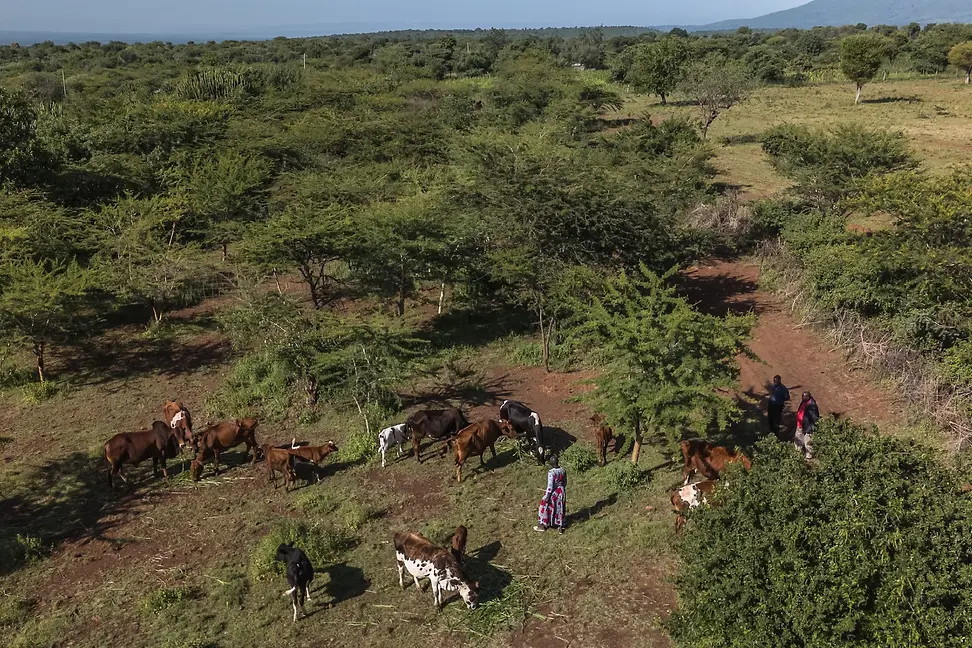
Watching this scene, you'd hardly guess that this is one of Kenya's semi-arid regions - a place where drought often leaves fields barren and livestock dead. Just beyond the garden fence, green pasture ripples in the breeze, dotted with trees and framed by low hills on the horizon.
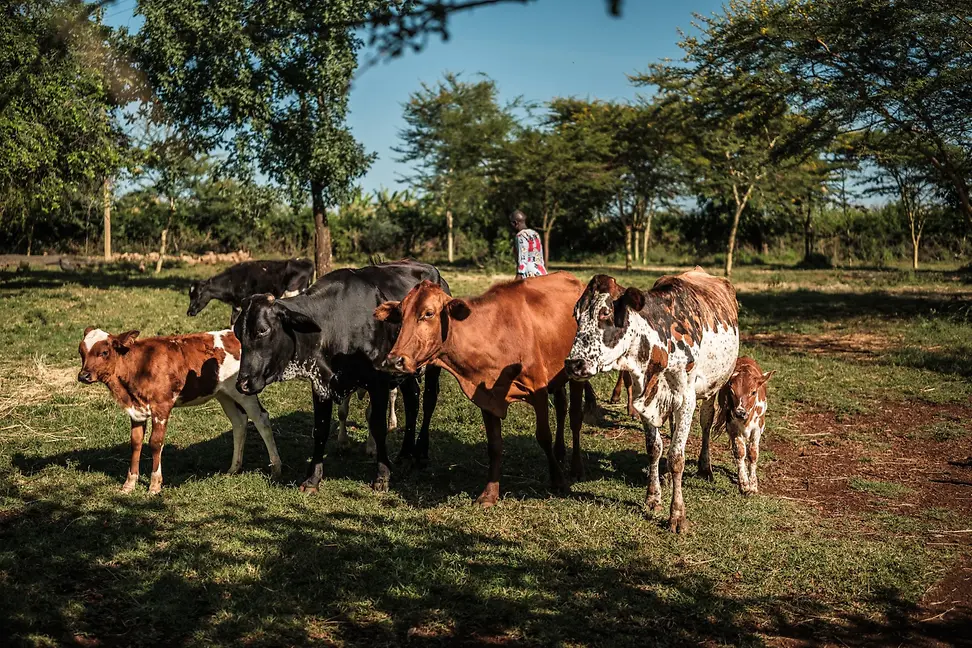
Everything here has been carefully chosen. The grass underfoot is Boma Rhodes, a nutrient-rich fodder plant with deep roots that can survive dry spells. Next to it grows Napier grass, which is not quite as nutritious for animals but is also very hardy, and, like Boma Rhodes, protects the soil from strong winds, heavy rain and drying out.
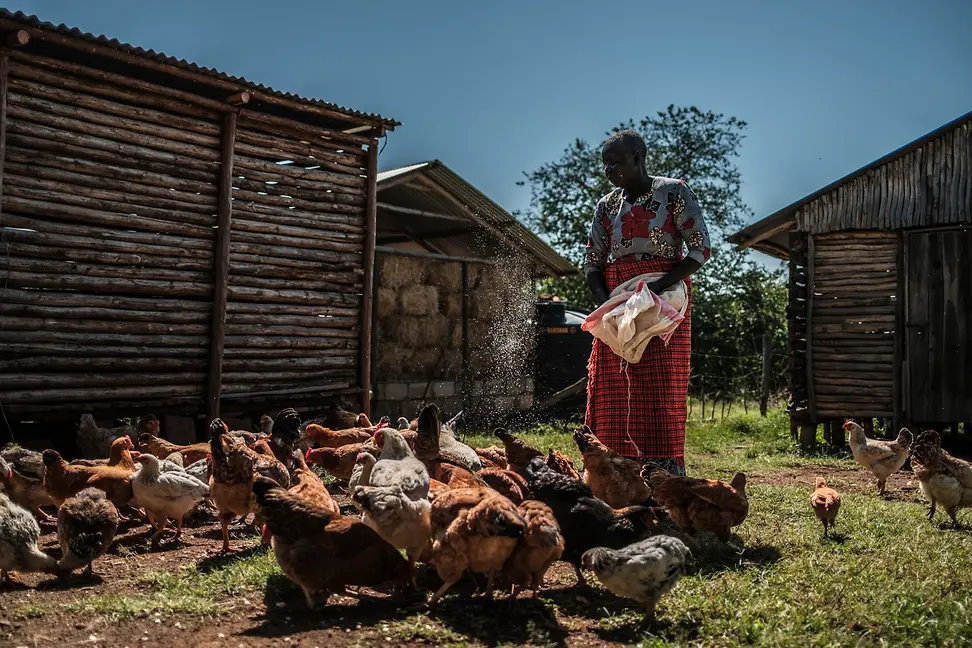
"The grass on my pastures is thick, my cows have enough to eat", says Kemboi. "That means they produce more milk, which I sell and earn good money from." But milk is only one of her revenue streams. Now in her sixties, Kemboi also sells honey from her beehives, and in good years, she sells her surplus grass, eggs from her 50 or so chickens, and poultry and the occasional sheep or cow. She also sells fruit and vegetables from her garden.
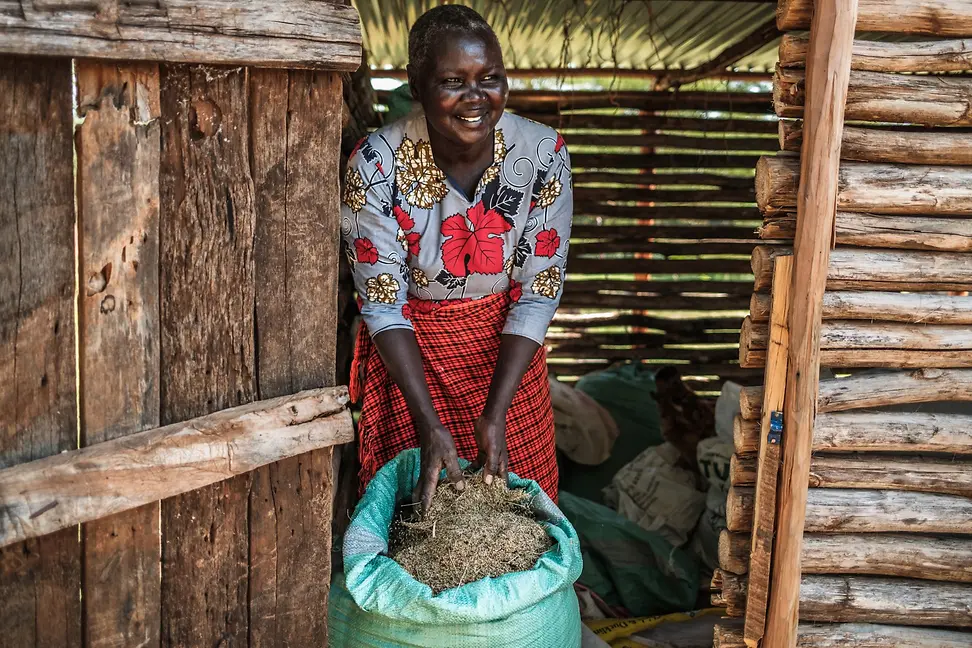
"I have a lot of money", says Kemboi matter-of-factly, standing between rows of sweet potatoes and cabbages, her feet and hands coated in soil.
These words could sound boastful, but coming from her, they don't. They sound like hard-earned pride at having made it. She no longer has to fear the next drought. "I have enough feed stored for two years", she says. "And I'm working towards making that four."
For people living in arid or semi-arid regions such as Baringo in western Kenya, livestock is more than a livelihood, it's a lifeline. When it's no longer possible to cultivate fields and gardens during extreme droughts, goats, sheep, camels and cattle can still provide milk. Or they can be sold, if needed. However, when they starve or die of thirst, survival itself is at stake.
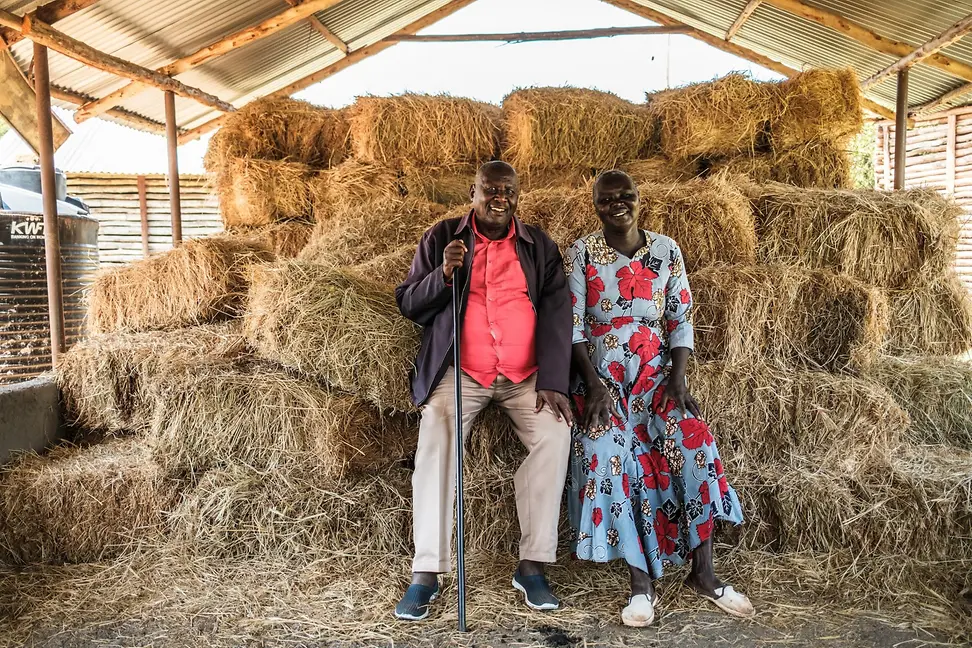
Kemboi has experienced first-hand what it means when a herd dies off, one animal at a time. This was her worst nightmare, and it began in 2000. The rain that was supposed to fall every spring failed to materialise for four long years. By the end, her 22 cows and 12 sheep were dead, and Kemboi was left with nothing. Luckily, her husband, who is 20 years her senior, worked as a local government chief and managed to keep the family of seven afloat. But his modest salary wasn't enough to cover school fees or medicine. So Kemboi, who was 41 years old at the time, had to start over. She bought a single cow, bred it and slowly built a new herd. But she remained vulnerable - another drought could undo it all again.
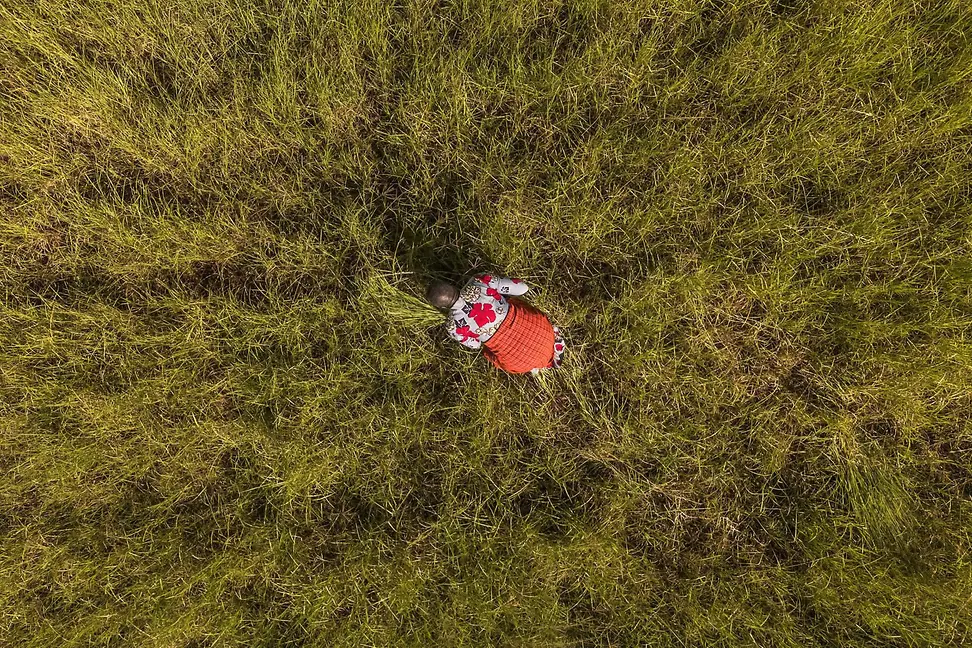
Then, in 2015, came a turning point. Through training organised by the international aid organisation World Vision, Kemboi learned how to restore degraded land - by allowing seeds scattered by animals to sprout, and by nurturing the tiny shoots that emerge from the stumps of uprooted trees. The method, known as Farmer Managed Natural Regeneration (FMNR), involves protecting young growth from grazing, and pruning it so it can develop into strong trees. The results of her efforts are now visible across her pasture.
Farmer Managed Natural Regeneration (FMNR) is a simple and inexpensive method of revegetating degraded and deforested land - without the need to plant new trees. Australian agronomist Tony Rinaudo rediscovered this traditional method almost four decades ago in Niger. He was awarded the Right Livelihood Award - often referred to as the Alternative Nobel Prize - in 2018 for his work.
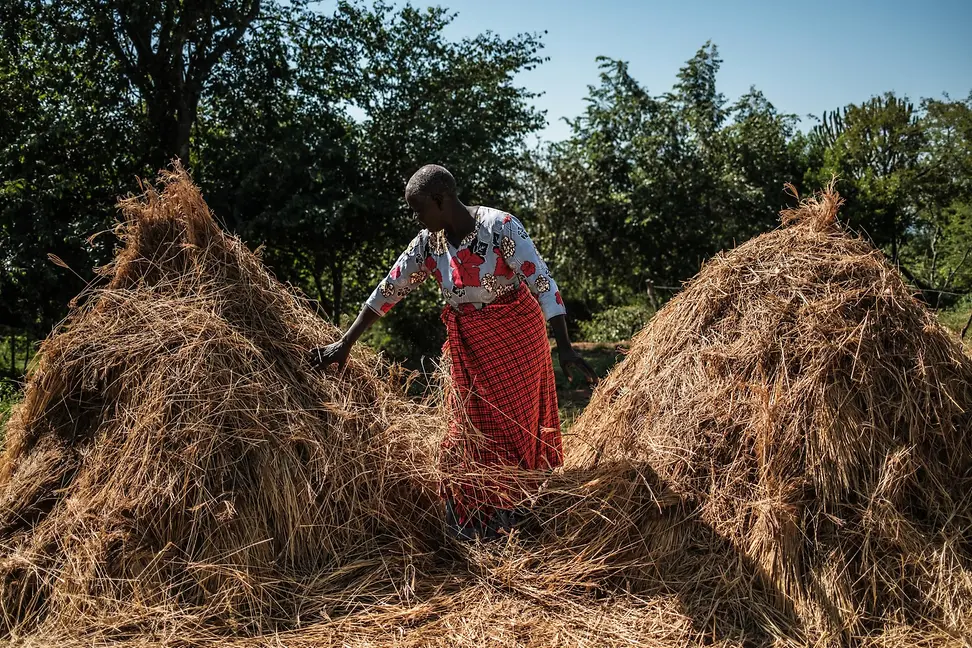
"We used to cut down the trees, including the very big ones, even though they provided shade", she recalls. "We turned them into charcoal and used the money to buy food - but within a day, everything was gone." Now she lets them grow. She prunes them carefully, using the branches for firewood and feeding her animals the bark, leaving the rest intact. The results are striking: not only has her income increased significantly, the soil retains more water and is richer in nutrients. The grass grows thicker, meaning her livestock has more to eat and produces more milk.
If need be, Kemboi can feed her animals bark, while during the last severe drought, her neighbours had to resort to feeding their animals cardboard to fill their stomachs.
It was only two years ago that the last drought ended in Baringo and other regions of Kenya. Between 2021 and 2023, at least two and a half million animals died of starvation or thirst across the country, including cattle, sheep, goats, camels and donkeys. Kemboi, on the other hand, got her entire herd through that period. Her animals have since reproduced, and she has also invested in some strong cows and sheep. She now owns 29 cows, 76 sheep and 50 chickens.
"Our attitude has changed", says Kemboi. FMNR is about farmers taking responsibility for natural regeneration. "Now I manage everything, including my cows, sheep and chickens, the beehives and my vegetable garden." And she's never looked back.
"Before I started FMNR, I had no vegetables and no firewood. The time I used to spend collecting firewood, I now spend on my vegetable garden."
When Kemboi talks about gardening, she's not just referring to loosening the soil and watering the plants. She doesn't see herself as a field labourer, but as the manager of a thriving enterprise. When she puts on her work clothes and picks up her gardening tools, she likes to say she's going to the office.
Nor is she satisfied with what is already growing successfully. She's always thinking ahead: what else might her customers need? How can she prepare for rainfall that no longer follows predictable seasonal patterns?
It all comes down to diversity. Kemboi grows corn and pearl millet, sorghum, peanuts, bananas, oranges, butternut squash, various leafy vegetables, red peppers and more. She plants different varieties to stagger harvest times. "That way, I can harvest all year round and always have something to sell", explains Kemboi.
Diversification also makes her more resilient to the vagaries of the weather brought about by climate change: if one variety dries up or rots due to irregular rains, she doesn't lose her entire harvest, and may succeed with another variety of the same species at a different time of the year.
Kemboi was in her early fifties when she first learned about FMNR. The technique transformed her view of natural resources and her farming practices. Since then, she has consistently strayed from traditional methods, embraced advice and tried new approaches. "I don't want to leave any stone unturned", she says. She gestures to a row of onions growing in her garden. "People say you can't grow onions here", she says, holding one up. But she tried it anyway - and was surprised by the result: "Onions grow very well, look how healthy they are!"
I used to lead, now she does.
Can her success be replicated? Kemboi is one of many farmers who received agricultural training. But unlike many Kenyan women, she has access to land - 16 hectares, roughly the size of 22 football pitches. Officially, the land belongs to her husband Willy Kepruto Kemboi, but he believes equality is the key to success. The couple keeps their incomes separate. "Households where men dictate what their wives have to do are worse off economically than those where the couple works together so they can produce as much as possible", says Kemboi's husband, who is in his eighties. If you want to become resilient to crises, you have to work as a team, he continues.
But teamwork alone is not enough, says Kepruto Kemboi. Mindset is more important: only those who are open to innovation can survive crises. In his youth, there was no such thing as gender equality - and in many rural areas of Kenya, that remains the case today. As a former local government official, he was once the authority figure. But when his wife took up FMNR ten years after he retired and became a role model in the region, the roles reversed. She taught her husband how to trim the trees, and he has been supporting her ever since. "I used to lead, now she does", he says, resting his hands on his walking stick. "She's good at it. I feel comfortable in my new role, and she deserves her success - I'm happy for her." Like his wife, he no longer fears the next drought.
The next day, Nancy Kemboi stands in her pasture, addressing a group of a dozen farmers. She explains the benefits of FMNR, vegetable cultivation and biodiversity. Supported by World Vision and the local government, she has been sharing her knowledge for several years. "Maybe 10 % take the advice right away", Kemboi says with a hint of frustration. "80 % wait to see if it works for others first." They don't want to take any chances, but their caution leaves them exposed to climate shocks.
Jane Lentupuru, a forest manager with Baringo County's Department of Environment, agrees: openness is a prerequisite for resilience. Since 2015, she has worked to help the local population become more resilient - no easy feat in a country where 70 % of the land lies in arid or semi-arid zones. Still, her experience is a touch more optimistic than Kemboi's. "30 % try out suggested improvements straight away, 50 % come around gradually and 20 % won't change, no matter what."
But mindset alone won't save people, Lentupuru warns. "We have to protect the environment. In regions like this, you can't survive without nature."