- Home
-
Private banking
- Market view
- Insights
-
LGT career

An embattled outsider for much of his lifetime, the Nobel prize winner's libertarian convictions resonate today in our increasingly polarised world.
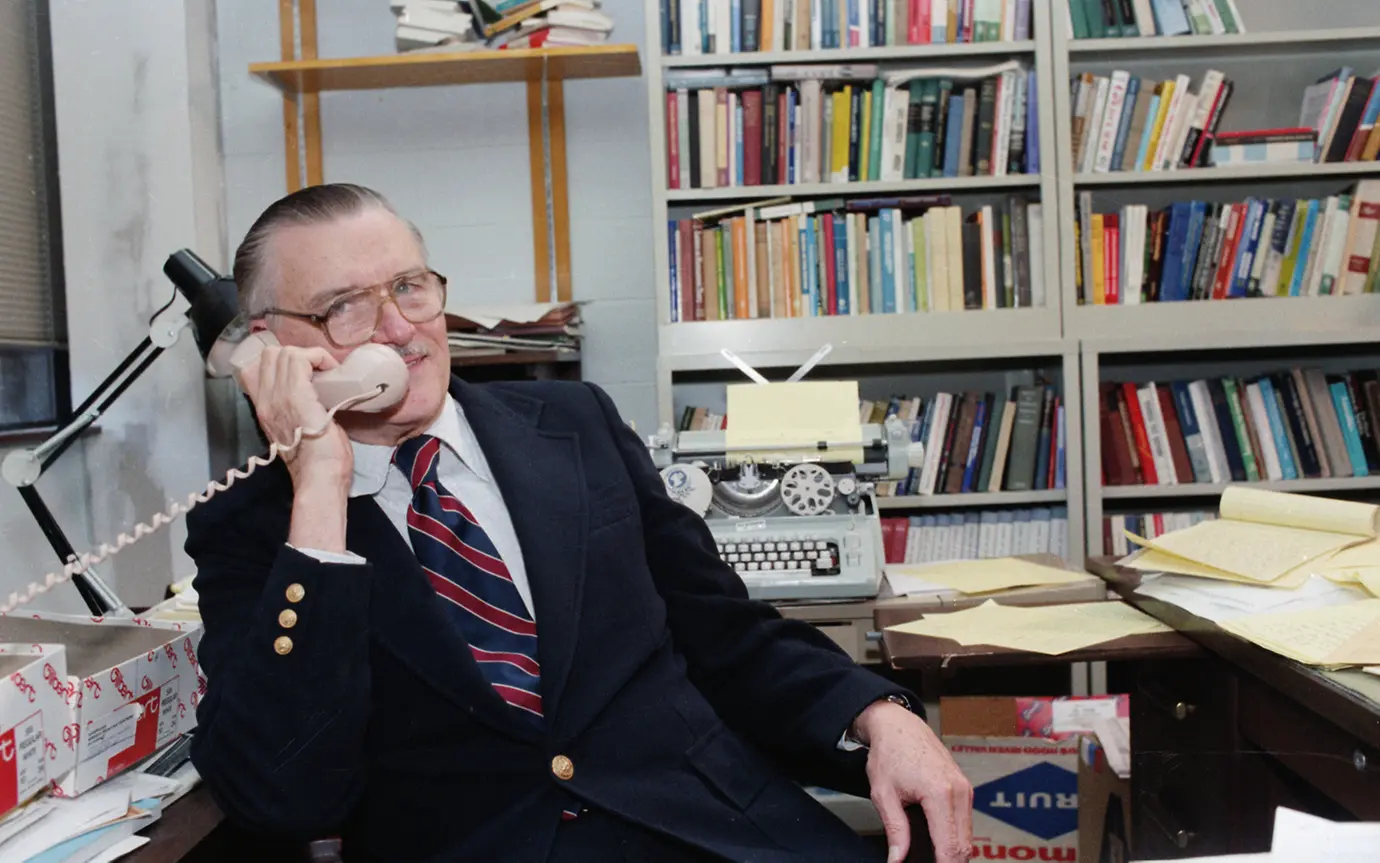
James M. Buchanan is not as well remembered as his fellow Nobel laureates and classical libertarian thinkers Friedrich Hayek and Milton Friedman. Yet his contribution to economics was arguably just as great, if not greater.
He won the Nobel prize in 1986 for transforming the way that economists think about politics and government. His core belief in free markets and that personal gain and self-interest are the key drivers of both economic and political life has found converts from Washington DC to Santiago de Chile.
Today, with liberal democracy in crisis, Buchanan's distinctive brand of what he called "politics without the romance" is generating renewed interest.

Buchanan was a genuinely original thinker.
At a time when economic theory concerned itself with exclusively economic matters such as how consumers and entrepreneurs buy and sell goods and services, he broke new ground by applying economic principles to political processes.
Over many decades, he developed a theory of decision-making in the public sphere that has become known as Public Choice theory, or the New Political Economy.
First outlined in "The Calculus of Consent" published in 1962 (with co-author Gordon Tullock) and still his best-known work, Public Choice theory transfers the concept of gain derived from mutual economic exchange between individuals to the realm of political decision-making.
Thus, the political process becomes a means of cooperation designed to achieve reciprocal advantages - the results of which depend on the "rules of the game", or the constitution in its broadest sense.
The political implications of Buchanan's theory are plainly significant.
His idea, after all, upends the whole notion of a beneficent government, and of programmes and policies designed altruistically. According to Buchanan, citizens and lawmakers cooperate to achieve mutual advantage, not to redistribute resources.
Politicians, like the rest of us, are looking out for themselves, but their self-interest is capable of inflicting far more damage. The expensive social programmes they devise are funded by taxes prised out of citizens who have little or no effective choice in the matter.
So, he believed, social security is a "Ponzi scheme" and the social contract that prevails in most liberal democracies is licensed theft, reinforced by progressive income taxes.
Born in 1919 on a family farm in Tennessee, the state where his grandfather had once been governor, he grew up during the Great Depression in what he later remembered as "genteel poverty".
War-time service in the US Navy reinforced his belief that the country's eastern establishment looked down on and discriminated against southerners. Indeed, Buchanan believed that his Nobel award represented a victory over the "Eastern academic elite", achieved by someone who was, he said, "proud to be a member of the great unwashed".
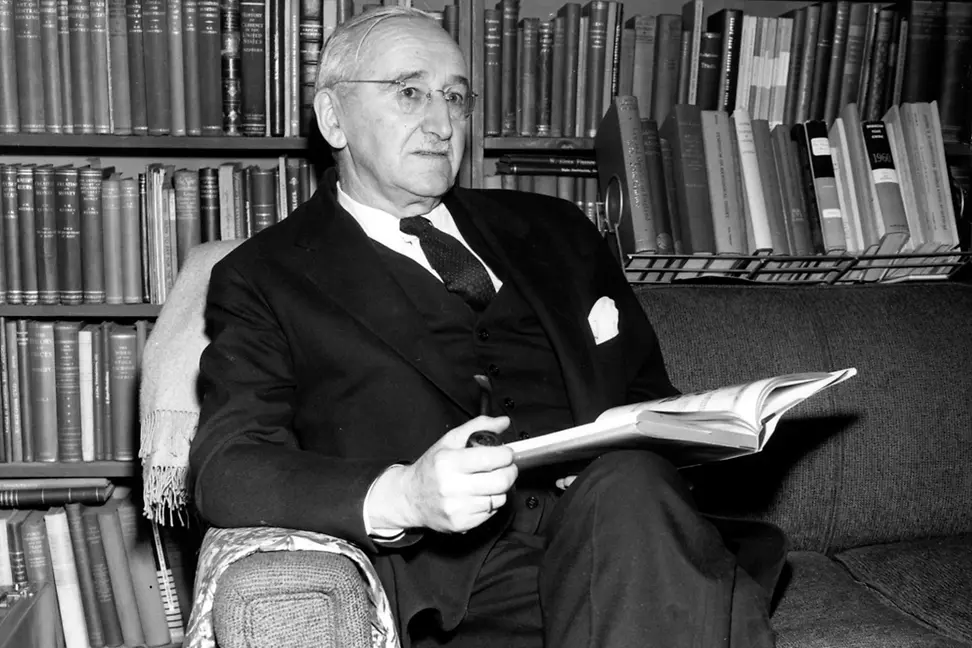
His outstanding intellect nevertheless took him to university and in 1945, he began graduate studies at the University of Chicago, where he received his PhD in economics in 1948.
The university's economics faculty by then included Milton Friedman, soon joined by Friedrich Hayek who were already shaping a new form of pro-market economics as part of a growing backlash against the Keynesian policies of the New Deal.
While studying at Chicago, Buchanan joined the Mont Pelerin Society, an international organisation of conservative intellectuals founded by Hayek to oppose the collectivist tendencies of the time.
Buchanan was in Italy on a Fulbright Scholarship in 1956 and 1957 when he became convinced that his generation of Americans had too romantic a view of politics. Post-war Italians, he thought, were far more sceptical and realistic.
Back in the USA and teaching at the University of Virginia, he had an opportunity to put his realism to the test. His tenure coincided with the rise of mass resistance to the Supreme Court's mandate for school desegregation.
Together with another new University of Virginia hire, Buchanan wrote a paper arguing that the crux of the desegregation problem was that state-run schools had become a "monopoly", which could and should be broken by privatization and tax-funded school vouchers. He wanted parents to have a choice.
Interestingly, however, by the 1980s, Buchanan had changed his mind and warned that a state-sponsored unregulated voucher system for schools could lead to "the evils of race-class-cultural segregation", recreating an exclusive system for elites.
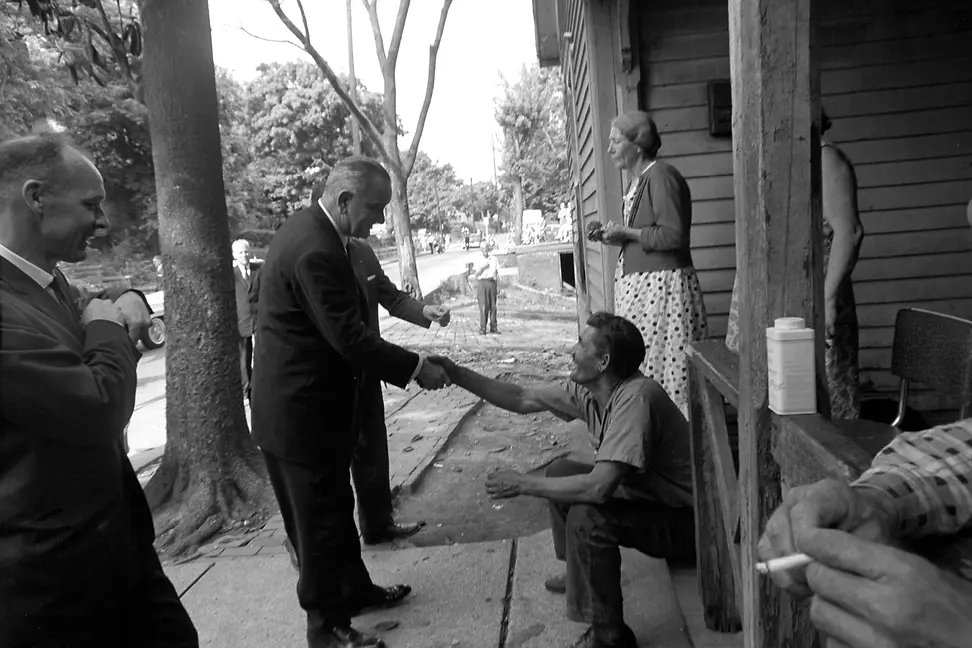
Yet the bigger battle was with unions, which Buchanan called "the labor monopoly movement", as well as with left-liberal policy makers and Keynesian economists. He saw these as forming a "ruling class" that was waging war against the marketplace.
What's more, the 1960s, with the launch of Lyndon Johnson's War on Poverty and the Great Society, looked even more challenging for classical liberals like Buchanan than the 1950s.
Everything changed, however, with the election of Ronald Reagan as US president in 1980. By this time, after falling out with the dean, Buchanan had left the University of Virginia, moving first to UCLA, then to Virginia Tech, and finally, in 1983, to George Mason University in Fairfax, Virginia, an institution that The Wall Street Journal has called "the Pentagon of conservative academia".
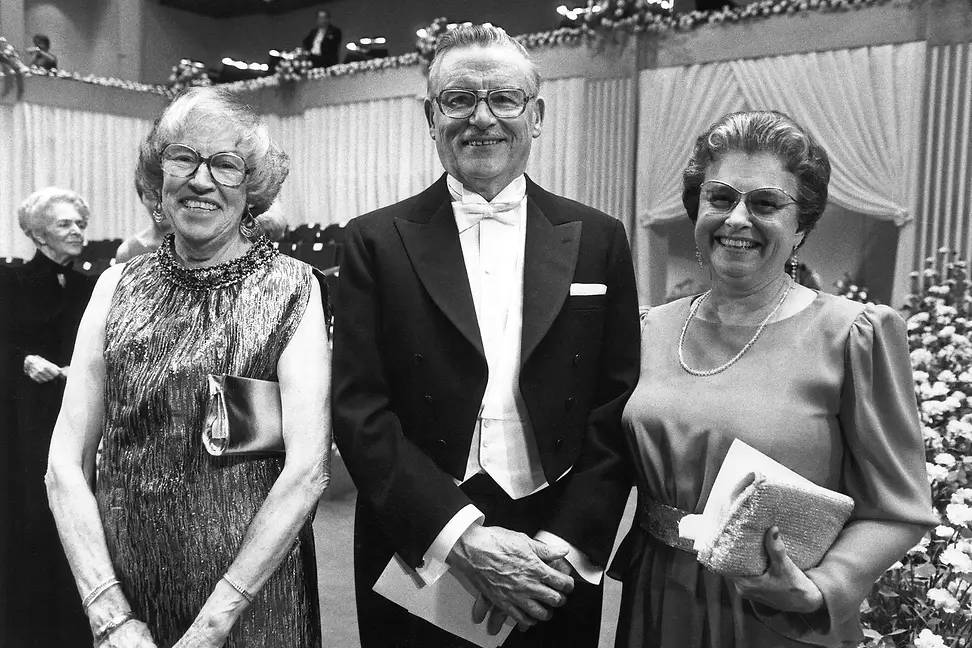
In the 1980s, and especially after he received the Nobel prize, Buchanan's political influence was at its height - and not just in the USA.
In Chile, after Augusto Pinochet's 1973 military coup toppled the socialist Salvador Allende, Buchanan visited to give advice and some of his followers helped to restructure Chile's economy. Labour unions were banned, and social security and healthcare were both privatized.
Even so, Buchanan's theoretical writings did support some redistribution. In his 1975 book "The Limits of Liberty: Between Anarchy and Leviathan" his proposed social contract for a "productive" state includes tax-financed goods and some social insurance. He also called for 100 % marginal tax on all estates above a relatively modest amount in order to stop an aristocracy forming in America and to ensure equal opportunity.
Buchanan died on his isolated Virginia farm in 2013, in relative obscurity. His core ideology, however, has outlived him.
In its obituary, The New York Times observed that he had influenced a "generation of conservative thinking about deficits, taxes and the size of government". In today's world, such thinking resounds more loudly than ever.