
- Home
-
Private banking
-
LGT career
-
Market view and Insights

As artificial intelligence and related technologies develop at pace, robots are becoming versatile thinking machines, not just pre-programmed automatons.
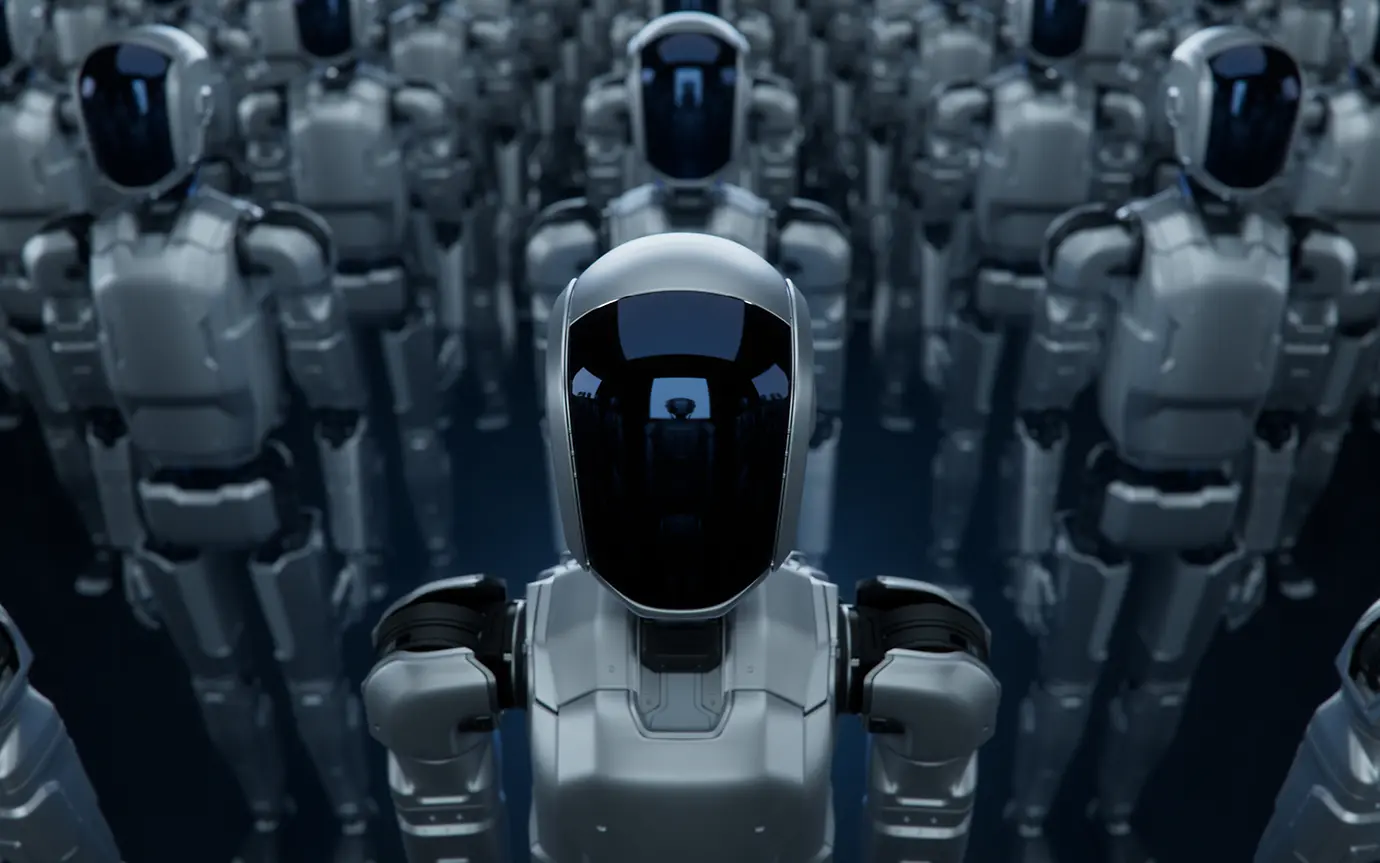
You've seen intelligent, human-like robots in movies like "The Terminator". You've read about them in books like Isaac Asimov's "I, Robot". But have you seen them in real life?
Maybe you missed the world's first humanoid robot combat exhibition match, staged by Chinese start-up Unitree Robotics. This real-world capability test for the company's robots is just one of many impressive (and sometimes not-so-impressive) robot prototype demonstrations taking place worldwide.
But don't expect to run into a humanoid robot on the street any time soon - the timeframe for mass adoption remains uncertain. Still, the necessary technologies are advancing rapidly and opening up a broad range of use cases for the future.
Recent breakthroughs in artificial intelligence (AI) mean that more and more consumers are using applications like ChatGPT to receive personalised information, and companies are exploring the use of AI assistants and agents to boost productivity.
Humanoid robots are the latest addition to the robot family.
The technology can also be employed to interact with the physical world through applications often referred to as "physical" or "embodied" AI. Simply put, this means that the digital "brain" gets a "body" to operate in the real world. AI enables robots to see, learn, move, talk, take instruction, and finally act.
Only recently has multi-modal AI enabled the integration and processing of various formats such as text, images and video, allowing all these elements to fit together. Furthermore, progress in the development of battery technology, microchips, and robotic dexterity is bringing this vision closer to reality.
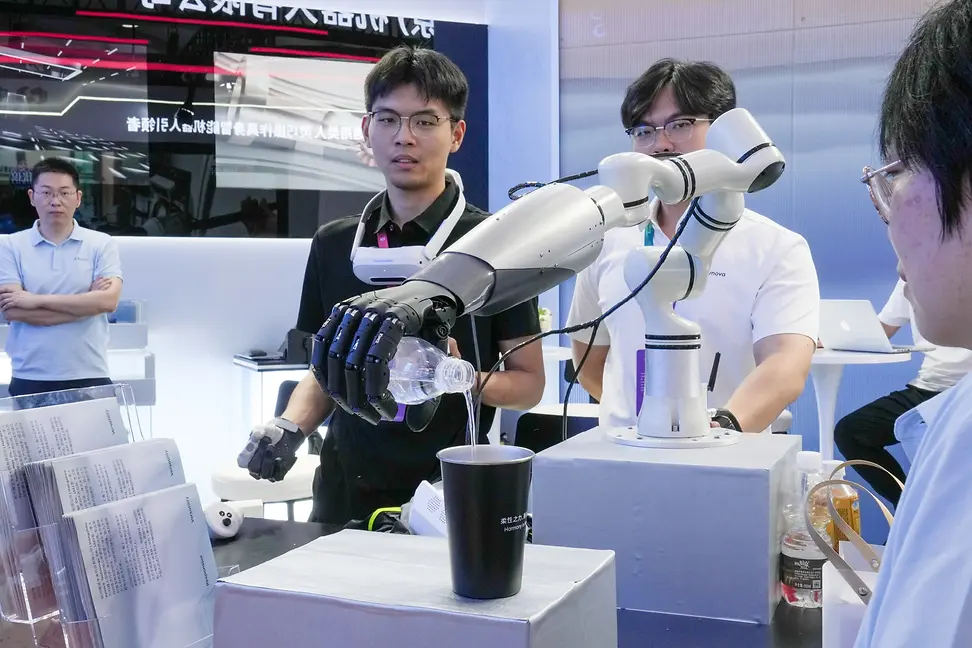
Traditionally, robots have been defined as devices that are preprogrammed to automatically perform complicated and often repetitive tasks. This definition is becoming increasingly outdated as advances in machine learning and generative AI have improved robots' capabilities.
While industrial, service, and collaborative robots will continue to be used in a variety of industries, humanoid robots are the latest addition to the robot family. With more intelligence and dexterity than their earlier counterparts, humanoid robots are fast becoming exciting new thinking machines, intended to fit into man-made environments and perform with versatility across many tasks.
Humanoid robots will offer a range of uses in industries as varied as manufacturing, retail, hospitality, and healthcare. In the retail sector, robots could assist with various tasks, including stocking shelves, helping customers, cleaning, and making last-mile deliveries. In healthcare, robots could allow people to remain longer in their homes as they age, by assisting with daily tasks and reminders to take medication.
Once the technology becomes scalable, the opportunities could be huge. Labour accounts for more than 50 % of global GDP and for more than 60 % in North America. If a price point of USD 25,000 per robot is realistic in the long run, as suggested by Elon Musk, payback periods look promising in contrast to personnel costs, even considering the operating costs of a humanoid robot, for energy and replacement parts, for instance.
Getting to the point when mass adoption becomes practicable won't be straightforward. Numerous obstacles stand in the way, indicating a multi-year journey. Estimates for the total addressable market reflect a range of uncertainty, characteristic of the early stages of exciting but new technologies. Forecasts range from USD 30 billion to USD 75 billion by 2035, growing considerably by 2050.
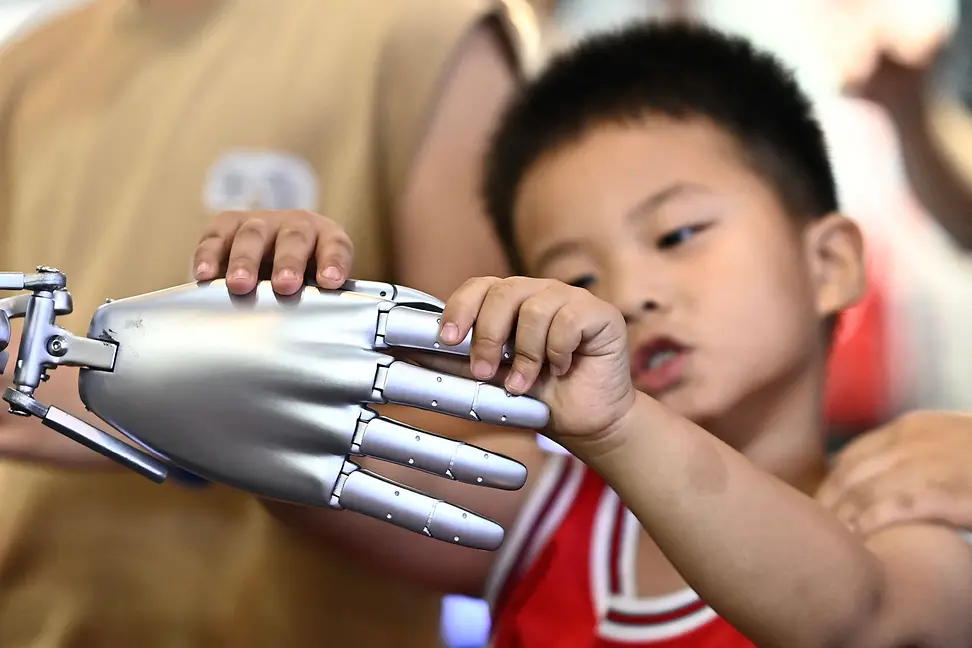
We think that 2025 marks the beginning of first real-world commercialisation, where humanoid robots are no longer limited to research and development (R&D) but can achieve autonomy in specific tasks. Companies as diverse as AgiBot and UBTech (Chinese robotics firms), as well as Tesla have announced plans for the mass production of humanoid robots starting in 2025.
The first applications of these robots will be in manufacturing, where non-humanoid robots have long been in use. Adoption in households, on the other hand, will take more time, given the higher requirements for generalisation, product safety, and regulation. Consumers too will take time to accept human-like creatures in their homes.
Developed market countries are more likely to embrace humanoid robots than emerging markets, as higher wage costs and ageing populations will drive faster development and adoption of the technology. China is likely to be the exception here, given its strong commitment to developing high-tech and robot technology, and its demographic challenges.

In considering the future of humanoid robots, it pays to think through the various hurdles that the technology will have to overcome. Humanoid robots must be trained on vast amounts of data to successfully complete the tasks asked of them; the availability of this data is limited and could constrain development. In addition, their data processing and movement needs require strong, long-life batteries and good heat dissipation systems to function efficiently.
Cost is an issue at this early stage, with the bill for materials for a single humanoid robot rising in some cases as high as USD 300,000. This is far more expensive than the envisioned mass adoption price of USD 20,000 to USD 30,000 per robot. While there are already relatively cheap models available in the market with a lower price tag, operating costs need to come down and capabilities to improve to make humanoid robots a reasonable investment for customers.
Furthermore, the mass adoption of robots could replace significant parts of the human workforce, sparking political protests. Economies and social systems will need time to adapt to these changes. Regulation will also play a part in the speed of adoption.
Companies operating in the humanoid universe fall into three categories, broadly related to the design and assembly, brain, and body of the robot. First there are the integrators that manufacture the robot and are responsible for R&D, design, and final assembly. Firms that support the intelligence of robots, i.e. the brain, include semiconductor and software providers. Another set of companies provides the industrial components for the robot body, including actuators, structural parts, and batteries.
A humanoid robot's capabilities are defined by both its brain and its body, which must work together seamlessly. Consequently, a vertically integrated supply chain would seem to offer a competitive advantage at this early stage. This could change as production volumes increase, and outsourcing components becomes a more efficient choice.
We expect suppliers of critical components (for the body) and enabling technology (for the brain) to benefit first from the adoption of humanoid robots. Integrators that can leverage their existing know-how and technology also stand to benefit as the industry develops.
LGT's experts analyze global economic and market trends on an ongoing basis. Our publications on international financial markets, sectors and companies help you make informed investment decisions.