- Home
-
Private banking
- Market view
- Insights
-
LGT career

As global challenges grow more complex, philanthropy experts Silvia Bastante de Unverhau and Oliver Karius reflect on how families and funders are adapting - and why long-term thinking matters more than ever.

Silvia Bastante de Unverhau: The shifting landscape is changing the context in which philanthropy operates, and calling into question its role in development. Given the urgency of today's global challenges, we can use this moment to reimagine the future of aid and rethink how we deploy scarce philanthropic capital more efficiently and effectively.
Oliver Karius: The organisations we support are often innovating on the ground, but their solutions run into systemic barriers. That's where philanthropy has a catalytic role to play. It's not just about funding organisations; it's about helping to shift the whole system. That includes working much more intentionally across sectors - we're seeing a lot of momentum in collaborations that bridge philanthropy, public institutions, and private capital.

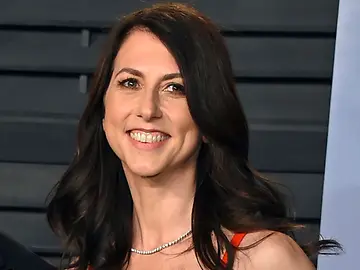
Silvia Bastante de Unverhau is Head of Philanthropy Advisory at LGT Private Banking, a role in which she advises ultra-high net wealth individuals and families on their philanthropic endeavours. She has over 25 years of expertise in philanthropy strategy and also programme development, and lectures on philanthropy at the University of Geneva.
Silvia Bastante de Unverhau: This shift is exactly what we hear from philanthropists. Ten years ago, much of it was driven by passion and the hope of doing good. Now, there's a much sharper focus on impact: how to scale, how to attract more funding, and how to make it last.
Oliver Karius: In the immediate aftermath of Liberia's civil war, more than 40 fragmented, NGO-led community health-worker programmes were operating on the ground, and funders were just as disjointed. Community health models had existed for decades, but health workers often didn't receive the support they needed to be successful. And there were scant examples of programmes scaled nationally in sub-Saharan Africa.
That changed when Last Mile Health partnered with Liberia's Ministries of Health and Finance to work with four other NGOs under a single national programme with one curriculum, one supply chain, one data system, one supervisory structure, and one approach to paying health workers. The cost of care dropped from $16 to $8 per person from 2014 to 2024. LGT Venture Philanthropy was an early backer of Last Mile Health, which is now playing a leading role in strengthening community health-worker programming in sixteen countries across Africa. That's what systems-level change looks like.
Silvia Bastante de Unverhau: You need strategy - but also a bit of passion. Once someone chooses a focus, we help them make the most of their capital. Often, that means building on what already works, and listening closely to people with lived, local experience. We always encourage philanthropists to start by asking: where is funding most needed, and where can it make the biggest difference?

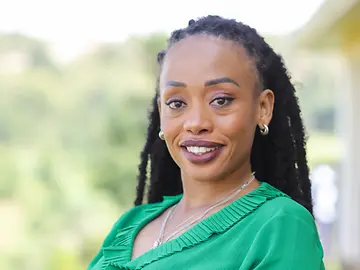
Oliver Karius is CEO of LGT Venture Philanthropy Foundation (LGT VP); he has been with the organisation since its inception in 2007. He also leads LGT VP's Environment portfolio for the Foundation and serves on multiple boards of portfolio organisations. Oliver has over 25 years of experience in venture philanthropy, sustainability, and impact investing in the African continent and India.
Oliver Karius: Philanthropy starts with the heart - then comes the mind, and then the wallet. It's a journey, not a product. And it only works when it's built on trust. That trust is what allows us to move quickly in a crisis, because we've already spent time understanding the organisation and its needs. That's what the LGT Venture Philanthropy approach is really about: showing up, listening, and staying long enough to make it count.
Oliver Karius: Educate Girls is a non-profit in India that helps girls in rural areas to access and then stay in school. We were among the first institutional supporters back in 2011. Since then, they've scaled up to reach 40 % of India's out-of-school girls. They were recently awarded the 2025 Ramon Magsaysay Award, Asia's Nobel Prize. But more than the recognition, it's the impact that matters. For us, it shows what's possible when you combine tailored financing, strategic support, and real partnership over time.
Values are deeply personal, and people often shape their philanthropic goals around their own life stories. More families are starting to think holistically about wealth - not just how it's invested, but how it's created, spent, given, and eventually passed on. That reflection opens up powerful cross-generational conversations, especially around aligning capital with values.

Silvia Bastante de Unverhau: In a recent LGT study, we found that many families now want to ensure that their investments don't undermine their philanthropic goals. Most don't want to find themselves combating climate change with one hand and funding it with the other. We see that kind of alignment increasing - but it requires a different kind of family conversation.
As time passes, families change. Often, they have to contend with upheaval. But successful families, like our owners the Princely Family of Liechtenstein, manage to preserve and build their wealth and values over generations. This transfer is often underpinned by principles and guidelines that the family has developed together, guided by a shared understanding of its values and goals. This is what is referred to as family governance.
As a client of LGT, you benefit from the Princely House of Liechtenstein's vast experience in successfully passing on assets, companies, and values accumulated over centuries.
Oliver Karius: We're in the middle of the largest wealth transfer in modern history. Families that engage early - involving spouses and children - often use philanthropy as a way to pass on values as well as assets. It becomes a kind of glue.

We support this through initiatives like LGT's Next Generation Academy and Learning Journey. When families visit our local partners in East Africa and see the work first-hand, it helps the next generation to understand what complex change actually looks like. These immersive moments are one of the most powerful ways to learn.
Silvia Bastante de Unverhau: When first-generation wealth-holders engage in philanthropy, their children usually continue. It becomes a way to share values and create continuity across generations.
Silvia Bastante de Unverhau: One key difference is how risk is perceived. In finance, risk is a core metric - but in philanthropy, men and women often define it differently. Many women don't see large philanthropic decisions as risky in the traditional sense. In fact, they often point to the risk of not acting. It's a powerful reminder that both the financial industry and philanthropy still need to adapt to different perspectives.
Silvia Bastante de Unverhau: I'd love to see a continued shift from attribution to contribution, and from competition to collaboration. That's how we reach meaningful scale. The more we stop trying to "own" impact, and instead ask what we can contribute to, the better the outcomes will be.
Oliver Karius: I hope philanthropy will focus less on chasing the next shiny solution, and more on doubling down on what works. Collaboration is critical. If we're doing this well, we make ourselves redundant - because the problem gets solved.
Our Philanthropy Advisory service supports clients at every stage of their philanthropic journey - from defining a clear vision to scaling impact. This service is designed for both seasoned philanthropists and those who are just beginning their philanthropic journey. Our clients can also take advantage of our dedicated philanthropy network to share insights and collaborate with peers and experts.
Founded in 2007 by the LGT Group, the LGT Venture Philanthropy Foundation (LGT VP) is an independent charitable foundation that supports local organisations that provide effective, scalable solutions to systemic problems. LGT VP focuses on health, education, and environmental initiatives in Sub-Saharan Africa and India. It provides flexible, multi-year core funding and builds long-term partnerships to foster collaboration and amplify impact.
Through the LGT Impact Fellowship, professionals from around the world contribute their expertise to support the Foundation's partner organisations. Since its founding, LGT VP has supported over 83 organisations and placed 225 professionals, contributing to improving the lives of over 29 million people.