
- Accueil
-
Private banking
-
Vue du marché e Insights

What does it take to become a soloist? Talent alone is not enough, as violinist and LGT Young Soloist Artistic Director Alexander Gilman has learned early on. It takes initiative, practice - and, perhaps surprisingly, the ability to play as a team.

There is a familiar paradox at the beginning of many careers: you need experience to get opportunities - but you need opportunities to gain experience.
For young musicians, this dilemma is particularly acute.
"No promoter regularly invites unknown artists", says violinist Alexander Gilman. "And without concerts, it becomes incredibly hard to develop" What is often underestimated, he adds, is how much of a musician’s career depends not only on technical mastery, but on networking, visibility and the ability to take initiative.
Gilman knows this from personal experience. As a young violinist, he was fortunate to perform regularly - an advantage he credits to a strong support system and early exposure. "Playing concerts motivates you. It gives your work a purpose. Without that perspective, practising alone for weeks can be incredibly tough."
This insight became the starting point for what would later become the LGT Young Soloists.

In 2013, Gilman was invited to perform at an event for LGT clients in Vienna. At the time, he had already been considering a new kind of ensemble - one that would give his students not only training, but a real stage, real practice, real motivation. The concert became the catalyst: "Our performance was followed by standing ovations, and so we decided to form a new ensemble: the LGT Young Soloists."
Rather than separating roles into soloist and orchestra, the LGT Young Soloists combine both. On stage, musicians step forward as soloists - and step back into the ensemble to support others. Individual excellence and collective performance are not opposites, but two sides of the same discipline.
"We expect our soloists to be team players", says Gilman. "That may sound contradictory. But even as a soloist, you are never truly alone."
The concept of the LGT Young Soloists goes far beyond musical performance. It is about preparing young talents for the realities of a professional career.
Today, the ensemble brings together around 25 highly talented string players from across the world, typically aged between 14 and 25. Admission is highly selective. And musical ability alone is not enough.
"We look for personality, curiosity, and the willingness to engage", Gilman explains. "A career in music requires much more than playing well. It requires resilience, communication, and an understanding of how this world works."
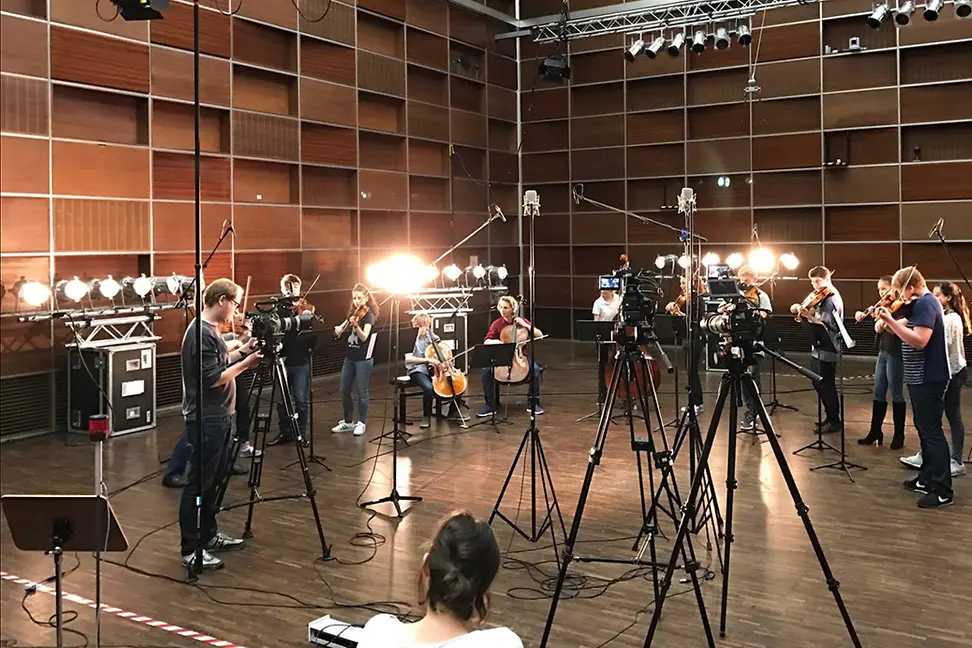
Through international tours, recordings and media exposure, the young musicians gain precisely that: experience under real conditions. They learn how to perform, how to present themselves, how to navigate a competitive environment - and how to support each other along the way.
The early years of the ensemble were anything but straightforward. "No one was waiting for us", Gilman recalls. "We had to build everything from scratch - the network, the reputation."
But persistence paid off. The first recordings followed, then international performances. Today, the LGT Young Soloists perform on some of the world’s leading stages and regularly release albums with global reach. Their distinctive style - energetic, precise and unpretentious - has also found a strong audience on digital platforms.
What sets them apart is not only their level of performance, but their mindset: a combination of ambition and openness that reflects a new generation of classical musicians.
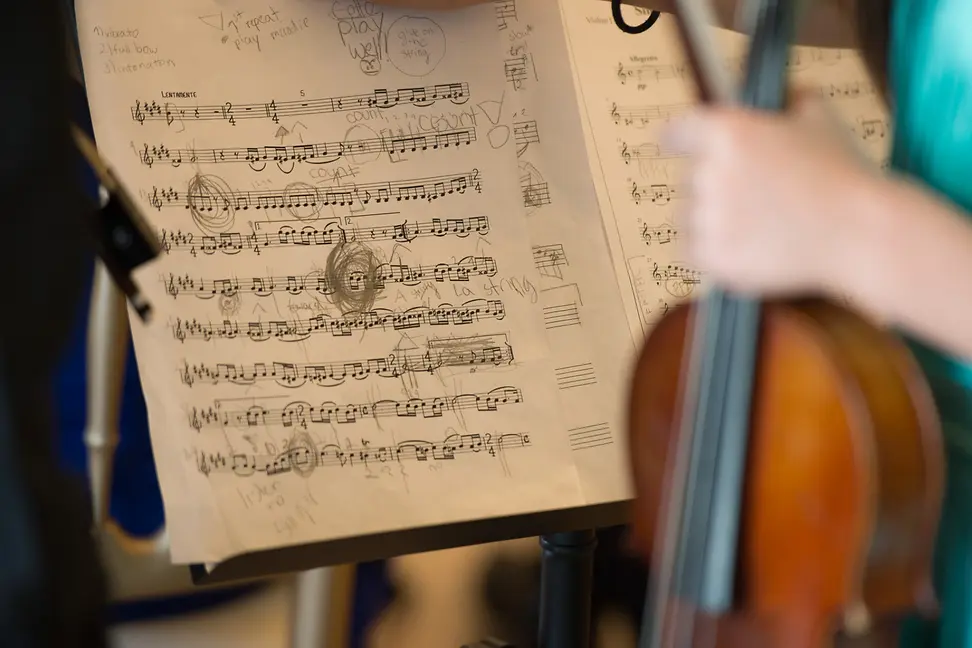
From the beginning, LGT has played a key role in enabling this journey. What started with a single concert has evolved into a long-term commitment to nurturing young talent. Across its engagements, LGT focuses on creating platforms where emerging talents - in music and beyond - can gain visibility, experience and confidence early in their careers. The partnership reflects a shared belief: that excellence develops over time - and that potential needs both opportunity and guidance to unfold.
In this sense, the LGT Young Soloists are an expression of a broader idea: investing in the next generation, creating platforms for growth, and fostering a mindset that combines individual responsibility with collaboration. Or, as Gilman puts it: "Talent may be individual. But success is never achieved alone."
That LGT supported the idea of the LGT Young Soloists from the very beginning is no coincidence. The Princely Family of Liechtenstein, the owners of LGT, have been closely connected to the world of music for centuries: Princess Maria Josepha Hermengilde of Liechtenstein was a patron of Joseph Haydn, who expressed his gratitude by composing several masses. Wolfgang Amadeus Mozart, in turn, dedicated a serenade to Prince Alois I.
This tradition reflects a consistent mindset: recognising and supporting talent early - often long before it reaches wider recognition. To this day, this principle guides LGT’s engagements: identifying and supporting promising talents at an early stage - in music, as well as in other fields such as sport - and accompanying them as they grow.