在此处更改您的语言和 LGT 位置。
私人客户的数字平台
登入 LGT 智能银行
金融中介机构的数字平台
登入 LGT 智能银行 Pro
常见问题解答 (FAQ)
LGT 智能银行帮助
常见问题解答 (FAQ)
LGT 智能银行专业版帮助
A successful handover takes years of preparation. The next generation must develop the skills and confidence to lead, while the older generation faces a different challenge: learning to let go. This final instalment in our succession series explores ten steps that can help families navigate the transition.

Imagine handing over a family business on a Friday and expecting the next generation to be running it exactly as you did by Monday. The legal documents may be signed, but little has been done to prepare for succession. Succession is not a single event, but a process that unfolds over years. In a notary's diary, the handover has a set date. In reality, passing on responsibility takes time. The good news is that succession is a skill that can be learned - and so is letting go.
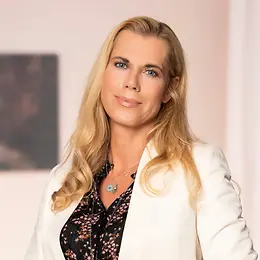
Elke Willi knows what careful preparation can achieve, as well as what happens when it falls short. As Head of Wealth Planning at LGT in Austria, she has seen families go through both successful and unsuccessful transitions. LGT itself offers a compelling example of long-term continuity: its owner, the Princely Family of Liechtenstein, has preserved its wealth for centuries, demonstrating that family wealth can endure across generations.
When it comes to timing, Willi has some sobering advice. Families should allow at least five years for a handover. But anyone who wants to prepare the next generation properly should "actually start ten years beforehand". Ten years - that is no ordinary project, but a long process of learning and preparation.
The first step is to establish whether the next generation is ready - and willing - to take over. Both questions need to be answered honestly, says Willi, ideally with the help of someone with an independent perspective. An outsider may be better placed to judge the abilities of one's own children. But ability alone is not enough. They should also want to take over.
Research suggests that motivation can make a significant difference. In 2005, family researcher Pramodita Sharma and her colleague Gregory Irving identified four reasons why an heir might take over the family business:
Genuine personal interest offers the strongest foundation. A successor who cares about the business and wants to contribute grows into the role. A person who takes over purely out of obligation or because there seems to be no alternative, on the other hand, is much less likely to become a good leader.
This helps explain why Willi welcomes a change she has observed in recent years. Where family expectations once left little room for choice, more parents now allow their children to decide for themselves whether they want to join the business. And if they don't, they don't have to. The family can retain ownership while entrusting the day-to-day management to others. That, too, is a form of succession.
Giving the next generation a choice is one thing. Preparing those who want to take over for the responsibilities that come with that is another. An important part of that preparation is helping successors understand what it means to inherit a family business. Is it simply an asset they will own, or a legacy entrusted to their care?
This is where stewardship comes in. In 1997, James H. Davis, F. David Schoorman and Lex Donaldson described stewardship as an alternative to self-interested management. Rather than pursuing personal interests alone, stewards recognise their responsibilities towards the company, the family and their shared enterprise.
This sense of responsibility is particularly important when a business passes from one generation to the next. The successors are not simply taking up a position that is theirs by right. They are custodians of something they did not build and will never fully own - holding it in trust for generations not yet born.
People who think this way lead differently: they take greater care of what already exists, while being bolder in exploring what else might be possible. By contrast, simply inheriting a position may produce a manager, but little more.

Preserving a legacy, however, should not be confused with preserving the status quo. A family business that hopes to survive for generations must be able to change and evolve.
This is one of the central ideas behind the STEP Project, an international research network established in 2005 at Babson College near Boston in collaboration with six European universities, including the University of St Gallen and Witten/Herdecke. Its work examines how family businesses sustain entrepreneurial success across generations.
Its central premise is that lasting success depends not merely on managing an inherited business, but on the ability to keep creating something new. In other words, succession involves passing on the entrepreneurial spirit as well as ownership. And that spirit can be difficult to develop in the shadow of one's parents.
That is why many families require prospective successors to gain experience elsewhere before joining the family business. Willi has encountered family constitutions that stipulate that family members must complete a university degree and have at least three years of experience at an outside company. One even goes so far as to require experience with a direct competitor.
That may be taking things rather far, Willi acknowledges, but the principle is sound. Working outside the family business provides an opportunity to prove oneself without the protection of the family name. It also teaches an important lesson: success is not guaranteed, and failure is a real possibility.
Our mini-series "Ready for succession" follows the journey from holding on to letting go. Part one explores three questions families should answer before a handover. Part two examines four common mistakes that families make. Part three sets out ten steps to help families complete the transition.
Once successors join the family business, responsibility should be transferred gradually - starting with an individual project or business area and then taking on more over time. As part of this process, the older generation must learn to accept that the younger generation will make mistakes - something they may find difficult. But rather than stepping in to correct every misstep, they should give their successors room to learn. Otherwise, they risk creating passive bystanders rather than capable leaders.
"Just because you've always done something a certain way," says Willi, "doesn't mean it has to continue that way."
New technologies provide a case in point. Artificial intelligence is transforming businesses across industries, and because younger people often have a more intuitive approach to new technologies, Willi sees this as one area in particular where the next generation should be given the opportunity to lead.
At an entrepreneurs' symposium organised by LGT Private Banking, two women preparing to take over their family businesses spoke about digitalisation. One had successfully introduced digital technologies at a large company despite initial resistance. As employees began to see the first tangible benefits, she gradually won them over.
The lesson here is straightforward: give the next generation real responsibility, rather than simply the promise of greater responsibility in the future.
Another element of succession planning that families sometimes struggle with is talking openly about wealth. Some parents are reluctant to discuss the family's financial circumstances for fear of spoiling their children. Willi takes a different view. "Hiding things, keeping them secret - that's rarely a good idea." Secrecy, she argues, is more likely to breed mistrust.
And it can be difficult to maintain. Children may not learn about the family's wealth through conversations at home, but they often pick up clues in everyday life, for example, from where the family goes on holiday.
Willi knows a businesswoman who built up a fortune in a single generation but has deliberately kept her teenage children unaware of the family's wealth. That is how she wants it. But by the time they reach young adulthood, most children will have worked it out for themselves. At some point, parents have to have an honest conversation about money.
But ultimately, preparing the next generation for succession is only half the challenge. The other half - and arguably the more difficult one - is preparing the older generation to step down. After years, sometimes decades, at the helm, letting go is rarely easy.
The business may be ready, the successor trained and the legal arrangements in place. But none of this necessarily prepares the person leaving for life after the handover. The final task is perhaps the hardest of all: learning to make yourself dispensable.
Willi therefore recommends a period during which the older and younger generations work alongside one another as a team, holding weekly or fortnightly strategy meetings over a clearly defined period. This allows the company to continue benefiting from the older generation's experience while the younger generation gradually assumes responsibility for decisions.
A gradual transition can also help the outgoing generation find a new role within the family business. A seat on the supervisory board or family advisory board, for example, can be a way to stay involved. Willi emphasises that the psychological importance of such a role should not be underestimated. It is more than a token gesture.
She recalls a case in which a father kept his office after handing over the business. He came in once a week, retained an assistant and continued to look after major clients with whom he had long-standing personal relationships.
Financial security matters too. The person stepping down needs an independent income and the assurance that they can maintain their standard of living. Otherwise, fear of losing their financial security or social standing may make it harder to relinquish control.

For some, however, leaving the business creates an opportunity to pursue interests that previously had to take a back seat. Willi cites the example of a fourth-generation German publisher who withdrew from day-to-day operations and devoted himself to helping children - initially through an association, and later also through a foundation.
Letting go does not mean stopping. It means starting something new.
How someone approaches that transition may ultimately depend on how they view their own role. In 1988, management researcher Jeffrey Sonnenfeld identified four types of corporate leaders based on how they approach stepping down: the monarch, who relinquishes power only through death or forced removal; the general, who appears to step down but secretly plans a comeback; the ambassador, who withdraws calmly while remaining involved as an adviser; and the governor, who serves for a period and then willingly makes way for someone else.
Sonnenfeld's conclusion was that a leader's self-image determines how they step down. Someone who sees the role as a throne will be reluctant to surrender it. But a leader who thinks in terms of generations may find it easier to step aside, recognising that the business was never about them alone, but about something intended to outlast them.
Ultimately, successful succession is not simply a matter of getting the legal structure right or optimising the tax arrangements. It is about making sure that a family can still sit around the same table afterwards - and that the person who built the business remains someone whose advice is valued, even if they no longer have an official role.
Wealth planning is particularly important in complex financial situations, for example where family assets are held across several generations in different countries and are subject to varying conditions, or where individual family members have different needs, values and goals.
Find out more about our wealth planning services for high-net-worth families here: