- Accueil
-
Private banking
-
Insights et vue du marché

These four cautionary tales reveal why some start-ups go bust, and what investors should consider before throwing money at the "next big thing".

Key takeaways:
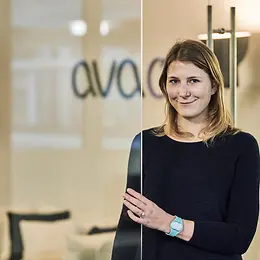
Lea von Bidder knows a thing or two about failure. The company she co-founded, Ava, was once hailed as Switzerland's most successful start-up, and then went under. The Ava bracelet promised to help women track their menstrual cycles and boost their chances of conceiving. Three years after Ava's collapse, von Bidder started speaking candidly about what went wrong. "There is almost never just the one reason", she said in an interview. Failure is "almost always a mixture of timing, financing, regulation, product-market-fit - and bad luck."
The start-up world is not for the faint-hearted. Anyone chasing rapid growth with an innovative, scalable business model and new technology must accept the risk of failure. The statistics are sobering: in Germany, Austria and Switzerland, 80 out of 100 start-ups fold within the first three years.
Natascha Fürst, CEO of the Austrian network Female Founders, says: "Start-ups usually fail when the business model doesn't work, and the founders fall out." In other words, it comes down to the numbers and the people. The following four case studies show how that can play out in practice - and what investors should watch for.
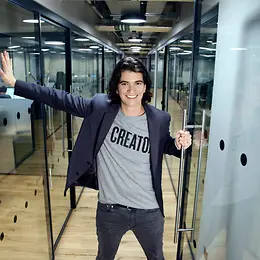
If you're looking for a textbook start-up disaster, WeWork is it. Documentaries, TV series and books have been churned out about its rise and fall. Once celebrated as the world's most valuable start-up, at its peak, the company was valued at USD 47 billion.
The central character? Adam Neumann, who co-founded WeWork in 2010 with Miguel McKelvey. Neumann and Miguel rented out empty offices as co-working spaces. They were selling a vision: work plus community plus collaboration equalled "We". A concept that in the 2010s was revolutionary.
Investors, including Softbank's Masayoshi Son, lapped it up and started pumping in billions. At its peak, WeWork boasted 12 000 employees, offices in over 100 cities and half a million members. Meanwhile, Neumann looked after himself rather nicely: extravagant staff parties, private jets; he even charged WeWork for the rights to the "We" trademark.
When the company planned to go public in 2019, the truth came to light: the business model was questionable, and the losses were enormous. Neumann resigned and the IPO was cancelled. In 2023, WeWork filed for bankruptcy, with creditors forced to inject another USD 450 million into the company.

The takeaway? Charisma, hype and cheap money can hide a weak business idea - but only for so long.
Lumos, an Indian start-up, failed for very different reasons. In 2014, three techies - Yash Kotak, Pritesh Sankhe and Tarkeshwar Singh - set out to develop a smart internet switch that would learn from users' behaviour and automate household appliances. Kotak and his two co-founders named the product Lumos - inspired by the spell in the Harry Potter books.

Despite quickly securing funding from an angel investor and producing a prototype in just 45 days (with another following a month later), the team overlooked one crucial step: testing whether anyone actually wanted their product. "We were pleased with ourselves. The investors were pleased with us. Life was a bed of roses", Kotak later recalled.
Reality hit soon after. The switch was overpriced, overly complex and lacked a clear target market. "We were trying to do everything for everybody", Kotak admitted. In a widely cited blog post he reflected: "After five months of toiling 14-hour days, making a hardware IoT product from scratch and spending thousands of dollars of other people's money, I and my two co-founders woke up with a jolt." Lumos folded in less than a year.
The lesson? A product must be clearly positioned and meet a real need. Otherwise, even the most innovative idea will fail.
While Lumos was built by three relative unknowns, Quibi was backed by Hollywood royalty and Silicon Valley heavyweights.
Quibi, which is short for "quick bites", was a US-based short video streaming service launched in April 2020, just as the pandemic was keeping everyone glued to their sofas. The masterminds behind Quibi were two very big names: Meg Whitman, ex-CEO of Hewlett Packard and eBay, and Jeffrey Katzenberg, former Disney Studios boss and co-founder of DreamWorks.
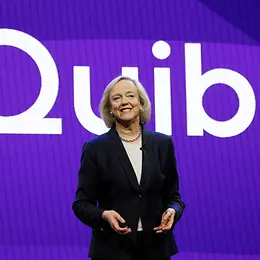
Whitman and Katzenberg raised nearly USD 2 billion and brought in a host of show business talent, including Steven Spielberg and Jennifer Lopez, who were supposed to serve up content for Quibi. But the shows didn't resonate. They didn't appeal to audiences, and the infotainment videos were branded as "... the equivalent to videos found on YouTube - except on YouTube, the same type of content was better and free." Quibi's strategy quickly came under scrutiny.
The lockdowns exacerbated the problems: Quibi was built for people to watch on the go - but suddenly, everyone was at home. Add to that a lawsuit, and the tense working relationship between Katzenberg and Whitman, which The Wall Street Journal reported on extensively, and the game was up. By October 2020, Whitman and Katzenberg announced they were shutting the company down and promised to return the remaining funds to investors.
The moral of the story? Big names and big money can't save a bad idea.
"Do we really need this?" Investors should have asked themselves this question before backing Juicero. But they didn't - until it was too late. In 2013, founder Doug Evans set out on a mission to bring fresh, nutritious juice to every household. His vision: a state-of-the-art, internet-connected juicer that turned chopped organic fruit and vegetables, sealed in bags, into fresh juice. In an interview with Gizmodo, Doug Evans described the Juicero as the Tesla of juicers.

Venture capitalists - including Kleiner Perkins, Google Ventures and Campbell's Soup - poured in more than USD 120 million. By 2016, the Juicero machine hit the market at a hefty USD 699, with monthly subscriptions for juice pouches costing another USD 30. The pouches even had expiry dates: once expired, they were unusable.
But with sales not meeting expectations, Juicero soon had to reduce the price to USD 399, far below production costs. In October 2016, Evans stepped down as CEO, and Jeff Dunn, a former Coca-Cola executive, took over. But then disaster struck: in a simple video, Bloomberg journalists demonstrated how Juicero's expensive juice bags could easily be squeezed by hand - rendering the USD 400 machine completely pointless. Fast Company's Mark Wilson summed it up saying, "It's a solution for rich people that's worse than the problem." In September 2017, Juicero ceased operations.
The lesson? Don't create artificial needs. Products must solve a real problem - or they won't survive.

A start-up exit is much more than just a financial milestone. Forward-thinking founders ask themselves the question early on: What comes next? How do I want to shape my life after the exit?
Here you will find exciting background information and stories about start-up exits.

For Natascha Fürst, failure is simply part of the start-up game. But she prefers to focus on what drives success. "Start-ups are successful when they understand that it won't be easy, but it can be great", she says.
What else sets winners apart? Diverse leadership teams, with women holding not just titles but also equity. A solid understanding of the legal framework and the risks involved. And, perhaps most importantly, a healthy failure culture - the ability to learn from mistakes rather than sweep them under the rug.