
- Home
-
Private banking
-
LGT career
-
Market view and Insights

Playing makes us happy, stimulates our creativity and gives us a sense of freedom. But why are children so much better at playing than adults? And why is Homo economicus unable to play? Philosopher Christoph Quarch has some compelling answers.
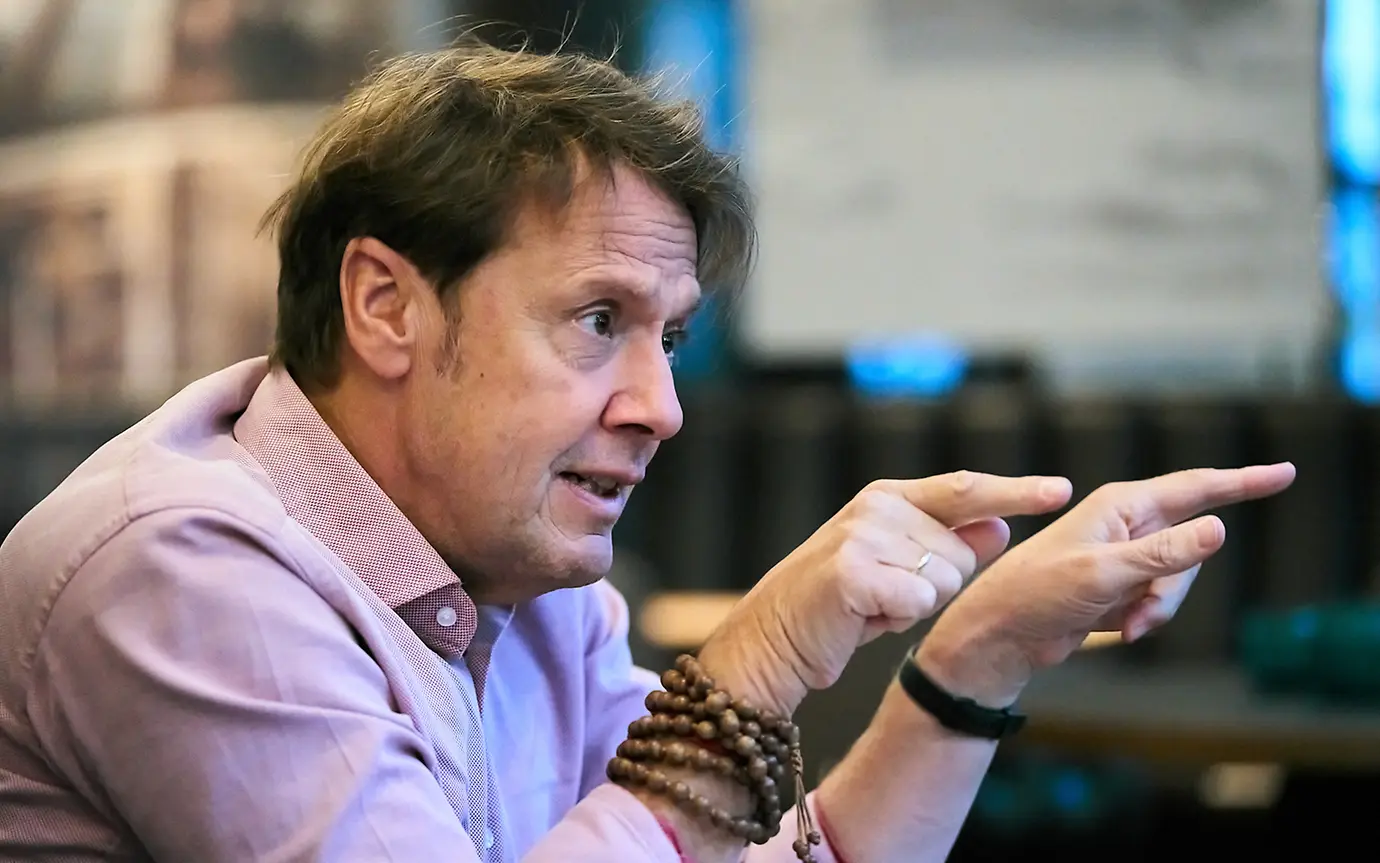
Humans are inherently playful beings. Dutch cultural anthropologist Johan Huizinga explored this phenomenon in his seminal work on the cultural significance of play, Homo Ludens. From ancient Greece to the Enlightenment and present-day football stadiums, humanity's passion for play remains profound.
The Greeks were unparalleled enthusiasts of play, and their religious celebrations often involved play. Consider the Olympics: every four years, rival city-states set aside conflicts to come together and compete. Their gods enjoyed playing too. For the Greeks, humans were closest to the divine when they gave themselves wholly over to play. Games weren't just about winning - they were a demonstration of excellence and a tribute to the divine.

That's my point exactly. People shouldn't go to casinos to win money.
When someone stands in front of a slot machine for hours, hoping to strike it rich, they're no longer playing. At that point, Homo economicus has infiltrated the world of play and eroded it from within.
Homo economicus has become the dominant paradigm of our time, valuing only what is useful, practical and advantageous.
Exactly. From Homo economicus's perspective, play is absurd because it totally lacks economic utility. In reality though, play is profoundly valuable.
That the point of play is simply to play. It makes you feel happy and alive, and gives you a chance to explore new ideas. People play to escape the ordinary and immerse themselves in something different. When I go to a football match, my philosophical self stays home, and another side of me emerges. Play lets us inhabit new roles and worlds. Monopoly, for instance, allows a die-hard leftist to revel in capitalism. Fully giving themselves over to play offers people a sense of freedom and happiness that few other experiences can match.
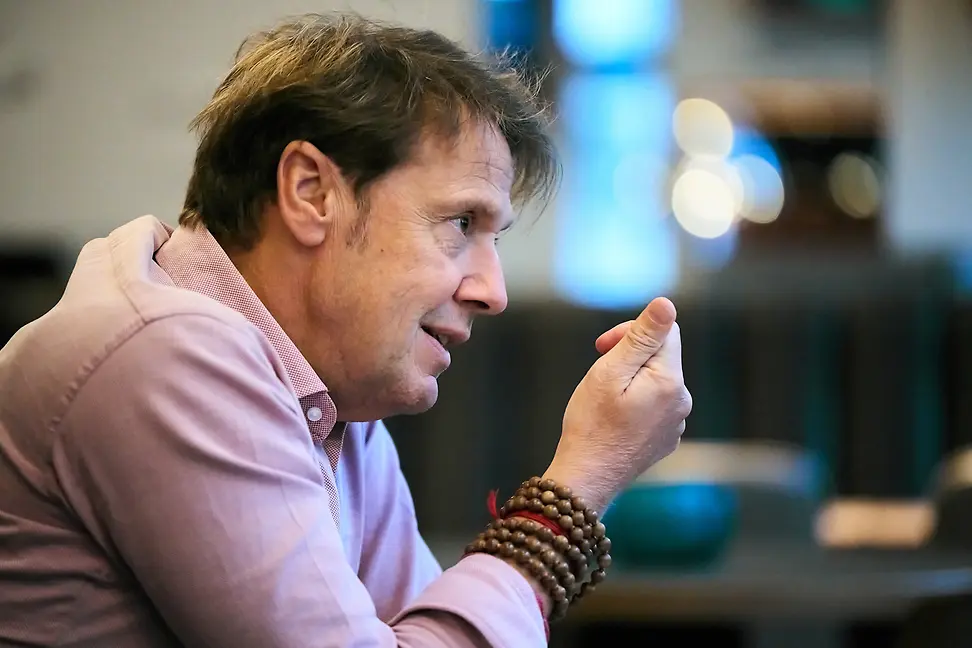
All play originates from ritualistic celebrations. The archetype of play is a sacred ceremony performed by a shaman, held in a defined space in which the ritual unfolds. For the Greeks, this was a temple - a place where events beyond the everyday could occur. Play always involves a set time, a designated space and specific rules that guide its purpose. What makes play so special is the extraordinary freedom it offers. That is also what makes it so universally appealing.
Precisely. In fact, it's the clear, mutually agreed-upon rules that give us that freedom. Take football: it has rules, but the outcome of the game and the players' actions are unpredictable. Rules protect the game from outside interference, allowing it to unfold freely. And having played football for years, I know that focusing on external rewards, like winning prize money, makes it impossible to play well.
Exactly. The true freedom of play lies in playing for the sake of playing. The moment a game serves another purpose, it loses its magic. Another rule of thumb is: the simpler the rules, the better. That's part of football's universal appeal - it's a game that children everywhere can play, even if all they have is an empty tin can.

Studies show that playing releases feel-good hormones in the brain. The deeper question is: are we happy because of these hormones, or do we release these hormones because we're happy? As a humanist, I believe it's the latter. The sense of freedom that play affords us and the opportunity to experience new and exciting things are good for the human psyche.
People who totally immerse themselves in play stop focusing on the self, and that is something children are much better at. They find it easy to slip into new roles and imaginary worlds, and can spend hours totally engrossed in a game.
That's the attitude of Homo economicus, which values tangible outcomes and wants to optimise utility in everything it does. The ego-driven "I want" mentality is antithetical to play because it prioritises the ego. When my children were younger and I used to try to get them to play educational games, they would immediately reject them, sensing there was a hidden agenda. Play dies when given an external purpose, just as overly moralistic or didactic theatre loses its audience.
Because it loses its playful character. Morality is fundamentally opposed to play. Games, to quote Nietzsche, are "beyond good and evil".
Vitality, joy, creativity and community. Play unites people from all walks of life. Rich people and the poor people all go to stadiums for one and the same reason: to watch a football match. Where does that happen, other than in the world of play?
Christoph Quarch is a philosopher and an expert on Plato. He is the author of several non-fiction books, including "Rettet das Spiel! Weil Leben mehr als Funktionieren ist", which he co-wrote with Gerald Hüther in 2016. Quarch serves as a consultant to companies and teaches ethics and philosophy at various universities.
You can find the full interview in LGT's client magazine CREDO.