
- Home
-
Private banking
- Market view
- Insights
-
LGT career

With data centres popping up everywhere and AI evolving rapidly, the future looks bright for both those companies enabling AI today and those integrating the technology in the future.
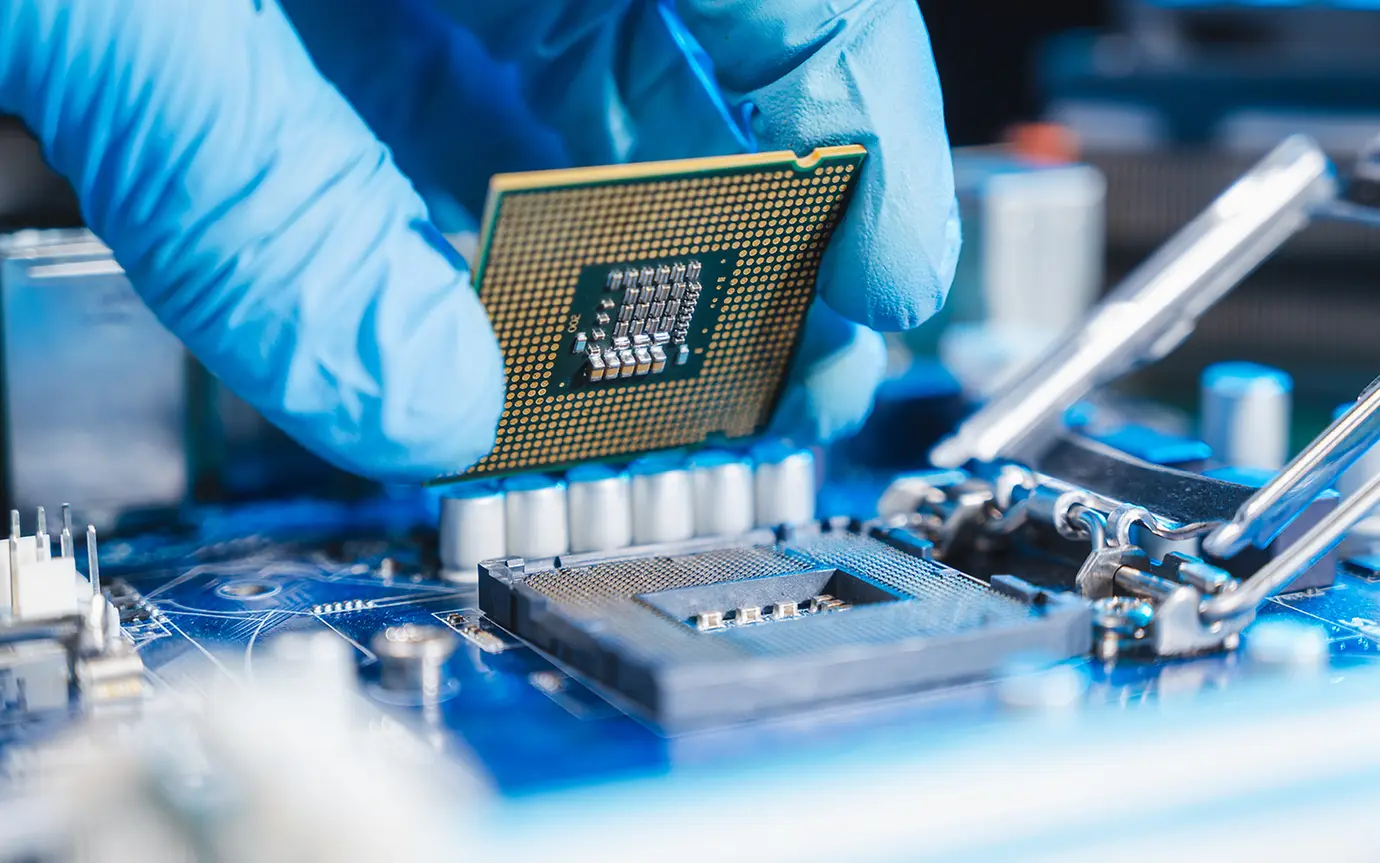
Artificial intelligence (AI) is the world's dominant investment theme. Almost no industry or area is mentioned without a reference to how AI will power it in the future. In the face of this blizzard of information, investors can be perplexed about how best to ride the AI wave.
The disruptive potential of AI has already sparked significant investment in the technology, with vast sums being spent on infrastructure. The companies - we call them AI enablers - are facilitating the creation of data centres that support the computationally intensive work of training and using large-scale AI models.
At the same time, AI itself is evolving rapidly into areas such as agentic AI, which can operate as an autonomous "agent", completing complex, multi-step tasks with minimal human intervention, and physical AI, which enables machines to interact with the real world using data from sensors. These are AI adopters, pushing the limits of AI capability.
With opportunities across the investment landscape, one potential approach is to view opportunities as a "barbell". This would involve examining both AI enablers, as current beneficiaries of an infrastructure build-out, and AI adopters in emerging fields in the longer run.
Investors still need to be choosy in their approach. When considering infrastructure, the key questions are how much is needed, can be built and importantly, monetised without risking overcapacity.

Patrick Huber leads all investment-related areas for the bank's clients in Europe, including portfolio management, advisory, research, strategy and sustainable investment. He has more than 20 years' experience in investment banking and asset management, with in-depth expertise in risk management and renewable energy.
Matching capacity to future demand is inherently challenging, frequently with a race to protect existing moats or establish new revenue streams. So far, hyperscalers - large cloud service and computing power providers - have been among the largest investors in infrastructure. Their capital expenditure has been well covered by operating cash flows - and importantly, the demand for computing power continues to outstrip supply.
More recently, start-ups like OpenAI have tried to nail down future supply by announcing multi-year partnerships with chip designers and cloud service providers to secure the computing power they will need for ambitious expansion plans. However, start-ups must often rely on external funding for their infrastructure needs, which introduces a new level of risk.
We do expect continued capital expenditure growth in 2026, with funding increasingly moving from internal sources to a broader mix including debt and risk-mitigation structures. While these developments require close monitoring, the continued infrastructure spending bodes well for AI enablers along the data centre value chain.
The global economy is being recalibrated. What does this mean for investors? Find out in our investment outlook 2026.
Emerging AI technologies also offer investor opportunity. In the future, AI will be embedded in all kinds of products. The question, of course, is when will these opportunities come to fruition. The two areas where AI is enabling remarkable progress are agentic and physical AI.
Agentic AI enables decision making and task execution with minimal human intervention to achieve a goal. For example, it allows enterprises to automate back-office processes, marking a leap forward towards digital workforces. Agentic AI has triggered concerns about disruption and a de-rating of software names, even though they are also integrating agentic solutions and have access to valuable data.
Too much infrastructure can be just as risky as too little.
Physical AI refers to the use of AI to interact with the real world. The rapid improvement of AI models and computing power has also led to significant advancements in robotics and autonomous driving, as evidenced by the global rise of robo-taxis.
As companies make sizable investments in AI infrastructure for applications, it remains unclear how companies can monetize these uses - representing a specific risk for investments in the sector, along with rather frothy valuations. Though any equity investment carries risk of loss, a barbell approach to AI investment can allow investors to benefit from both the current and future stages of development in this important technology.