- Home
-
Private banking
-
LGT career
-
Market view and Insights

Over centuries of buying and selling, art collectors and the markets around them have shaped taste - influencing which artworks endure, which disappear, and even how art itself is made.
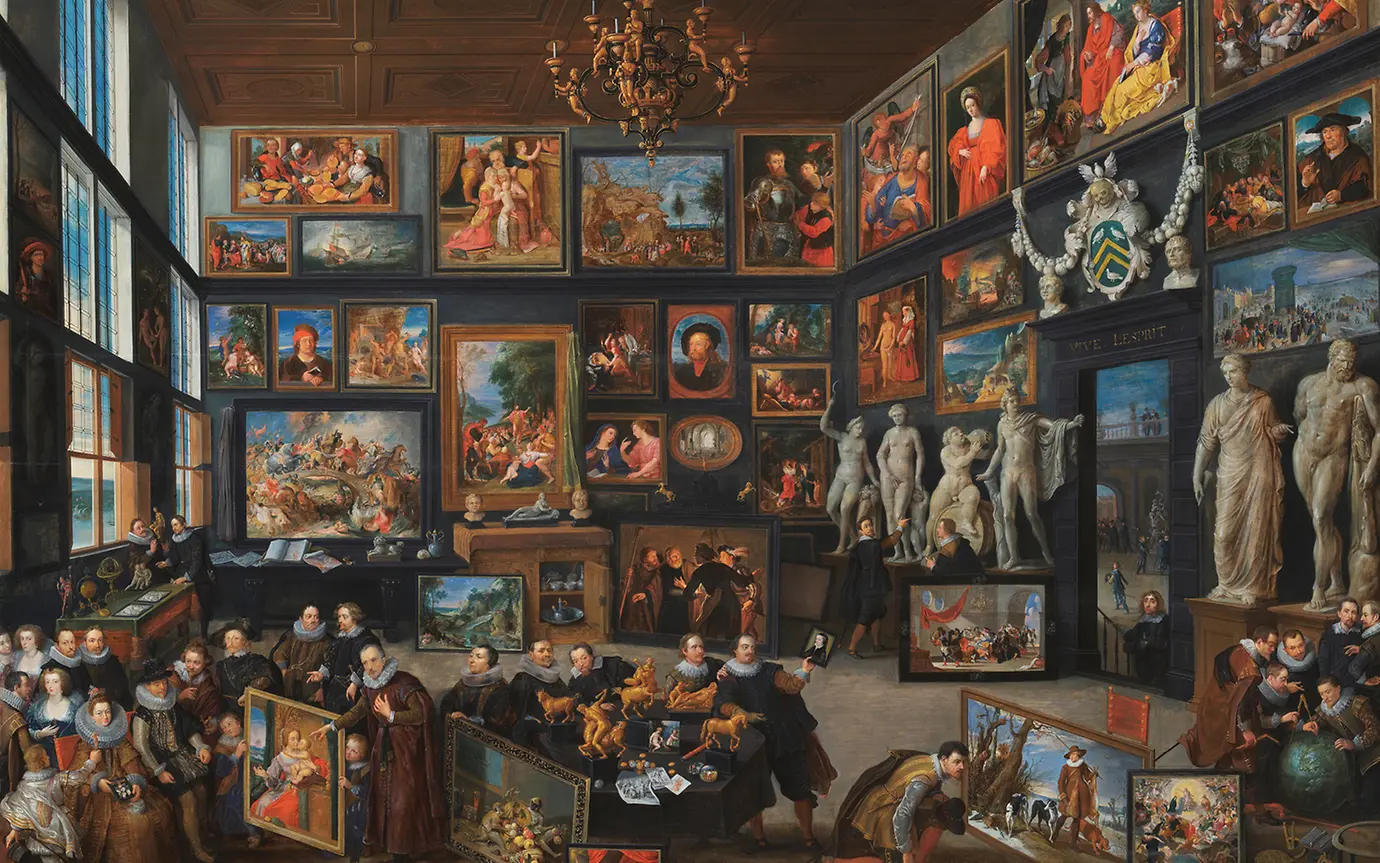
The prices were high, the negotiations were intense, and the buyers - international art collectors - were driven by everything from aesthetic appreciation to the desire to demonstrate their wealth and status. No, this is not a description of last years Art Basel or Frieze. This was Antwerp in the fifteenth and sixteenth centuries.
In a precursor of todays art fairs, the Dutch port city was home to what were known as panden - sales halls where artists, dealers and collectors met to buy and sell paintings, prints and other objects. "You could rent a stall and bring your artworks to sell. It was a transitional moment - a speculative place for an open market", says Christian Huemer, an expert on the history of art markets. These, he explains, have operated since ancient Roman times.
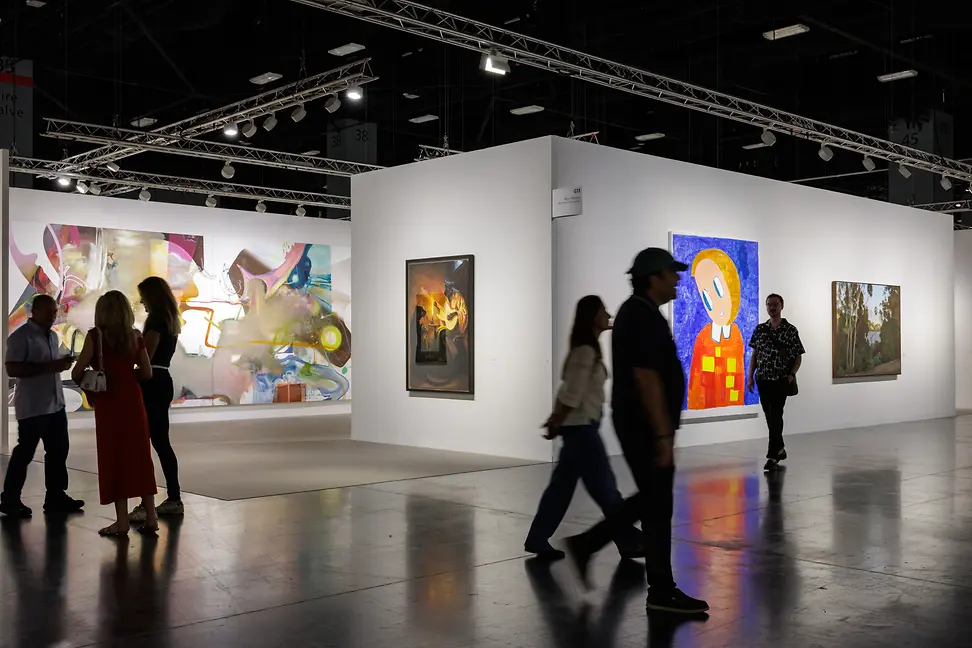
Today, collectors are part of global network of art fairs, auctions and online sales, with tastes and prices shifting from season to season. In recent years, for example, collectors have been getting younger, more female buyers have been entering the market, and digital art is becoming increasingly collectible.
But if the art market is in a constant state of flux, what does not change is the diverse set of factors that drive art collecting. For some, its an investment with the lure of financial gain. For some, its decorative, whether for the walls of a Roman villa or the corridors of a corporate headquarters. And for others it is social, bolstering the appearance of being cultured while providing conversation pieces that prompt intellectual exchange.
Collectors' practices are being explored in a new exhibition in Vienna, Dealing in Splendour, in which dozens of artworks - including major works from the Princely Collections of the Princely House of Liechtenstein - reveal the workings of European art markets from ancient Rome to the nineteenth century. "Establishing such a long perspective, from antiquity to modernism, has never been done before", says Christian Huemer, editor of the show's catalogue.
Most importantly, there is the enjoyment of art itself, says Stephan Koja, director of the Princely Collections. He describes a "multifarious enrichment experience" from which collectors can not only derive pleasure from interpreting art but can also use it as a means for self-reflection. Art collector and industrialist John Paul Getty would have agreed. Collecting, he once famously remarked, adds "breadth and depth to one's whole existence."

In ancient Rome, the spoils of war sparked a period of intense collecting. After a series of military victories over the Greeks, looted artworks became immensely popular, providing a way to demonstrate power and wealth but also linking their owners with a glorious past. The market was a sophisticated one, says Koja. "It was supported not only by collectors and connoisseurs willing to pay high sums to acquire the objects of their desire, but also by a whole network of supply including agents, auctioneers, restorers - and even forgers."
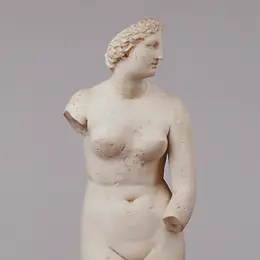
At public art auctions in Rome, consumption was out on display, with furious rounds of bidding resulting in extremely high prices, something Roman author Pliny believed marked the end of a period of virtue and the start of an era dominated by the desire for luxury. So great was the appetite for Greek artworks, in fact, that demand outweighed supply, leading Roman artists to create copies, which were also highly collectible.
As collectors, artists have often found inspiration in the works they own. This was the case for the great Rembrandt, whose extensive collection included paintings and drawings, as well as casts of Greek and Roman busts. And if he couldnt buy what he wanted, he made visual notes.
In 1639, at the estate auction of Flemish merchant and collector Lucas van Uffel, he was impressed by a Raphael portrait of Baldassare Castiglione. The painting sold at an astonishingly high price but not before Rembrandt had made a sketch of it. He later adapted the sitter's pose for one of his self-portraits.

For centuries, art collecting has involved travel. And perhaps no cultural movement illustrates this better than the Grand Tour of the seventeenth and eighteenth centuries, when young wealthy Brits would embark on extensive trips to Europe to visit its classical monuments.
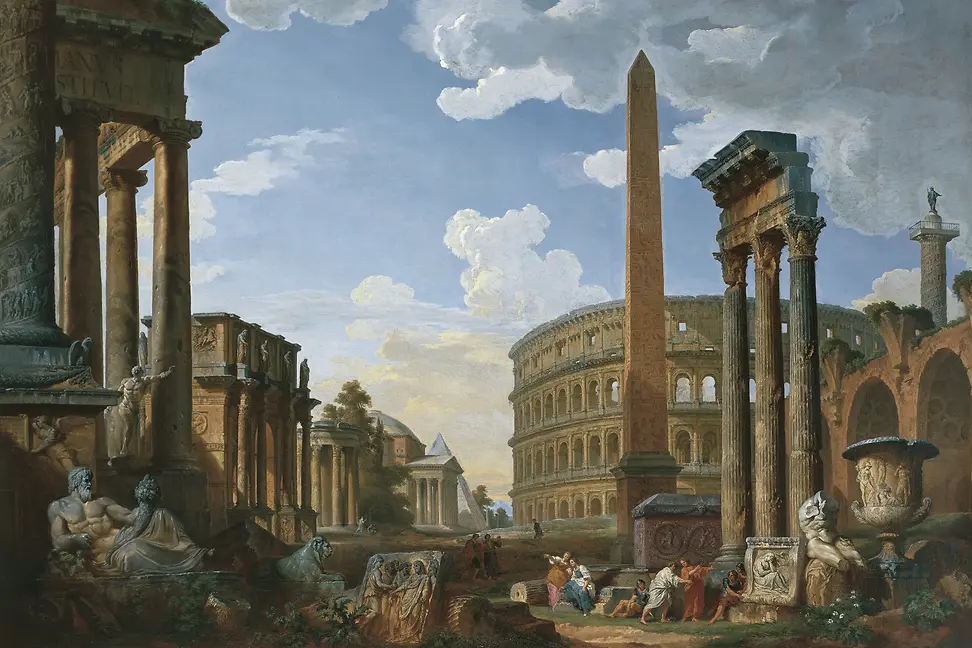
They would invariably return with a clutch of souvenirs - antique or reproduction statues, vases and bronzes, but also capricci. Painted by artists such as Giovanni Battista Piranesi and Giovanni Paolo Pannini, capricci brought together unrelated statues, buildings and archaeological ruins in imagined compositions.
Whether picking up souvenirs or filling the worlds art museums with their bequests, collectors and the art market ecosystem that has grown up around them have helped shape the story of art - something Huemer and Koja readily acknowledge. "Dealers, agents, auctioneers, collectors, critics and scholars shaped reputations, directed taste and determined which works were preserved or forgotten", they write in their introduction to the Dealing in Splendour catalogue. "Their decisions affected not only prices and careers, but also the formation of canons and the writing of art history itself."
Over the past 500 years, the Princely House has assembled one of the most important private art collections in the world, with masterpieces ranging from the early Renaissance to Austrian Romanticism. It features works by Lucas Cranach the Elder, Frans Hals, Raphael, Rembrandt, Peter Paul Rubens, Anthonis van Dyck, Rudolf von Alt, Friedrich von Amerling and Ferdinand Georg Waldmüller. These masterpieces are open to the public through guided tours in the Liechtenstein Garden Palace and the Liechtenstein City Palace in Vienna and are also regularly featured in exhibitions of prominent museums worldwide.