- Home
-
Private banking
-
LGT career
-
Market view and Insights

How do you lead a world-class orchestra as an equal among equals? Paavo Järvi, Music Director of the Tonhalle-Orchester Zürich, shares insights into his work - from communicating his musical vision and mentoring young talent to the enduring power of classical music.
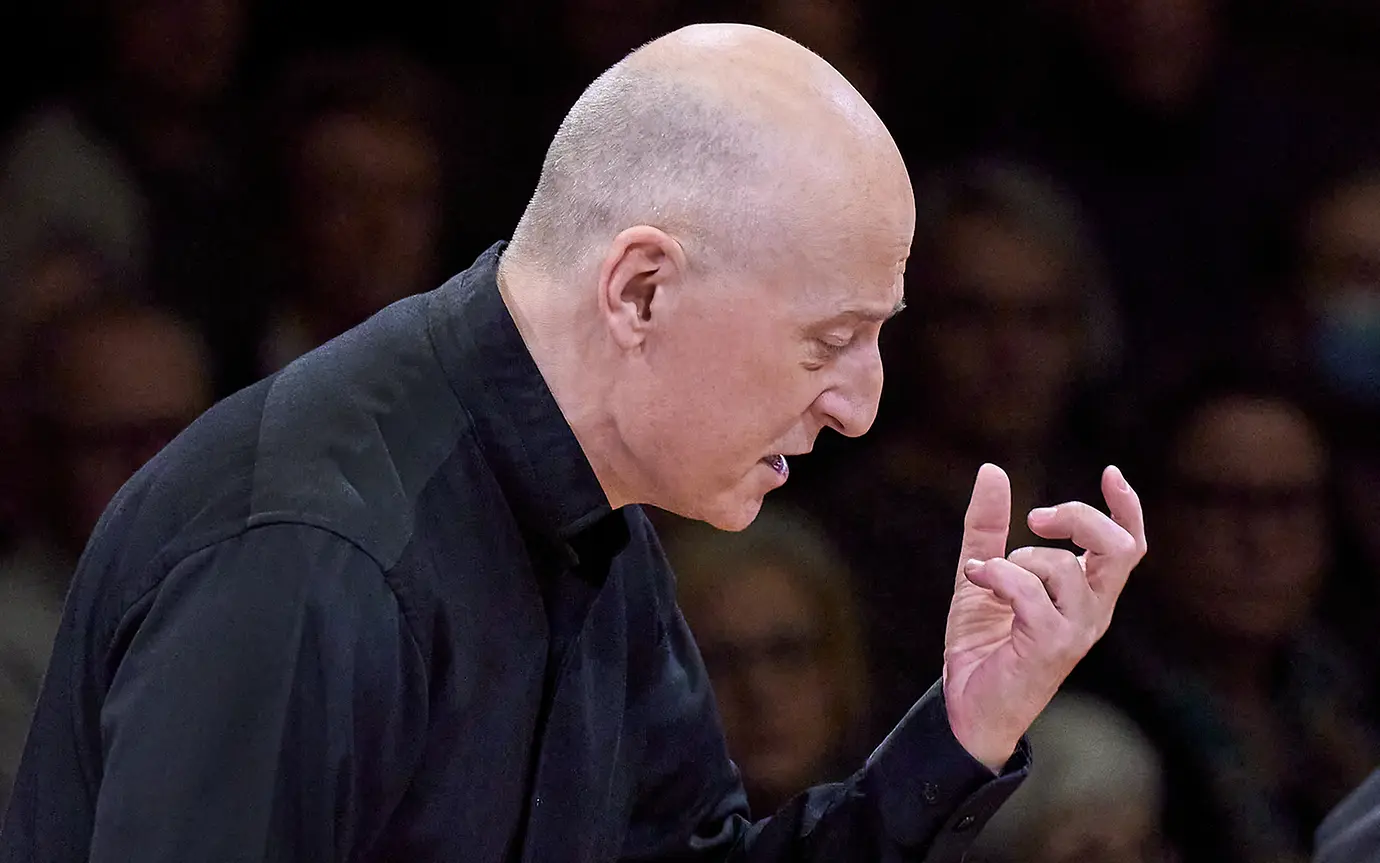
Conducting an orchestra is similar to managing a large company. It's about working with people and continuously motivating them. You have to make sure you're delivering good quality at all times, and you need to figure out where you want your journey to take you. Once you know what your goals are, you can work out how to achieve them.
At the start of rehearsals, I already have a clear idea of how I want the piece to be interpreted. The orchestra comes to the first rehearsal having already prepared thoroughly, and sometimes, it will bring in its own ideas. But ultimately, the final decision is mine. And it's my responsibility to get the orchestra on board with my vision so that everyone has the same understanding of the piece.
I've been working with the Tonhalle-Orchester Zürich for six years now, and the musicians are increasingly attuned to what I want, for example, when it comes to the sound quality of the strings or rhythm.
I believe we all need a mentor - someone who believes in us, is brutally honest, and helps us grow.
One thing is for certain though: if my interpretation is at odds with how the orchestra envisions it, there is no point in imposing my vision. Instead, I need to engage with the musicians so they understand where I'm coming from.
We have all worked very hard over the years. The orchestra is in fantastic shape and highly motivated to perform at a world-class level. We share a common understanding of how we make music and how we approach new pieces. We function as a unit and have a clear understanding of our individual roles. We have learned a great deal from one another - and we continue to learn. That strong sense of togetherness is something that makes me proud.
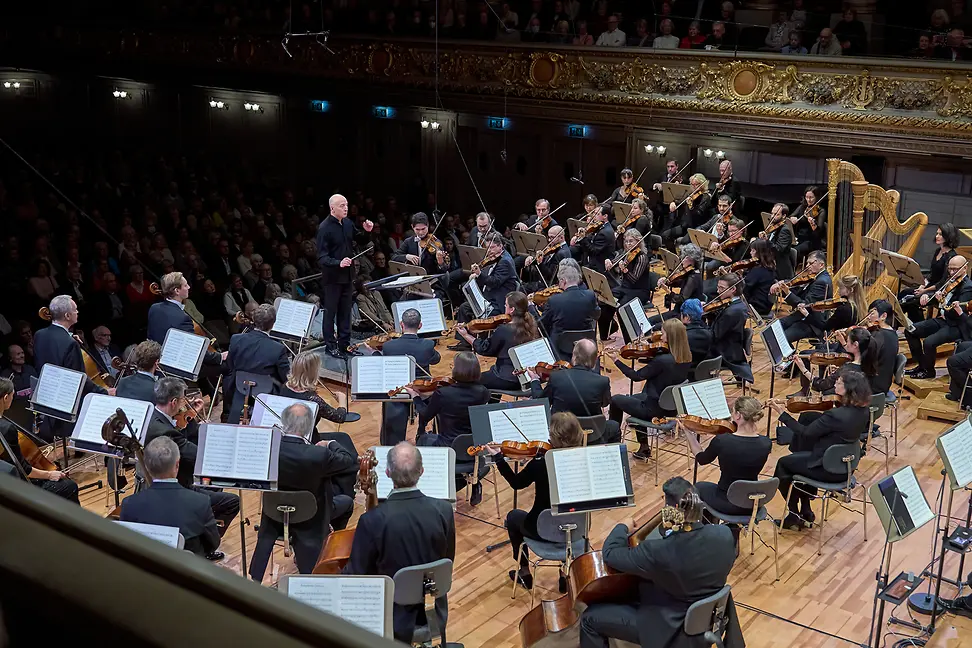
I'm also proud that our CD recordings allow us to reach music lovers in parts of the world we can't travel to. They're a way of leaving a high-calibre musical legacy - one that has been recognised through awards and positive reviews.
The Mahler recordings and concerts were a highlight for me. So much detail goes into making a recording like that. You literally have to take the pieces apart. The orchestra truly outdid itself in the process.
Another thing that stands out for me is Anna Thorvaldsdottir's Archora. Anna was our Creative Chair last season. Working on the new piano concerto by John Adams, performed by our Focus Artist Víkingur Ólafson, was also incredibly exciting.
I was also very pleased that LGT extended its sponsorship. Financial stability is essential if an orchestra wants to be able to plan long term. I see LGT as a highly committed partner. And I really enjoyed the "Tram for Two" with Anke Bridge-Haux.
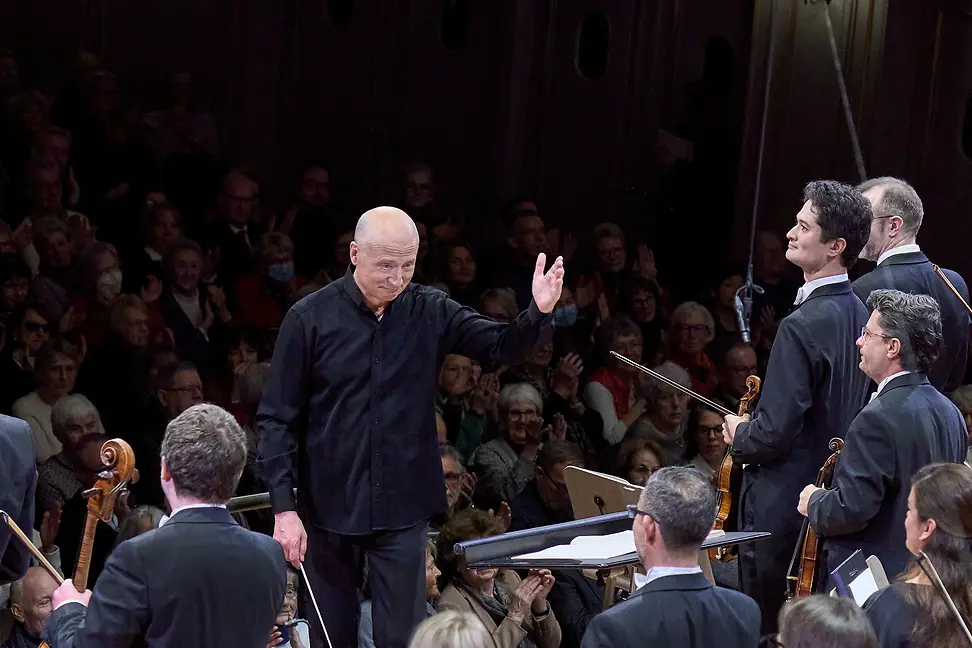
That's right. Passing on my knowledge is important to me, and the Academy gives me the opportunity to do that. It's exciting to identify what young conductors need, to have in-depth discussions with them and to help them improve their technique. Some young conductors don't yet have the technical skills they need. I get the sense that this aspect is often overlooked in training these days. Talent and passion aren't enough if the technique isn't there...
I think we all need a mentor. Someone who believes in us, who explains the rules and gives us advice. Someone who is brutally honest. A mentor is also someone who takes you by the hand and tells you: forget the first ten performances of any piece - perfection takes time.
The most effective way for me to give advice is to stand right next to a conductor. That way, I instantly see when they make a mistake, and I can step in to show them what they should do differently. They can then try my suggestions out right away and internalise them.
Classical music will always exist. It is part of our culture and our tradition. The real question is: what role it will play in people's lives in the future? If society increasingly regards classical music as unimportant, there's a risk it will lose its relevance.
But we shouldn't be pessimistic. It's up to us to ensure that classical music has strong advocates - and that we ourselves act as ambassadors. After all, music touches something in all of us.
My daughters are my inspiration. The general state of the world right now, on the other hand, is not something I find very inspiring...
Yes, it's demanding and my schedule is packed. But after 40 years in this profession, you learn how to carve out time for yourself and what you need to recharge. You also learn how to set boundaries. Having music as your work is incredibly fulfilling. Music is both my hobby and way of life. How many people can say that about their job?
That said, on those rare days when I have no plans, I feel a wonderful sense of freedom.
The Princely House of Liechtenstein has a long tradition of supporting the promising musicians - centuries ago, they supported Joseph von Haydn and Wolfang Amadeus Mozart. LGT continues this tradition as main sponsor of the Tonhalle-Orchester Zürich.
Since 1868, the orchestra has captivated classical music enthusiasts around the world, performing in more than 100 cities across over 30 countries. In 2022, it was honoured with the European Cultural Prize.