- Home
-
Private banking
-
LGT career
-
Market view and Insights

It's a multipolar world out there now, with national security taking precedence over economic efficiency.
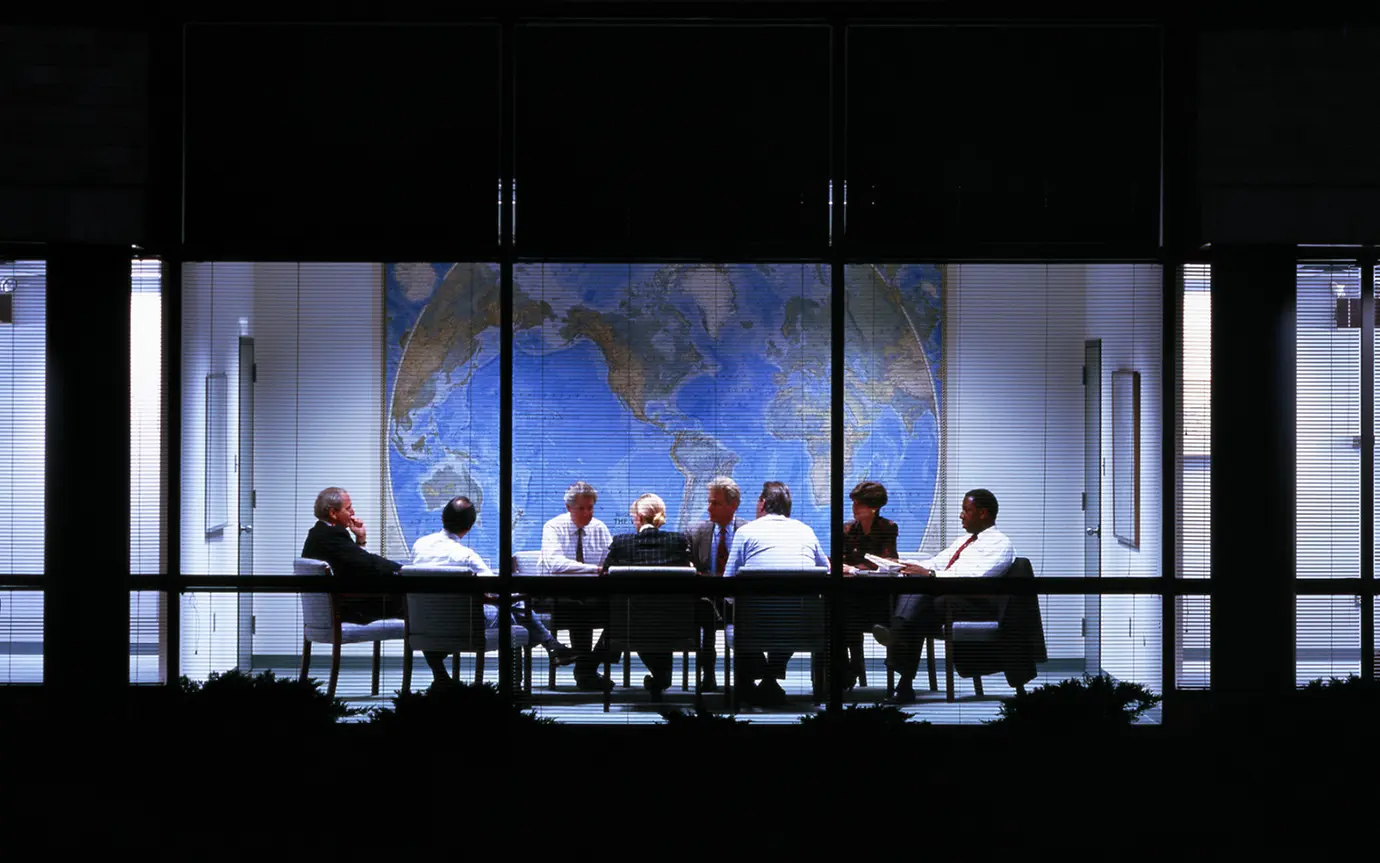
Globalisation is not dead - far from it. But it is being reinvented. Forget the old trade logic: "Produce cheaply, sell globally, profit quickly." That era is ending. Instead, we are seeing a world in which countries use tariffs, export bans, and strategic investments as weapons. Influence over business sectors such as semiconductors, artificial intelligence, and critical minerals are increasingly contested. Whoever controls these industries will have the upper hand.
Since January 2025, many longstanding global trading blocs have begun to fragment. The USA is at odds with China. Europe is seeking strategic autonomy. India is trying to maintain a difficult balance between China and Russia. The Gulf States are looking to diversify their trading partners.
To illustrate this fragmentation, we just need to look at global trade volumes. These remain high at 44 % of global GDP, moderately below pre-pandemic levels. But while globalisation is not collapsing, it is no longer growing. Value chains are becoming regionally segmented, with ASEAN (the Association of South East Asian Nations), Mexico and eastern Europe acting as hubs for the USA and western Europe, and China serving as a centre.

Meanwhile, new blocs are emerging, like the Quad, a diplomatic partnership between the USA, India, Japan, and Australia covering Indo-Pacific trade; BRICS+, a coalition of developing nations trading together, including Brazil, Russia, India, China, and South Africa, now expanded to 10 nations; and I2U2, a trade group encompassing the USA, Israel, India, and the UAE. New regional payment systems are also emerging. And in some industries, trade, technology, security, and energy are increasingly subject to their own new rules.
What characterises this new multipolar world is that the old winners of globalisation, sectors like low-cost fast fashion and simple exports, may come under pressure, while areas such as defence, infrastructure, and strategic technologies could play a more prominent role in the evolving environment. Investors may now ask themselves not "Where is it cheapest to produce?", but "Who has the upper hand?"

Chris Burger is a Senior Equity Specialist at LGT, specialising in consumer staples, big tech and Swiss equities. His thematic areas include artificial intelligence, cloud computing, cyber security and slowbalisation.
When it comes to identifying which country or countries are in charge, it's clear that opinions are changing. In the past, public opinion polls in 13 major countries saw 50 % of people identify the USA as the sole superpower. This figure has now dropped to 32 %. The multipolar view is gaining ground, with 24 % of respondents describing countries as diverse as India, Europe, Russia, and the Gulf States as power houses today.
Multipolarity is being fought out via three main channels:
These developments aren't likely to reverse any time soon, because profound structural forces will continue to transform economies, technology, and global politics. One major driver is demographic change, with populations shrinking in many industrialised countries.
Reduced working populations could dampen long-term growth potential in these nations if they fail to compensate through higher automation, for example. On the other hand, emerging markets with rising populations will only see growth if they manage to harness the productivity provided by better education and infrastructure.
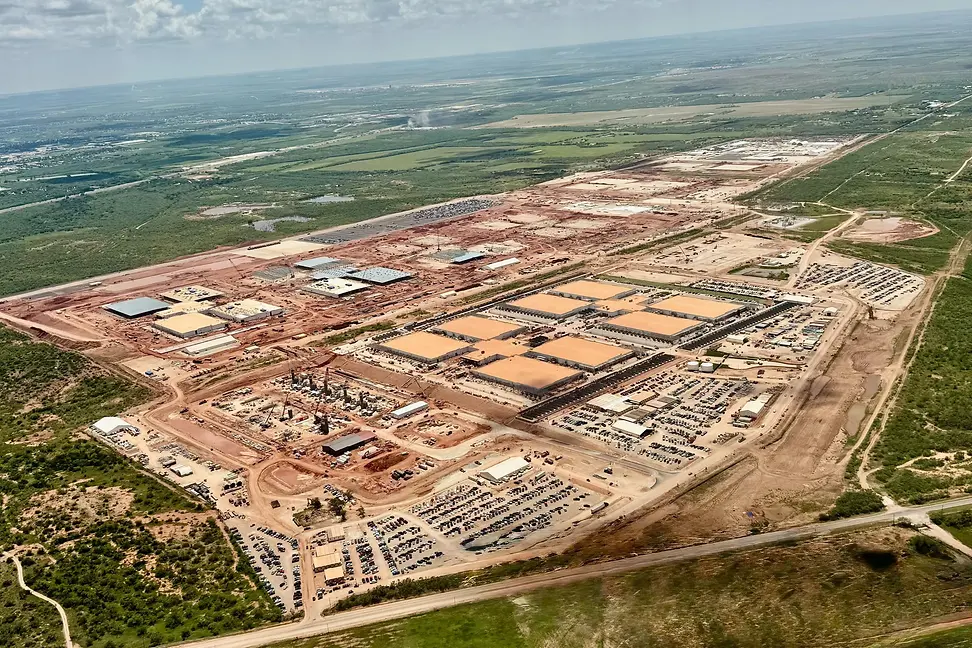
Technology and security are the central battlegrounds of this new order. In the AI arms race, the USA has a strong position thanks to its dominance in graphics processing technology (GPUs), its leading position in large language model (LLM) ecosystems, and the Stargate project, with its projected USD 500 billion investment in AI infrastructure. China can't be counted out, though. It has its own large, domestic AI market, and its own models like DeepSeek.
Analysts emphasise that control over AI, quantum computing, and high-end chips will be critical for achieving superpower status in the future. A lot will depend on the efficiency of supply chains and the flow of critical minerals like lithium, cobalt, and rare earths. It is here that much of the competition for control is already taking place.
The question is no longer who trades most - but who controls the future.
Politically, populism and the erosion of democracy are reinforcing the current scepticism around globalisation. According to the 2024 "World Affairs Survey" conducted by global market research firm Ipsos, 74 % of respondents in 30 countries still agree with global cooperation (a decline of five percentage points compared to the previous five-year average), but 78 % want their country to focus less on the world and more "at home". This is true even in countries that have traditionally benefited from globalisation, such as the USA, UK, and Australia.
Meanwhile, the multilateral order is eroding. Blockages in the World Trade Organisation's (WTO) dispute settlement system have encouraged the adoption of bilateral agreements. Analysts anticipate increased protectionism, export controls, and sanctions as countries defend their domestic interests more vigorously.
Multipolarity and the technology race are influencing how different sectors develop, and some areas may appear relatively better positioned than others in this changing landscape. The semiconductor industry remains at the heart of the geopolitical battle for tech dominance. The USA leads in chip design and has strong players in memory chips and critical equipment. Taiwan dominates the manufacturing of logic chips, while the Netherlands and Japan supply critical equipment. China is investing heavily in all aspects of chip production, so could prove competitive in future.
LGT's experts analyze global economic and market trends on an ongoing basis. Our publications on international financial markets, sectors and companies help you make informed investment decisions.
Regionalisation and friend-shoring of supply chains is leading to the creation of regional hubs and therefore new logistics capabilities. Potential beneficiaries here include shipping lines and logistics providers, as well as port operators. But there are plenty of challenges: piracy, congestion at ports, and rising fuel costs all pose problems.
Multipolarity and high defence budgets may favour defence and cybersecurity industries. Conflicts are shifting away from the creation and equipping of large ground armies towards high-precision, tech-driven systems, and hybrid threats, in which cyberattacks, satellite jamming, and drone warfare play a central role. Modern armies are investing in networked sensor technology, software, and data platforms.
Industrial revitalisation, the green energy transition, and AI data centres require massive investments in infrastructure, which is likely to shift the focus onto companies in sectors like construction and engineering. There are hefty risks here too: lengthy approval processes, supply chain volatility, and geopolitical pressure on foreign investors.
Today's multipolar world is characterised by a focus on national security, not cost optimisation. Supply chains are fragmenting into regional blocs. Multipolarity is being fought out economically, technologically, and in terms of security policy. Control over semiconductors, AI, critical raw materials, energy, and infrastructure will be essential to securing power. As the world becomes more complex, it will be harder, but not impossible, to navigate. The key is to understand the new logic of multipolarity, manage its risks, and identify potential structural winners.