- Home
-
Private banking
-
LGT career
-
Market view and Insights

The two superpowers are vying for leadership in technologies that have the potential to reshape the global balance of power. There are striking differences in their approaches to AI.

Artificial intelligence (AI) has become a new focal point of USA-China rivalry. Having an edge in this general-purpose technology can significantly enhance a nation's economic and geopolitical power, making it a strategic priority not only for companies, but also for governments.
Based on the strength of its information technology (IT) sector and AI capabilities, the USA has been at the forefront of AI innovation up to now. US companies have access to the most powerful AI supercomputers, allowing them to develop leading AI models.
But China has also made remarkable progress in AI over recent years. Backed by substantial state support and national AI strategies, it has emerged as a formidable competitor to the USA.
To date, the USA has been at the heart of the AI boom, enabled by its access to vast computing power. This comes at a high price, however, with major US tech firms expected to spend more than USD 700 billion in 2026, primarily on AI infrastructure.

Tobias Aellig is a Senior Equity Specialist at LGT. He focuses on companies in the information technology and industrial sectors, with a specialization in the semiconductor and capital goods industries. His areas of expertise include artificial intelligence, cloud computing and data centers, automation and robotics, and energy efficiency.
On the other hand, with US sanctions ensuring it has restricted access to advanced semiconductor technology, China is developing an independent ecosystem, with an open-source approach to AI models and a focus on AI applications. With its vast domestic market, huge population, and large industrial sector, China has immense opportunities to leverage AI for consumer products and to transform industries.
These two different and in many ways competing approaches to AI offer opportunities to investors across the value chain - although with the global geopolitical landscape so uncertain, caution is appropriate. That said, China has been committed to its AI race against the USA since its top player in the board game "Go" was defeated by Google DeepMind's AlphaGo program in 2017. Soon afterwards, the State Council set out milestones with the goal of becoming the global leader in AI by 2030.
The cornerstone of China's AI strategy is known as "AI Plus". This mirrors its earlier "Internet Plus" programme, which jumpstarted connectivity in the country. AI Plus targets the widespread adoption of next-generation AI devices and agents, to make AI a key driver of China's economic and social development over time.
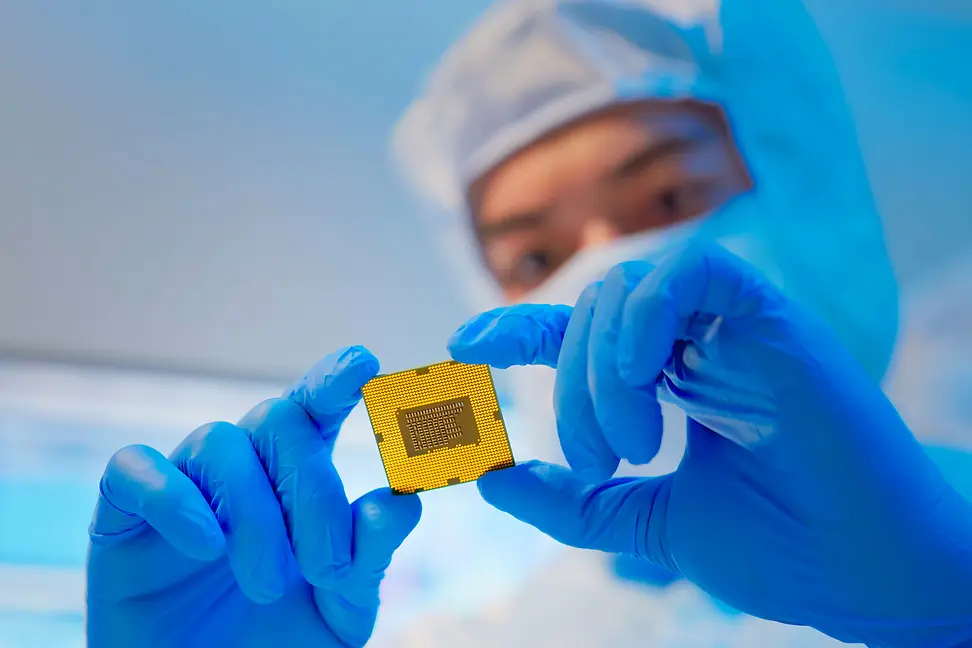
China's success hinges on several factors, including access to a strong technology stack and favourable external circumstances. The AI technology stack encompasses layers of technologies used to build and deploy AI systems.
While the technology stack is integrated into the AI value chain, covering everything from hardware and infrastructure to models and applications, China's strength lies in its wide range of potential application opportunities. Hardware, particularly advanced semiconductor products, remains one of China's biggest hurdles.
The USA dominates in chip design and is home to major equipment manufacturers, although the most advanced chips are manufactured by TSMC in Taiwan. Access to the most advanced semiconductors and a massive data centre infrastructure enables US companies to develop leading AI models and deliver AI services at scale.
LGT's experts analyze global economic and market trends on an ongoing basis. Our publications on international financial markets, sectors and companies help you make informed investment decisions.
Export restrictions on advanced semiconductor technologies, imposed by the US and its allies, limit China's access to computing power. Although China is working hard to develop an independent domestic semiconductor industry, progress in leading-edge technology takes time. In order to compete in the AI race, China is focusing on engineering efficiency and leveraging open-source models.
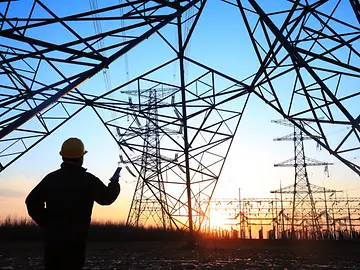
Another key difference between the USA and China is energy. While the USA has almost unrestricted access to computing power today, it is at risk of hitting a "power wall". Data centre power consumption is expected to surge over the coming years, putting considerable strain on local power grids. China has a more resilient power system, with more than twice the installed power generation capacity of the USA.
Data is a crucial input for AI; many call it the crude oil of the 21st century. AI turns this raw input into valuable, potentially transformative information and technological capabilities. With over 1.4 billion people, 1.1 billion internet users, and a massive manufacturing base, China generates an enormous amount of data.
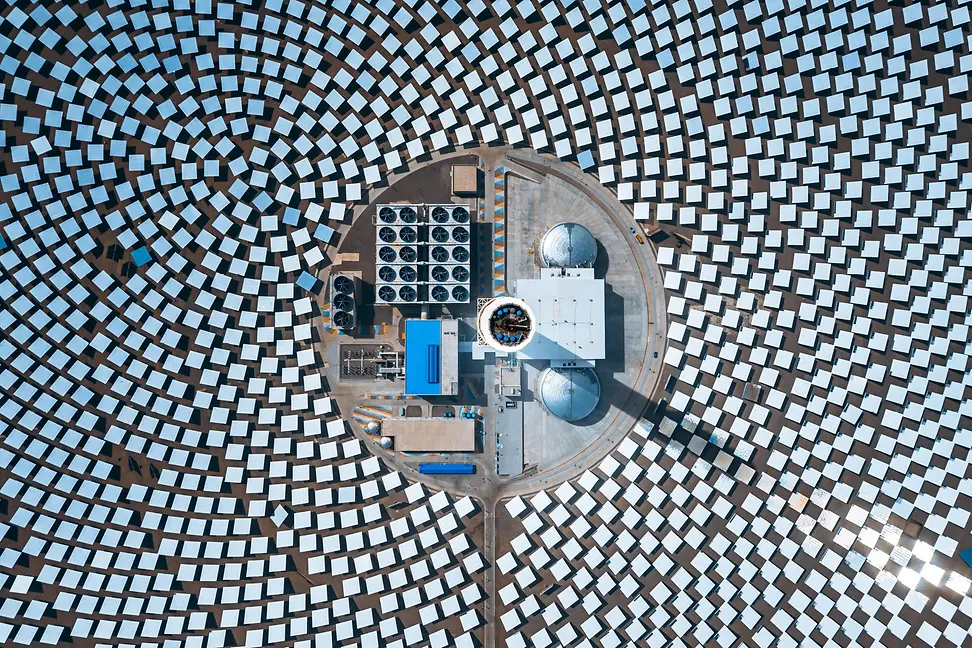
Another difference is the use of open-source models favoured by China, in contrast to the proprietary approach taken by many US companies. By primarily following an open-source, collaborative approach to AI model development, the country has been able to narrow the performance gap between Chinese and western models at much lower cost. In addition, it has developed a remarkable talent pool; globally, around 50 % of the world's AI researchers are Chinese.
Finally, cost-effective, readily available models that are "good enough" for many use cases have paved the way for widespread AI integration into China's huge domestic market, particularly in mobile platforms and physical AI applications.
Physical AI involves embedding AI into systems that interact with the real world. Think of robots and self-driving cars. Against the backdrop of an ageing population, rising labour costs, and its status as the world's manufacturing superpower, AI represents an opportunity for China to drive industrial transformation at scale.
The USA and China are competing across the physical AI landscape, including intelligent robotics and autonomous driving. Beyond their home markets, the two superpowers are also competing to see which country's companies can dominate, for instance in the Global South.
In recent years, China has made remarkable progress in AI. Backed by substantial state support and national AI strategies, it has emerged as an impressive competitor to the USA. In response, the USA has imposed sweeping export restrictions on advanced semiconductor technology aimed at blocking China's progress. However, rather than thwarting China's ambitions, these constraints have pushed the country to build an impressively efficient and self-sufficient ecosystem, and use its vast domestic market to focus on AI adoption. This bodes well for the big Chinese tech companies and companies along the AI value chain.